


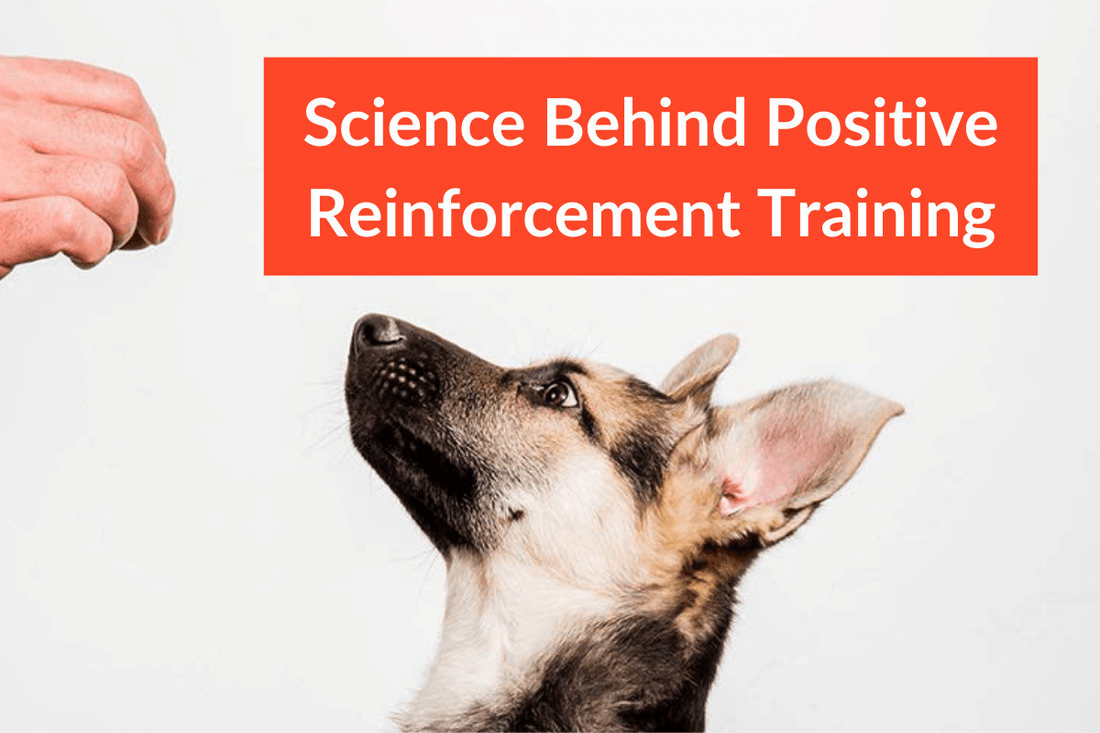
Positive reinforcement training isn’t just a “nice” way to train, it’s the most effective and humane method backed by decades of behavioral science.
In the past, punishment-based or “dominance” training methods were widely promoted by TV trainers and outdated resources.
But today, animal behavior experts and organizations like the American Veterinary Society of Animal Behavior (AVSAB) and the International Association of Animal Behavior Consultants (IAABC) agree...
positive reinforcement produces better learning outcomes and healthier, happier dogs.
At Pupford, our mission is to help pup parents understand why this approach works, so you can train confidently, compassionately, and effectively.
🎧 Podcast Episode:
If you haven’t yet, check out our Positive Reinforcement Training episode on the Pupford Podcast, where we break down what this method is, the science behind it, and how to use it in everyday life.
What Is Positive Reinforcement Training?
In scientific terms, positive reinforcement comes from operant conditioning, a learning theory first described by B.F. Skinner in the mid-1900s.
In operant conditioning, behavior is influenced by its consequences. There are four “quadrants”:
- Positive Reinforcement – adding something the dog finds rewarding to increase a behavior
- Negative Reinforcement – removing something unpleasant to increase a behavior
- Positive Punishment – adding something unpleasant to decrease a behavior
- Negative Punishment – removing something rewarding to decrease a behavior
Positive reinforcement focuses on the first (and most effective) quadrant: adding rewards to encourage desired behaviors.
For example:
When you ask your dog to sit and then reward them with a treat or praise, you’re adding something valuable (the reward) immediately after the desired action. This strengthens the “sit” behavior, making it more likely your dog will do it again.
It’s important to note that dogs determine what’s reinforcing. What’s motivating for one pup might not be for another. Common reinforcers include:
- High-value treats or food
- Play (tug, fetch, chase)
- Verbal praise
- Petting or physical affection
Our role as pup parents is to identify what motivates our dogs and use it strategically to shape behavior.
The Science: Why Positive Reinforcement Works
From a biological perspective, rewards activate the brain’s dopamine system, which plays a key role in learning and motivation. When your dog performs a behavior and is rewarded, dopamine is released, creating a positive emotional state and strengthening the neural pathways associated with that behavior.
In contrast, punishment-based methods activate the amygdala, a brain region tied to fear and stress. This can lead to anxiety, avoidance, and aggression, making it harder for dogs to learn and bond with their humans.
Numerous studies have demonstrated these effects:
- Dogs trained with aversive methods show increased signs of stress, such as yawning, lip licking, and lowered body posture.
- Punishment-based training can make dogs less playful and more anxious.
- Positive reinforcement leads to better long-term learning and stronger human–dog relationships.
In short: dogs trained with kindness learn faster, retain more, and trust deeper.
Learn the Humane Hierarchy & LIMA Principles
If you’re new to positive training, one of the best frameworks to study is the LIMA (Least Intrusive, Minimally Aversive) approach and the Humane Hierarchy. These guidelines prioritize teaching and motivation through rewards, using aversive methods only as a true last resort, and often, never at all.
Recap of the Podcast Episode
In this episode, we discuss how positive reinforcement goes beyond “giving treats.” It’s about communication, trust, and setting your dog up for success.
We also cover:
- How to use timing and consistency to strengthen learning
- Why “balanced” training isn’t as balanced as it sounds
- The real impact of fear-based training on a dog’s mental state
If you’re serious about deepening your bond with your pup and creating a calm, confident companion, positive reinforcement is the path forward.
Related Reading
Links to Relevant Articles and Studies About Types of Training:
- What Is LIMA? https://m.iaabc.org/about/lima/
- Aversive Methods Lead to Signals of Stress. https://www.sciencedirect.com/science/article/abs/pii/S1558787814000070
- Punishment Makes Dogs Less Playful. https://www.sciencedirect.com/science/article/abs/pii/S0168159111000876
- AVSAB's Position Statements. https://avsab.org/resources/position-statements/
- Debunking Alpha Dogs, Dominance, and Pack Leadership | Pupford
- Are You Unknowingly Using Aversive Training Techniques? Understanding – Pupford
Continue Your Learning
✅ Listen to the full episode on the Pupford Podcast (and don’t forget to subscribe!).
🎥 Watch the video version to see examples of reinforcement timing in action.
📱 Download the free Pupford training app—featuring 100% positive, science-backed lessons to help you and your pup succeed together.
Recap of Episode
Not everyone you know will teach you science-backed, positive methods for training. That's why it's important to do the research and find what the professionals and researchers have uncovered about the power of positive reinforcement!
Looking for guidance on how to train your dog more effectively? Be sure to check out our 100% free (and positive-reinforcement-based) dog training app.
Get more info about the training app here.
If you have questions, please ask them below in the comments. Happy Training!


