


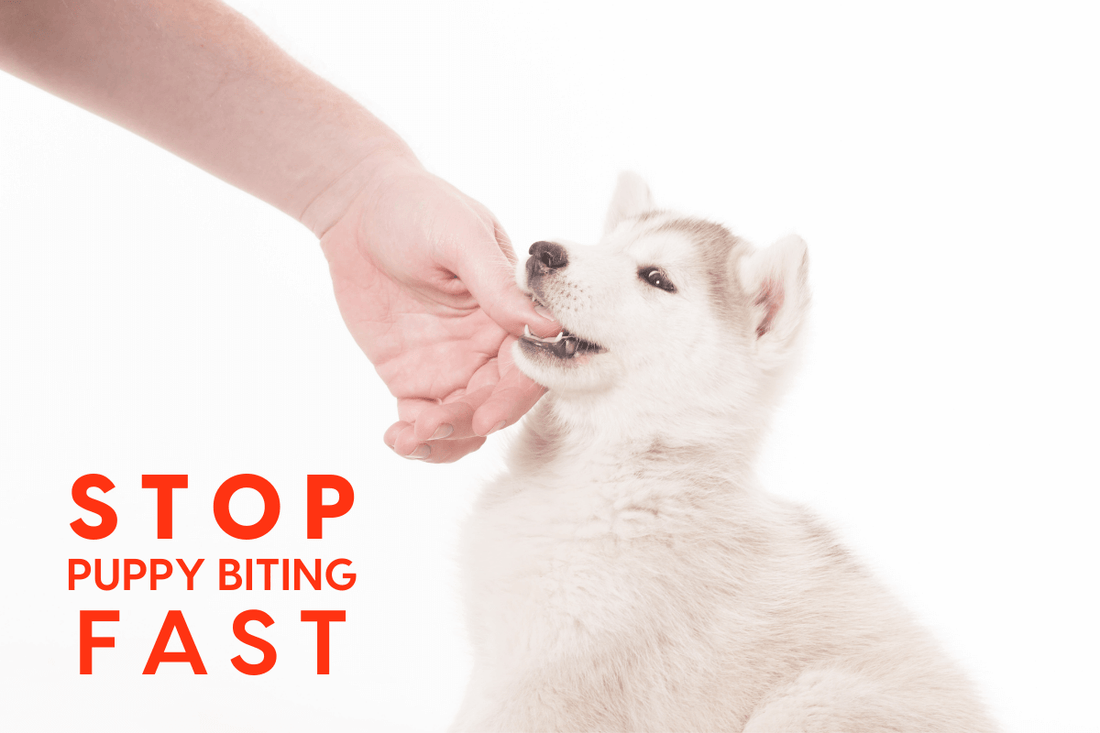
Frustrated with your puppy biting your hands, ankles, feet, and just about anything else they can sink their little shark teeth into?
Here are 11 tips to stop a puppy from biting... fast (well, as fast as possible)!
Before we dive in (speaking of shark teeth… 🦈), let’s talk about some common puppy biting questions. Answering these questions will help you better understand the challenge of puppy mouthing, nibbling, and biting.
WHY IS MY PUPPY BITING ME?
Look down at your own hands (which are likely covered in scratches and bite marks). Now, look at your puppy. Does that little land shark have hands like yours?
If they do, you don’t have a dog… maybe it’s a child or a monkey? Definitely not a dog though. Okay, jokes aside... let's look at why puppies bite so much.
Dogs bite because that is how they discover and interact with the world around them. They can’t pick things up with their paws, so they try to do it with their mouths!
It’s important to know that puppy biting is extremely normal and expected. Almost anyone who has raised a puppy (myself included) has experienced biting in one way, shape, or form.
Let me repeat that…. Puppy biting is normal.
And remember, the biting is even worse during the puppy teething phase.
Which leads us to our next (and extremely common) question about puppy biting…
HOW LONG DOES PUPPY BITING LAST?
Short answer, it depends… but typically puppy biting lasts about 3-6 months. Yep, that’s quite a while!
Just like with anything dog-related, every pup has a different background, environment, breed history, etc. which means that varying behaviors occur differently for every dog! I have two lab pups from the same parents (different litters) and even they have extremely different behaviors, challenges, and successes.
Remember, every dog is different! If your pup takes longer than six months, that is fine! Focus on small “victories”, apply the tips I am about to tell you, and above all, stay patient.
Another note, some behaviors that continue and you feel are becoming serious should be directed to a local dog trainer near you. Find one who is up to date on the most recent science-based methods and employs positivity as their first option.
Here it comes, your 11 tips to stop a puppy from biting. And keep in mind, one tip may work wonders for your pup but do nothing for others. So, find what works best for you and get to training!
11 WAYS TO GET A PUPPY TO STOP BITING HANDS, FEET & EVERYTHING
While puppy biting is completely normal, there are things you can do to make it stop more quickly! These tips will work with Labs, Bernedoodles, Chihuahuas, and even Great Danes.
Here are 11 tips to get a puppy to stop biting:
- Adequate exercise
- Engage in a training session
- Teach leave it
- Teach "yes" and "no"
- Don't get frustrated
- Teach tug of war
- Reward positive moments
- Give them a timeout
- Don't make yourself enticing
- Socialize with other dogs
- Teach an alternative behavior like "lick" or "kisses"
Alright, let's dive into each tip below. 👇
Don't miss out! Sign up for a 100% free online dog training course, 30 Day Perfect Pup with Zak George. Get access to videos & daily tips covering biting, leash walking, potty training and more! Sign up for free here! 🐶
TIP 1: ADEQUATE EXERCISE: ONE OF THE BEST TIPS

Yes, exercising your dog really can be one of the best ways to stop puppy biting. Exercising a puppy is one of the best ways to help alleviate problem behaviors (like biting). Often times puppies act out when they haven’t had enough physical and mental stimulation.
Again, how much exercise your puppy needs will be largely dependent on their breed and age.
A general rule of thumb is that a puppy can have 5 minutes of exercise per month of age, twice a day. So a 4-month-old puppy can exercise for 20 minutes twice a day.
When I say exercise, I don’t usually mean a leisurely stroll around the block. I’m talking about a structured game of fetch, tug, or other play to rid your pup of their energy. The more energy your pup uses, the better!
Exercise can also take the form of jogging, just be careful not to overrun your pup. Excessive exercise can cause joint problems in the long run.
WHY IS BITING HAPPENING DURING EXERCISE OR PLAY?
If you find that the puppy biting gets extra crazy during exercise or playtime, don’t fret! There are a host of options to help you overcome this issue so you can still effectively get rid of their energy.
Consider getting a flirt pole.
Flirt poles are a fantastic option because they allow you to play very energetic and fun games of chase, without worrying about getting your hands nipped at.
You can get one here.
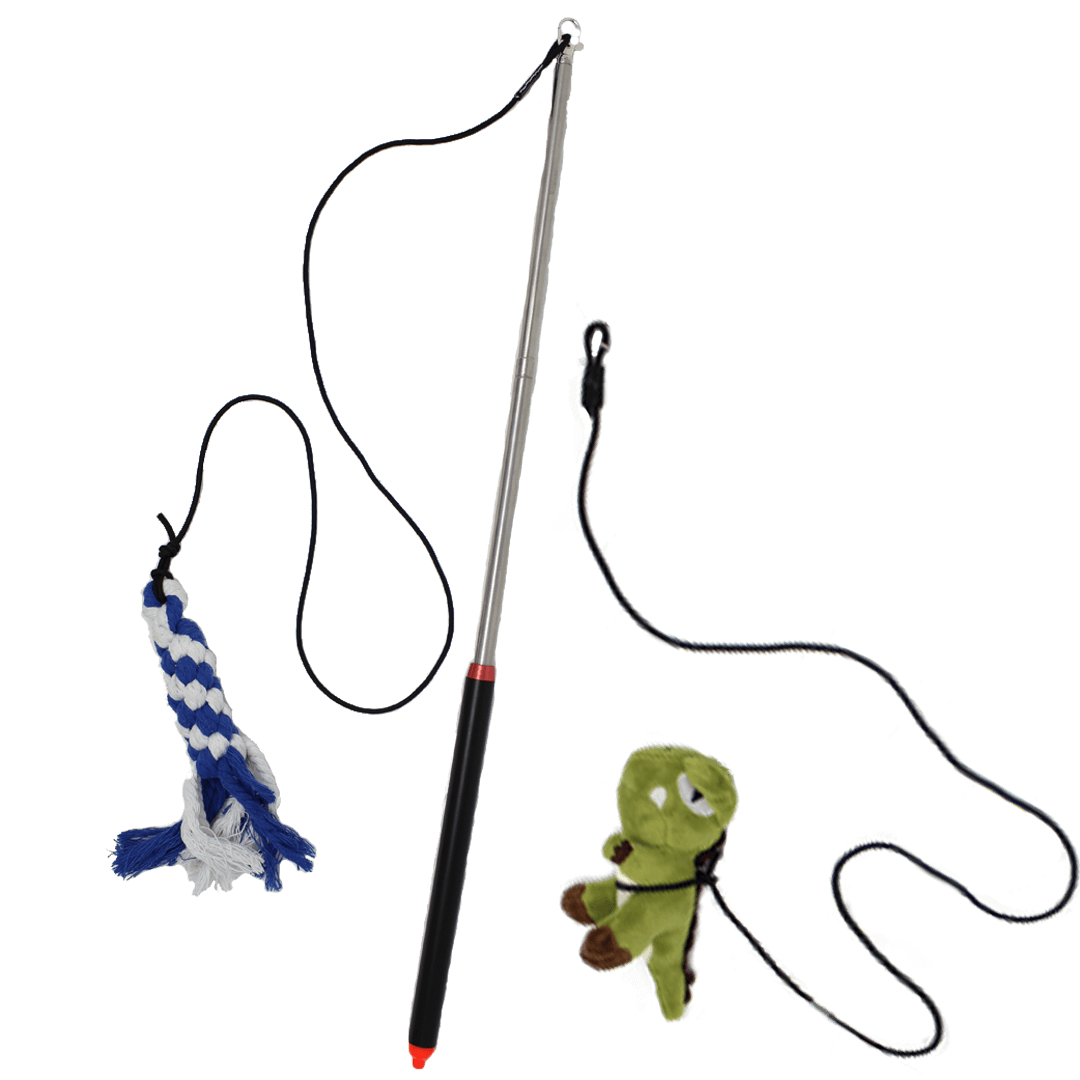
Another option is to teach your pup a structured game of fetch. Fetch is great because it exercises dogs both physically and mentally. Zak George lays out how to teach your dog to fetch in our free online training class, 30 Day Perfect Pup. You can sign up here.
Remember, many dogs can have been bred for hundreds of years to have high levels of energy. Be sure to give your pup an outlet with exercise to help stop that puppy biting!
TIP 2: ENGAGE IN A TRAINING SESSION TO STOP THE NIPPING
Puppies often nip and bite when they are bored or want to play. That is the perfect time to engage them mentally with a quick training session!
Not only does it deter them from biting, but it gives you an opportunity to reward them for positive behavior.
When your pup starts biting, grab some high-value treats (you’ll always want to keep some nearby during this stage of puppy life) and get to training! Typically you’ll want to work on a behavior that they are somewhat familiar with. For example, get them into a sit or lay down and then do a 5-10 second “stay”.
This 5-10 second “stay” can help your puppy calm down (even if at least momentarily) and then you’ve got the chance to create a positive experience with rewards and treats. In many situations, you’ll be best served to carry on with more skills and tricks and possibly train for a good 10-15 minutes.
A great behavior to keep practicing during these impromptu training sessions is ‘leave it’.
TIP 3: TEACH LEAVE IT
Teaching your dog ‘leave it’ is a powerful technique to get your dog to stop biting you. In its simplest form, the leave it behavior is all about restraint.
A dog that can restrain from lunging and grabbing a treat on the ground, is much more likely to be able to leave your hand alone when you ask. If you haven’t yet taught your pup the behavior ‘leave it’, I would go right now and sign up for our free online dog training class, 30 Day Perfect Pup. Sign up for free (yes, it’s 100% free) here.
In the meantime, I’ll give you a pretty quick breakdown of ‘leave it’.
HOW TO TEACH A DOG TO LEAVE IT

Step 1: Attract your pup’s attention by doing a simple sit and rewarding them with a treat or two.
Step 2: Show your pup a treat and then close your hand so your pup cannot access it. Your pup will likely try to get to the treat by licking, biting (hopefully not), or pawing at your hand where the treat is. When this happens, give a simple “no” (you don’t need to yell or be mean about it).
Once your pup shows restraint or stops attempting to get the treat, give a quick “yes” and then reward with a different treat.
Step 3: Practice that behavior multiple times until your pup starts to generalize the concept. Once that happens, then you can introduce the cue word “leave it”. It’s best to introduce the word as your pup is in the motion.
So for example, when you close your hand around the treat and your pup diverts their attention away from the treat, say “leave it” immediately. Follow that with a “yes” or “good” and reward with another treat.
Step 4: The next step up in difficulty would be to leave the treat visible in your hand and work on them doing a ‘leave it’. The next step after that would be to try putting a treat on the ground and telling your pup to leave it. If they lunge, just block the treat with your hand and give a simple “no”.
Once your pup restrains, give a “yes” and reward with a different treat.
Step 5: Practice, practice, and then keep practicing. Practice having your pup ‘leave it’ with slippers, toys, socks, treats, and just about anything else! The idea is to help your pup understand that ‘leave it’ means something should not be touched, no matter what.
Related Reading: Why Does My Dog Steal Socks & Shoes
As you can likely see, teaching your pup a really solid ‘leave it’ will help them quit the puppy biting. If your pup starts biting into your skin, give the leave it command, and reward when they stop. Practice makes perfect!
TIP 4: TEACH YOUR PUP ‘YES’ AND ‘NO’
One important aspect of ‘leave it’ is helping your pup understand the difference between yes and no. Through training other behaviors, you can further reinforce ‘yes’ and ‘no’ to your pup.
For example, as you teach your pup the sit behavior you can help them understand yes and no. If your pup sits, you reward with a “yes” and a treat. If they continue to walk around or jump (hopefully not), you can give a “no” and work to lure them into a sit. Once they get the sit, say “yes” and reward with a treat.
Over time (trust me, it takes time), your pup will better start to understand the difference between yes and no. That understanding will translate into being able to tell your pup “no” as they start to bite onto your hand!
TIP 5: DON'T GET FRUSTRATED WHEN YOUR PUPPY BITES YOU
Before hating me for telling you not to get frustrated, just know that I’ve been where you are.
My wife and I raised two Yellow Labs that are about 7 months apart. And they were the first puppies we had raised as adults. So please, trust me when I tell you that getting frustrated will only make things worse.
This doesn’t mean that you won’t have frustrating moments, but do your absolute best to leave that frustration out of your interaction with your pup. And especially, don’t allow training sessions to become frustrating.
When you are frustrated, your pup likely is as well. And when puppies are frustrated, they won't learn!
So, if you find a certain puppy behavior (like biting) or situation starting to overwhelm you… take a timeout. Let your pup cool down in their crate or sleep area and give yourself a few minutes to regroup. Guess what. It’s okay to get overwhelmed and emotional when dealing with puppy biting. So, do what you need to do for a personal break, and then recommit and get back at it!
The main idea is this, do your absolute 100% best to avoid becoming visibly frustrated around your pup. They have a keen sense of noticing our emotions. When frustration creeps in, learning stops for both human and dog.
TIP 6: TEACH TUG OF WAR TO STOP PUPPY BITING
Tug of war isn’t just a game you play in 3rd grade P.E. In fact, it’s a game that can quickly help eliminate puppy biting through redirection!
Redirecting to a game of tug of war can help teach your pup what is okay and not okay to chew on. As we mentioned before, puppies explore the world with their mouth, that is totally normal! So, it’s important for us pup parents to help them latch onto things that are okay to be latched onto.
If you are in the process of overcoming puppy biting, consider always having chew toys/tug toys nearby! Many pup parents have found it best to approach your pup with the toy in hand so you can be ready if the hand chomping starts happening.
If your puppy starts biting you, give a quick “no” and replace yourself with the tug toy/chew toy. Once your pup engages the toy, say “yes” and give additional praise.
Teaching your dog tug can be a great way to stop puppy biting. Just remember, these behaviors can take significant practice and time to overcome.
TIP 7: REMEMBER TO REWARD THE POSITIVE MOMENTS
Remember that teacher you had growing up who only ever got mad at students’ mistakes and never praised their successes. You probably forgot that teacher’s name because you hated them so much… ;)
As a puppy parent, you can often get caught up in only saying “no” and trying to correct bad behaviors. The thing is when you step back and consider your puppy’s behaviors you’ll notice they’re actually doing some really positive things.
The question is, are you rewarding those positive behaviors and moments as you should be?
If you are going through the process of overcoming puppy biting, you need to remember to praise the successful moments. When your pup comes up to you and lets you pet them without getting nippy, praise and reward them! Maybe you will see your puppy chewing a toy instead of your slippers or hand, reward them! If your puppy licks your hand instead of biting it, reward them!

A huge part, and often underlooked, of training a puppy is to praise their successes. Treat each victory as a party and break out the fun, treats, and praise. Your job as a pup parent is to teach your dog what you want them to do. How can they know if you don’t let them know when it’s happening?
Remember, praise your pup’s successes so they know what exactly it is you want them to do.
PS- If you're looking for a high-value reward treat for your pup, we've got your back! Check out our training treats here.
TIP 8: STOP PUPPY BITING WITH A SMALL TIMEOUT
In conjunction with your pup understanding “no”, it can be beneficial to implement simple timeouts. By timeout, I don’t mean you are giving a serious punishment or scolding, rather a break away from what the pup desires.
Of course, you praise the positive moments but at times, you have to take away what your pup is desiring. In the instance of biting, pups are looking for playtime and engagement with us humans. So, if they can’t handle it properly, take yourself away from the situation.
Leave the room, put them in another room, or put them into a playpen for 5-10 minutes.
Implementing this method consistently will help your pup come to understand that when biting starts, playtime stops.
A note on this, in most cases it is best to not use the crate as a negative reinforcer like a timeout. Your pup’s crate should be something they only equate with positive moments and situations.
TIP 9: DON'T MAKE YOURSELF ENTICING
Sometimes without knowing it, you may be making yourself more enticing to be bitten by your pup. Of course, I’m not saying your puppy biting you is your fault, just that you can do things personally to make yourself less enticing to be bitten.
For example, when your pup starts nibbling, do your best to not jerk your hand away quickly. Most dogs love things that are moving! So if you jerk your hand or foot away, your pup may think you are trying to be playful.
If your pup starts biting, let your hand go limp. Then implement some of the other techniques we’ve chatted about in this article like redirection to chew toys or training.
Another way to make your skin a little less enticing is to keep them covered when possible. Wait a minute… hear me out before you get upset and start thinking that this isn’t a tip to “stop” puppy biting.
Being a successful pup parent oftentimes comes down to how well you can set your pup up for success. If you are always leaving out things on the ground that you don’t want your 4-month-old puppy to chew on, whose fault is that?
So if you know your pup is going through an extreme biting phase, consider keeping that skin covered when at home. It can be wearing socks, long sleeves and pants, and other things like that! When the puppy biting phase is at its worst, every little bit of help is important! :)
Don't miss out! Sign up for a 100% free online dog training course, 30 Day Perfect Pup with Zak George. Get access to videos & daily tips covering biting, leash walking, potty training and more! Sign up for free here! 🐶
TIP 10: ADEQUATE SOCIALIZATION WITH OTHER DOGS
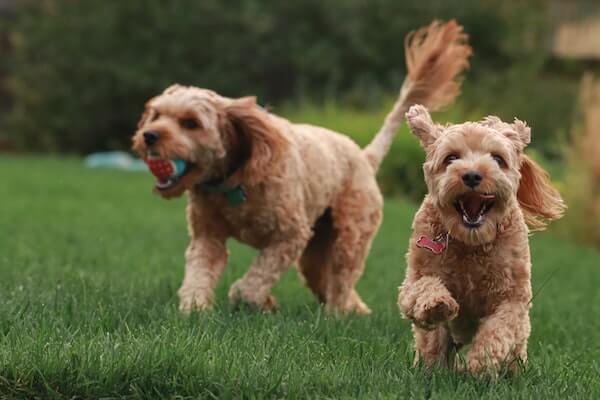
Some of the best teachers for a puppy can be other dogs. Dogs are obviously very skilled at helping each other learn what is okay for play, and what is too aggressive.
One quick note on socializing your puppy is that you should always be there to monitor them! Be active and aware and be ready to intervene if the play gets out of hand or aggressive. Some dogs have lower levels of patience with puppy biting, so be aware of how the other dogs are responding.
As your puppy plays with other dogs, they’ll quickly learn what levels of biting and nipping are tolerable to other dogs. Many pup parents find that the more they can correctly socialize their puppy, the milder the puppy biting will become.
TIP 11: TEACH AN ALTERNATIVE BEHAVIOR LIKE "LICK" OR "KISSES"
Teaching an alternative behavior is a powerful way to get your puppy to stop biting. If you can effectively teach them a behavior that they can only do without biting then you'll be much closer to no biting!
While there are plenty of alternative biting behaviors you can teach, here are some favorites:
- Teach "kisses" or "lick"
- Focusing on long-duration "stays" to help your pup reset
- Teach your puppy the place behavior
- Tug of war (as mentioned above)
There are many alternative behaviors you can teach! The key is for the behavior to be something your pup can only do without biting!
BONUS TIP: GIVE YOUR PUP SOMETHING HEALTHY TO CHEW ON
Chews won't solve all your biting and nipping problems, but they sure can help!
The right chew will help your pup burn off some energy and fill their need to nibble.
There are many suitable options out there, but we're personally biased towards Yak Cheese Dog Chews, Bully Sticks, and Beef Tendon Chews (these are a personal favorite for puppies)!
Oh, that's right... we offer those right here on the Pupford site.
Shop dog chews, part of our Engage Line here.
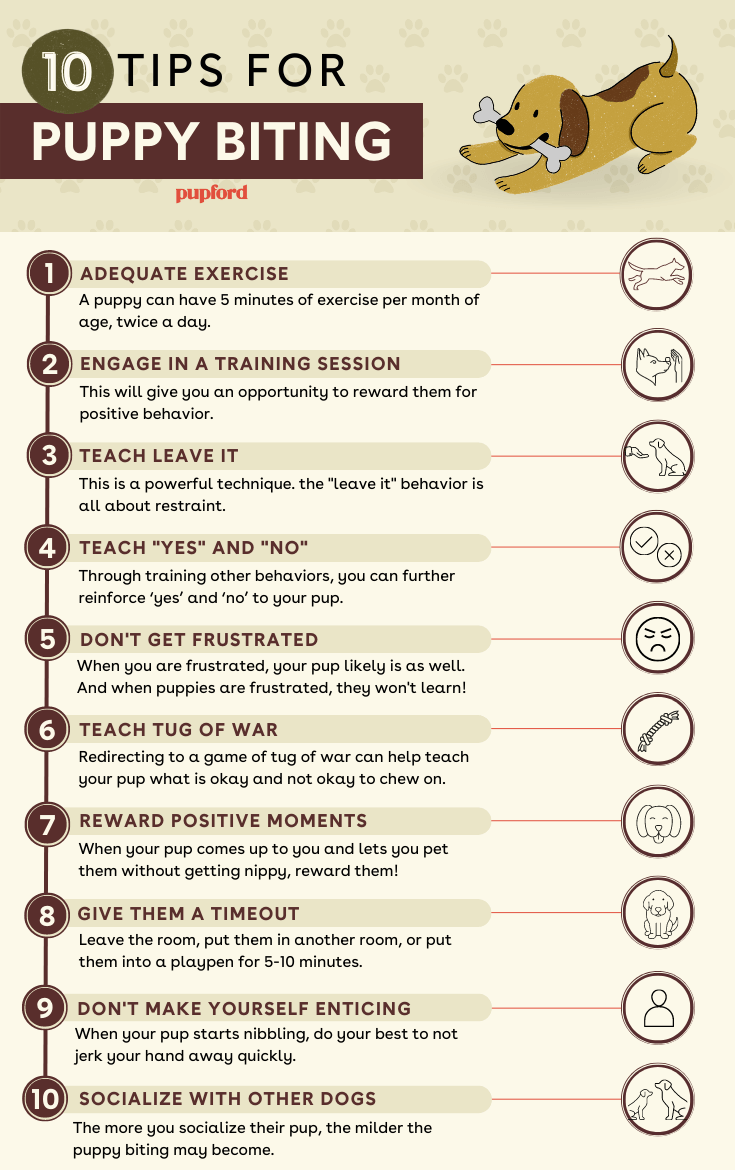
HOW TO STOP A PUPPY FROM BITING RECAP
Above all, remember to stay patient with yourself and your pup. Although it may seem like their progress is slow (or non-existent), any progress is good progress!
As you work on stopping puppy biting, stay consistent. When inconsistency creeps in, your pup will likely get confused. And we all know, confusion does not equate to progress!
If you need a little extra motivation, encouragement, and tips be sure to sign up for our free online training class 30 Day Perfect Pup, led by Zak George, it comes complete with a downloadable ebook, daily tips, and guided videos. It even covers biting more in-depth!
Not only that but part of the class is gaining exclusive access to a private Facebook community. It can be a powerful resource to find unique content, live Q&A’s, and so much more.
Again, it’s 100% free. Go ahead and sign up for the free course here.
PS- If you're dealing specifically with your puppy biting the leash head here!


