


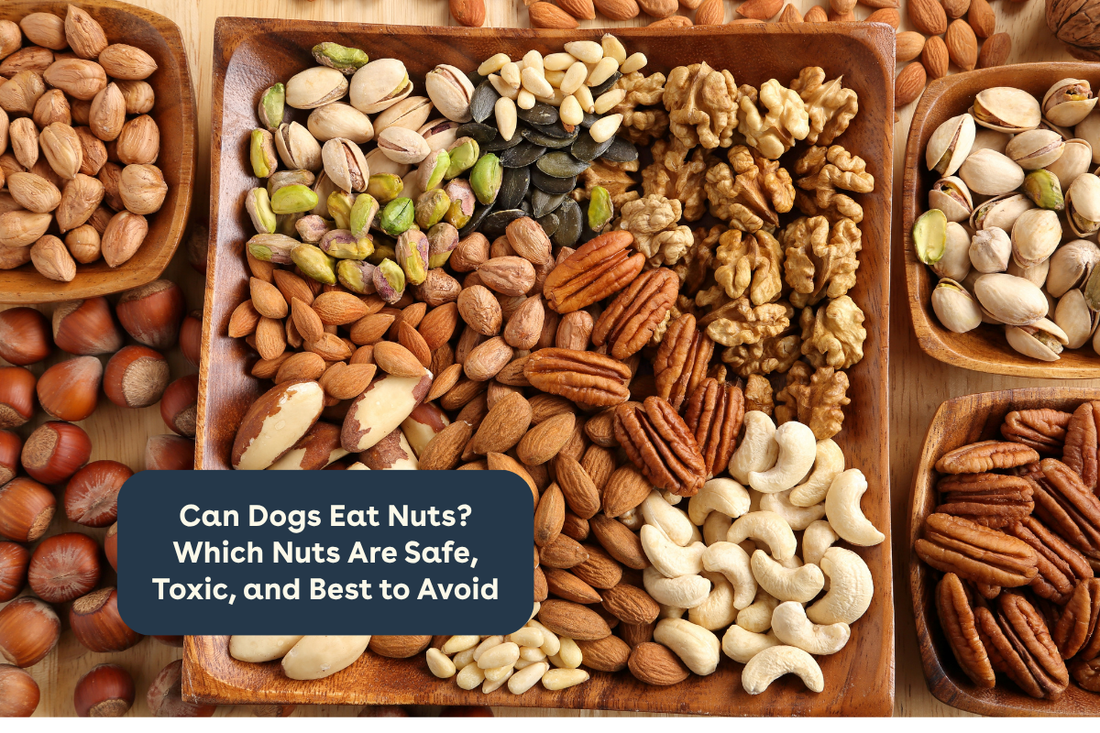
Nuts are a healthy snack for many people, packed with protein, healthy fats, vitamins, and minerals. But does that mean they're good for your dog, too?
The short answer is not really.
While a few types of nuts are technically safe for dogs in small amounts, others can be toxic, and nearly all nuts come with risks like choking, digestive upset, and pancreatitis. In most cases, there are much better treat options for your pup.
Here's everything you need to know about dogs and nuts.
Are Nuts Safe for Dogs?

Some nuts are non-toxic, but that doesn't automatically make them a good treat.
Most nuts are:
- High in fat
- High in calories
- Difficult for dogs to digest
- Potential choking hazards
- Capable of causing intestinal blockages
- Often coated with salt, spices, chocolate, or sweeteners that are unsafe for dogs
Because of these risks, veterinarians generally recommend choosing treats made specifically for dogs instead of sharing nuts from your snack bowl.
Why Are Nuts Risky for Dogs?
Even "safe" nuts can cause problems.
High Fat Content
Nuts contain a lot of fat. Eating too much fat at once can upset your dog's stomach and, in some dogs, trigger pancreatitis, a painful inflammation of the pancreas.
Signs of pancreatitis include:
- Vomiting
- Diarrhea
- Loss of appetite
- Abdominal pain
- Lethargy
Dogs with a history of pancreatitis or breeds predisposed to the condition should avoid fatty foods like nuts altogether.
Choking and Blockages
Whole nuts are hard, slippery, and difficult to chew. Small dogs are especially at risk of choking, while larger dogs may swallow nuts whole, increasing the chance of an intestinal obstruction.
Added Ingredients
Many packaged nuts contain ingredients that are unsafe for dogs, including:
- Salt
- Garlic or onion seasoning
- Chocolate
- Artificial sweeteners like xylitol
- Spicy coatings
These ingredients can be far more dangerous than the nuts themselves.
❤️Top 5 Most Toxic Foods for Dogs (That Every Dog Owner Should Know) | Pupford
Can Dogs Eat Different Types of Nuts?

Here's a breakdown of the most common nuts.
Peanuts
✅ Generally Safe (In Moderation)
Despite the name, peanuts are actually legumes, not true nuts.
Unsalted, dry-roasted or raw peanuts are generally safe for healthy dogs in small amounts.
Avoid:
- Salted peanuts
- Honey roasted peanuts
- Chocolate-covered peanuts
- Peanut shells
What About Peanut Butter?
Plain peanut butter can be a great occasional treat or a way to hide medication.
Always check the ingredient list for xylitol (sometimes listed as birch sugar), which is extremely toxic to dogs.
🥜Shop our favorite Peanut Butter Treats!
Cashews
✅ Safe in Small Quantities
Plain, unsalted cashews are not toxic to dogs.
However, they're high in fat, so only offer one or two occasionally, not as a regular snack.
Almonds
⚠️ Best Avoided
Almonds aren't considered highly toxic, but they aren't a good choice for dogs.
Risks include:
- Choking
- Digestive upset
- Intestinal blockage
- High fat content
Even a few almonds may cause vomiting or diarrhea in sensitive dogs.
Pistachios
⚠️ Best Avoided
Pistachios aren't toxic, but they present several concerns:
- Hard shells can cause choking.
- High fat may contribute to pancreatitis.
- Moldy pistachios may contain harmful toxins.
If your dog accidentally eats one plain pistachio, it's usually not an emergency, but they shouldn't be offered intentionally.
Walnuts
⚠️ Avoid
Walnuts deserve extra caution.
English walnuts aren't considered highly toxic, but they're still high in fat and may cause digestive upset.
Black walnuts are much more concerning and can cause neurological symptoms including:
- Weakness
- Tremors
- Vomiting
- Fever
- Seizures
Additionally, mold growing on walnuts can produce dangerous toxins that affect a dog's nervous system.
Pecans
⚠️ Best Avoided
Pecans are difficult to digest and very high in fat.
They may also contain:
- Mold toxins (mycotoxins)
- Naturally occurring compounds like juglone that can contribute to digestive issues
Dogs that eat pecans may develop vomiting, diarrhea, tremors, or pancreatitis.
Macadamia Nuts
❌ Toxic
Macadamia nuts are one of the few nuts that are clearly toxic to dogs.
Even a small amount can cause:
- Weakness
- Vomiting
- Tremors
- Difficulty walking
- Fever
- Depression
Symptoms usually begin within 12 hours of ingestion.
If your dog eats macadamia nuts, contact your veterinarian immediately.
Hazelnuts
⚠️ Best Avoided
Hazelnuts are not considered toxic, but they're round, hard, and easy for dogs to swallow whole.
This makes them a choking hazard and possible cause of intestinal blockage, especially in small breeds.
Brazil Nuts
⚠️ Best Avoided
Brazil nuts aren't known to be toxic, but they're among the fattiest nuts available.
Because of their size and fat content, they're more likely to cause stomach upset or pancreatitis than provide any nutritional benefit.
Pine Nuts
⚠️ Occasionally Safe
Pine nuts are not toxic, but they're still high in fat and calories.
If your dog accidentally eats a few, they're unlikely to have problems, but they shouldn't become a regular treat.
Acorns
❌ Toxic
Although technically not the type of nut we snack on, acorns deserve a mention.
Acorns contain tannins that can make dogs sick and may lead to:
- Vomiting
- Diarrhea
- Kidney damage
- Intestinal blockage
If your dog eats acorns, especially several of them, contact your veterinarian.
Speaking of acorns…How to Get My Dog to Stop Chasing Squirrels | Pupford
Nut Safety Chart
|
Nut |
Safe? |
Notes |
|
Peanuts |
✅ Yes |
Plain, unsalted only |
|
Peanut Butter |
✅ Yes |
Must not contain xylitol |
|
Cashews |
✅ Occasionally |
High fat |
|
Almonds |
⚠️ Best avoided |
Choking and digestive risks |
|
Pistachios |
⚠️ Best avoided |
Shells and fat content |
|
Walnuts |
⚠️ Avoid |
Mold risk; black walnuts are toxic |
|
Pecans |
⚠️ Avoid |
Mold, fat, digestive issues |
|
Hazelnuts |
⚠️ Avoid |
Choking hazard |
|
Brazil Nuts |
⚠️ Avoid |
Extremely high fat |
|
Pine Nuts |
⚠️ Occasionally |
Small amounts only |
|
Macadamia Nuts |
❌ Toxic |
Veterinary emergency |
|
Acorns |
❌ Toxic |
Can damage kidneys |
What Should You Do If Your Dog Eats Nuts?

The answer depends on:
- The type of nut
- How many were eaten
- Whether they were salted or seasoned
- Your dog's size
Call your veterinarian promptly if your dog:
- Eats macadamia nuts
- Eats black walnuts
- Consumes moldy nuts
- Eats a large quantity of any nuts
- Begins vomiting, trembling, acting weak, or having difficulty walking after eating nuts
For a single plain peanut or cashew, simply monitor your dog for stomach upset unless your veterinarian advises otherwise.
Better Alternatives to Nuts
If you're looking for healthy rewards, there are much better choices than nuts.
Consider offering:
- Bite-sized training treats
- Freeze-dried meat treats
- Carrots
- Green beans
- Blueberries
- Apple slices (without seeds)
These options are lower in fat and generally easier for dogs to digest.
Frequently Asked Questions

Can dogs eat mixed nuts?
No. Mixed nuts often contain macadamia nuts, heavily salted varieties, spicy seasonings, or chocolate coatings that can be dangerous for dogs.
Can dogs eat nut shells?
No. Nut shells are difficult to digest and can cause choking or intestinal blockages.
Can puppies eat nuts?
It's best to avoid nuts for puppies. Their smaller size increases the risk of choking and digestive problems.
Can dogs be allergic to nuts?
Although uncommon, dogs can develop food allergies or sensitivities. If your dog experiences vomiting, diarrhea, itching, or swelling after eating a new food, contact your veterinarian.
Recap: Can Dogs Eat Nuts?
While a handful of nuts, like plain peanuts and cashews, are technically safe in moderation, most nuts aren't ideal for dogs. Their high fat content, choking hazards, potential for mold contamination, and risk of toxic ingredients outweigh any nutritional benefits.
When in doubt, skip the nuts and reach for treats made specifically for dogs. Your pup will still be excited for the reward, and you'll have peace of mind knowing it's a safer choice.
For any concerns about accidental nut ingestion, especially macadamia nuts, black walnuts, or large quantities of fatty nuts, contact your veterinarian right away.


