


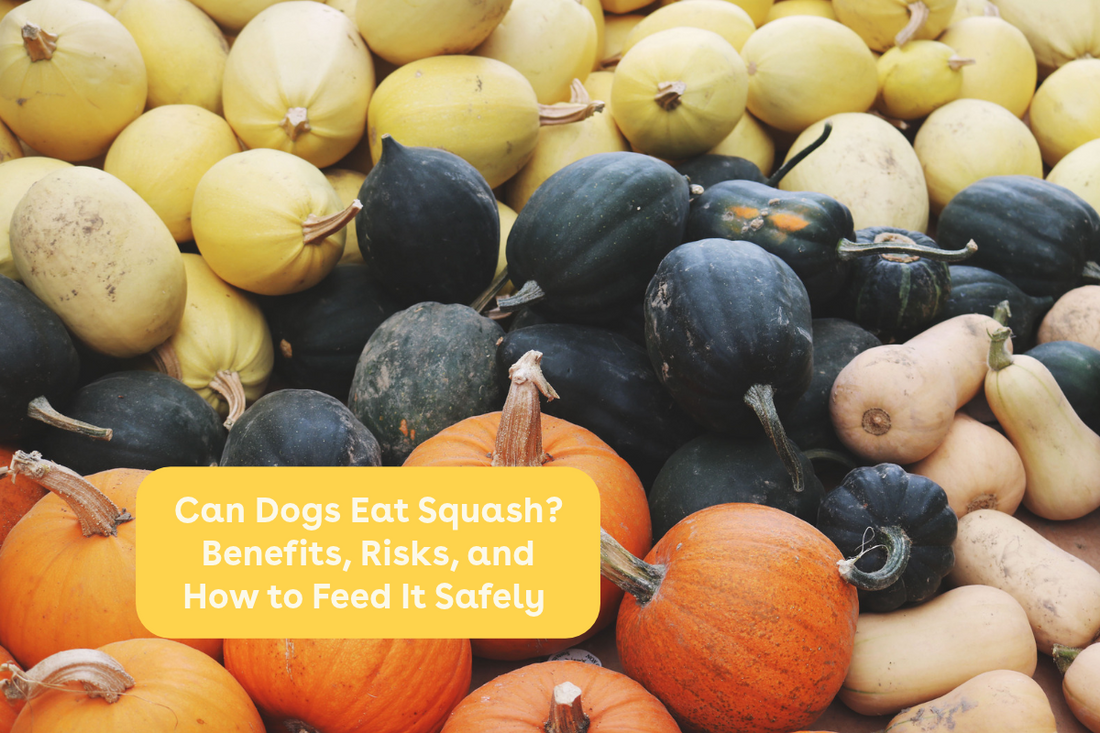
From pumpkin patches to cozy fall dinners, squash is a staple ingredient many families enjoy throughout the year. And if your pup has a habit of following you around the kitchen, you may find yourself wondering if they can safely share a bite.
While some human foods make great occasional treats for dogs, others can cause digestive issues or may even be unsafe. Knowing which foods are dog-friendly can help you make better choices when adding variety to your pup’s diet.
So, where does squash fall on the list? Let’s take a closer look at whether dogs can eat squash, the potential health benefits, how to prepare it safely, and what squash-based foods to avoid.
Can Dogs Eat Squash?

Yes, dogs can eat squash!
Many types of squash are safe for dogs when prepared properly. Plain, cooked squash can be a healthy occasional treat or food topper thanks to its fiber, vitamins, minerals, and naturally low calorie content. However, not all squash dishes are safe for dogs. Squash prepared with ingredients like butter, garlic, onions, salt, sugar, or heavy seasonings can be harmful to your pup.
❌Top 5 Most Toxic Foods for Dogs (That Every Dog Owner Should Know) | – Pupford
So before sharing a bite of your favorite fall squash recipe, let's take a look at which types of squash dogs can eat, the benefits of squash for dogs, and how to serve it safely.
Is Squash Safe for Dogs?
Yes, most common varieties of squash are safe for dogs when served plain and prepared correctly.
Some dog-safe squash varieties include:
- Butternut squash
- Pumpkin
- Zucchini
- Yellow squash
- Acorn squash
- Spaghetti squash
The safest way to serve squash is cooked, unseasoned, and with the seeds and tough outer rind removed.
Remember, squash should be considered an occasional treat or topper, not a replacement for your dog's complete and balanced diet.
Health Benefits of Squash for Dogs

Squash isn't just a tasty snack for dogs, it can also provide some nutritional benefits when included as part of a balanced diet.
While your dog should get most of their nutrition from a complete and balanced dog food, small amounts of squash can add extra variety and beneficial nutrients to their meals.
Supports Healthy Digestion
One of the biggest benefits of squash for dogs is its fiber content.
Fiber plays an important role in digestive health by helping support normal bowel movements and a healthy digestive system. This is why plain pumpkin, which is a type of squash, is often used as a food topper for dogs with mild digestive upset.
However, too much fiber can cause digestive issues like gas or loose stool, so it's important to introduce squash slowly and feed it in moderation.
🎃Benefits of Pumpkin for Dogs: Upset Stomach & Vomiting | Pupford
Provides Vitamins and Antioxidants
Squash contains several nutrients that support your dog's overall health, including:
- Vitamin A: Supports normal vision, immune function, and cell growth.
- Vitamin C: Provides antioxidant support and helps protect cells from damage.
- Beta-carotene: A naturally occurring antioxidant found in many orange-colored squash varieties.
- Potassium: Supports normal muscle and nerve function.
A Low-Calorie Treat Option
Squash is naturally low in fat and calories, making it a great option for pet parents looking for a lighter treat or meal topper.
Its fiber content can also help add volume to meals, which may help some dogs feel more satisfied after eating.
Adds Variety to Your Dog's Diet
Many dogs enjoy new flavors and textures, and adding safe whole-food ingredients can provide extra enrichment during mealtime.
A small amount of plain squash mixed into your dog's regular food can be an easy way to add variety while still keeping their primary nutrition source consistent.
What Types of Squash Can Dogs Eat?
Can Dogs Eat Butternut Squash?
Yes! Butternut squash is one of the most popular squash varieties for dogs.
When cooked and served plain, butternut squash provides fiber, vitamins, and antioxidants. Remove the skin and seeds before offering it to your pup.
Can Dogs Eat Pumpkin?
Yes, dogs can eat plain pumpkin.
Pumpkin is one of the most commonly shared squash varieties for dogs. However, make sure you are feeding plain pumpkin puree and not pumpkin pie filling.
Pumpkin pie filling often contains added sugar, spices, or ingredients that are unsafe for dogs.
Check out our Pumpkin Training Treats! They are a favorite in my house 🙂
Can Dogs Eat Zucchini?
Yes, zucchini is safe for dogs when served in moderation.
Zucchini is a type of summer squash that is naturally low in calories and provides fiber and nutrients. It can be served raw or cooked, although cooked zucchini may be easier for some dogs to digest.
Can Dogs Eat Spaghetti Squash?
Yes, dogs can eat spaghetti squash.
Make sure it is cooked, cooled, and served without the skin or seeds. Cut it into smaller pieces or mash it before offering it to your dog.
Can Dogs Eat Yellow Squash?
Yes, plain yellow squash is safe for most dogs.
Like zucchini, yellow squash is a low-calorie vegetable that can be served as an occasional treat.
Can Dogs Eat Raw Squash?

Some softer squash varieties, like zucchini, can be eaten raw in small amounts.
However, most dogs will have an easier time digesting squash when it is cooked. Harder varieties like butternut, acorn, and spaghetti squash should be cooked before serving.
Cooking softens the squash, making it easier for your dog to chew and digest.
Can Dogs Eat Squash Skin?
It's best to remove squash skin before feeding it to your dog.
The outer rind of many squash varieties can be tough and difficult to digest. It may also create a choking hazard, especially for smaller dogs.
When preparing squash for your pup, remove the skin, seeds, and tough inner parts before serving.
Can Dogs Eat Squash Seeds?
No, it's best to remove squash seeds before feeding squash to your dog.
Seeds can be difficult to digest and may pose a choking hazard. Always scoop out seeds and discard them before preparing squash for your pup.
How to Prepare Squash for Dogs

The best way to prepare squash for dogs is to keep it simple.
Follow these steps:
- Wash the squash thoroughly.
- Remove the skin, seeds, and tough inner pieces.
- Cook until soft by steaming, baking, or roasting.
- Avoid adding butter, salt, garlic, onions, sugar, or seasonings.
- Cut into small pieces or mash before serving.
Plain cooked squash can be served on its own, mixed into your dog's regular food, or used as an occasional enrichment ingredient.
How Much Squash Can Dogs Eat?
Squash should only make up a small portion of your dog's daily calories.
When introducing squash for the first time, start with a small amount and monitor your dog for any signs of digestive upset.
A general guideline:
- Small dogs: 1–2 teaspoons
- Medium dogs: 1–2 tablespoons
- Large dogs: 2–4 tablespoons
Every dog is different, so your dog's size, activity level, diet, and health history should always be considered.
Can Puppies Eat Squash?
Yes, puppies can eat small amounts of plain cooked squash.
However, puppies have specific nutritional needs as they grow, so squash should only be an occasional treat, not a replacement for a complete puppy diet.
When introducing any new food, start slowly and watch for signs of stomach upset.
Can Dogs Eat Squash Every Day?
While squash can be a healthy addition to your dog's routine, it shouldn't become a major part of their diet.
Dogs need balanced nutrition from a complete dog food that provides the right amounts of protein, fats, vitamins, and minerals.
If you want to add more whole-food nutrition to your dog's bowl, Pupford Good Dog Food combines real meat, organs, fruits, vegetables, and superfoods in a complete and balanced recipe.
Squash can be a fun topper or occasional treat alongside a nutritious everyday diet.
Risks of Feeding Squash to Dogs

Although squash is generally safe for dogs, there are a few things to keep in mind.
Too Much Squash
Feeding too much squash may lead to:
- Gas - are you the victim of a gassy pup? 👉Living With a Gassy Dog: A Guide to Reducing Canine Flatulence | Pupford
- Loose stool
- Stomach discomfort
Introduce squash slowly and keep portions small.
Seasoned Squash
Never feed your dog squash prepared with ingredients like:
- Garlic
- Onion
- Butter
- Excess salt
- Sugar
- Artificial sweeteners
These ingredients can be dangerous for dogs.
Squash-Based Desserts
Avoid sharing foods like:
- Pumpkin pie
- Sweet squash casseroles
- Squash bread
- Flavored squash soups
These recipes often contain added ingredients that aren't safe for dogs.
Recap: Can Dogs Eat Squash?
Yes, dogs can eat squash!
Plain, cooked squash can be a healthy occasional treat that provides fiber, vitamins, antioxidants, and variety to your dog's diet.
The safest way to serve squash is simple: remove the skin and seeds, cook it until soft, and avoid any added seasonings or ingredients.
Whether you're sharing a little butternut squash, zucchini, pumpkin, or another dog-safe variety, moderation is key. When prepared properly, squash can be a tasty way to add a little extra nutrition to your pup's bowl.
🦃15+ Foods Dogs Can (& Can't) Eat on Thanksgiving + Dog Thanksgiving Meals – Pupford


