


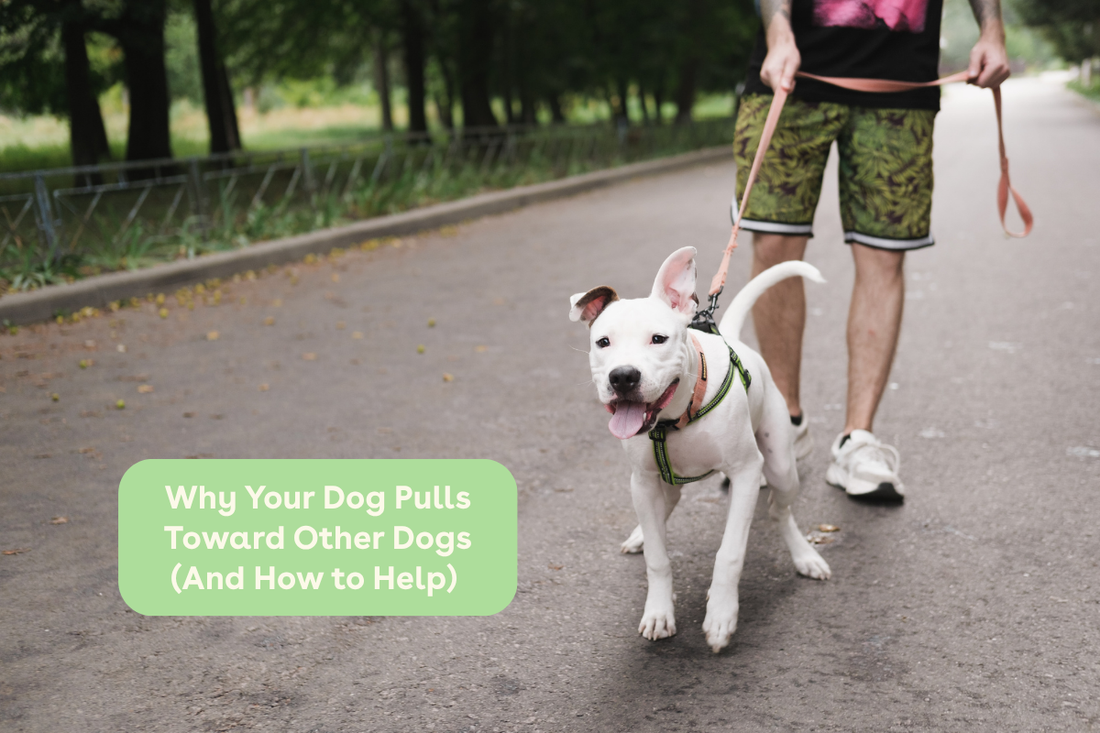
If every walk turns into a tug-of-war the moment another dog appears, you're not alone. Pulling toward other dogs is one of the most common leash challenges pup parents face.
The good news? Your dog probably isn't trying to be "dominant" or intentionally ignoring you. Pulling is simply your dog's way of trying to reach something they find exciting, interesting, or even concerning.
Understanding why your dog pulls is the first step toward changing the behavior. Once you know what's motivating them, you can use positive reinforcement training to teach calmer, more enjoyable walks.
Why Dogs Pull Toward Other Dogs

Dogs pull for many different reasons. While the behavior may look the same, the motivation behind it can vary significantly.
They Want to Say Hello
This is by far the most common reason.
Dogs are naturally social animals. If your dog enjoys meeting other dogs, they may rush forward every time they spot one.
Unfortunately, if your dog reaches another dog after pulling, they've just learned that pulling works.
Behavior that gets rewarded tends to happen more often.
They're Excited
Some dogs simply become overstimulated when another dog appears.
Their heart rate increases, adrenaline kicks in, and suddenly they're too excited to think clearly.
This excitement can make it difficult for them to respond to cues they normally know well.
They're Frustrated
Leashes prevent dogs from moving freely.
If your dog wants to investigate another dog but can't reach them, frustration can build quickly.
This is called barrier frustration or leash frustration, and it often results in:
- Lunging
- Barking
- Whining
- Pulling harder
- Jumping
These dogs aren't necessarily aggressive, they're frustrated by being restrained.
They're Nervous or Reactive
Not every dog pulling toward another dog wants to make friends.
Some dogs pull because they feel anxious and want to increase distance or because they have learned to bark and lunge to make other dogs go away.
Signs your dog may be reacting out of fear include:
- Stiff body posture
- Hard staring
- Barking or growling
- Raised hackles
- Closed mouth
- Difficulty disengaging
If this sounds familiar, your dog may benefit from a structured reactivity training plan.
👉How to Know if Your Dog is Reactive | Pupford
Why Pulling Gets Worse Over Time

Pulling is often unintentionally reinforced.
Here's a common example:
- Your dog sees another dog.
- They pull on the leash.
- Eventually, they reach the other dog.
From your dog's perspective:
"Pulling got me where I wanted to go!"
Every successful pull makes the behavior stronger.
Even if they only reach another dog occasionally, that unpredictable reward can make pulling even more persistent.
Should You Let Dogs Meet On Leash?
Many dog trainers recommend limiting on-leash greetings.
For some dogs, on-leash greetings can actually increase excitement, frustration, and leash pulling.
However, on-leash greetings can increase safety for dogs who are potentially dog selective.
Greetings, whether on leash or off, should be based on both dogs' comfortability.
Instead, focus on teaching your dog that seeing another dog is simply another part of the walk, not an automatic invitation to greet.
How to Teach Your Dog Not to Pull Toward Other Dogs

The goal isn't to stop your dog from noticing other dogs.
Instead, you want them to notice the dog, then choose to stay engaged with you.
1. Start Far Enough Away
Distance is your biggest training tool.
If your dog is already lunging, barking, or pulling hard, they're too close to learn.
Move far enough away that they can:
- Look at the other dog
- Stay relatively calm
- Eat treats
- Respond to their name
This is called staying under threshold.
Training becomes much easier when your dog can still think.
2. Reward Calm Observation
When your dog notices another dog but stays calm, immediately reward them.
You're teaching:
"Seeing dogs makes good things happen." (like treats)
Over time, your dog begins looking to you instead of charging forward.
Use high-value rewards like freeze-dried training treats, rather than their kibble.
3. Teach an Auto Check-In
Many dogs can learn to automatically look back at you after spotting another dog.
Here's how:
- Your dog notices another dog.
- Say their name to get them to look back at you.
- The moment they glance back at you, even briefly, mark the behavior ("Yes!") and reward.
Eventually, checking in becomes your dog's default response.
4. Practice the "Look at That" Game
The "Look at That" game helps dogs feel calmer around distractions.
The process is simple:
- Your dog looks at another dog.
- Mark the moment they look.
- Reward immediately.
You're not asking them to ignore the other dog.
Instead, you're changing how they feel about seeing dogs while building engagement with you.
5. Reinforce Loose Leash Walking Everywhere
Don't wait until another dog appears.
Practice loose leash walking during everyday walks when distractions are low.
Reward your dog for:
- Walking beside you
- Keeping slack in the leash
- Choosing to stay close
- Checking in voluntarily
These habits become much easier to use around distractions with enough repetition.
🐕Loose Leash Walking Training: 5 Tips to Stop Pulling | Pupford
Avoid These Common Mistakes

Letting Pulling Work
If possible, avoid allowing your dog to reach another dog by pulling.
Consistency helps your dog learn that loose leash walking, not pulling, is what earns access.
Using Leash Corrections
Jerking the leash or using punishment may temporarily interrupt pulling, but it doesn't teach your dog what to do instead.
For dogs who are fearful or reactive, punishment can actually increase negative emotions around other dogs.
Positive reinforcement creates more lasting behavior change while preserving your relationship with your dog.
🐶Are You Unknowingly Using Aversive Training Techniques? Pupford
Waiting Until They're Over Threshold
If your dog is barking, lunging, or ignoring treats, learning has largely stopped.
Increase distance first.
Then begin training again once they're calm enough to succeed.
Helpful Equipment
While training changes behavior, the right equipment can make walks safer and easier.
Look for:
- A well-fitting front-clip harness
- A standard 4–6 foot leash
- A treat pouch for quick rewards
- High-value training treats
Avoid equipment designed to cause pain or discomfort, as these tools don't address the underlying reason for pulling.
How Long Does It Take?
Every dog learns at a different pace.
Factors include:
- Age
- Previous experiences
- Consistency
- Environment
- Emotional response to other dogs
Many pup parents notice small improvements within a few weeks of consistent practice, while dogs with stronger leash frustration or reactivity may need several months of gradual training.
Progress is rarely perfectly linear, and that's completely normal.
When to Work with a Professional
Consider working with a qualified positive reinforcement trainer if your dog:
- Lunges aggressively toward other dogs
- Has bitten or attempted to bite
- Cannot recover after seeing another dog
- Shows intense fear
- Makes walks feel unsafe
Early intervention often leads to better outcomes.
Frequently Asked Questions

Why does my dog pull toward every dog we see?
Most often, it's because they want to greet the other dog, they're excited, or they've learned that pulling successfully gets them closer.
Should I let my dog greet other dogs on walks?
Not every dog needs to meet every dog. Limiting on-leash greetings often helps reduce pulling and frustration while creating calmer walks.
Will my dog eventually grow out of pulling?
Usually not. Because pulling is often rewarded by reaching interesting things, the behavior tends to become stronger without training.
What treats work best for leash training?
Choose small, high-value treats your dog loves, especially when practicing around distractions. Soft or freeze-dried meat treats are often excellent choices because they're easy to deliver quickly and highly motivating.
❤️Shop our full line of training treats!
Recap: Why Your Dog Pulls Toward Other Dogs
Pulling toward other dogs doesn't mean your dog is stubborn or trying to be in charge. More often, it's the result of excitement, frustration, curiosity, or uncertainty.
By identifying why your dog pulls and consistently rewarding the behaviors you'd like to see instead, you can help them develop better leash manners over time.
Remember, the goal isn't for your dog to ignore the world around them. It's to help them learn that staying connected with you is just as rewarding as chasing every distraction.


