


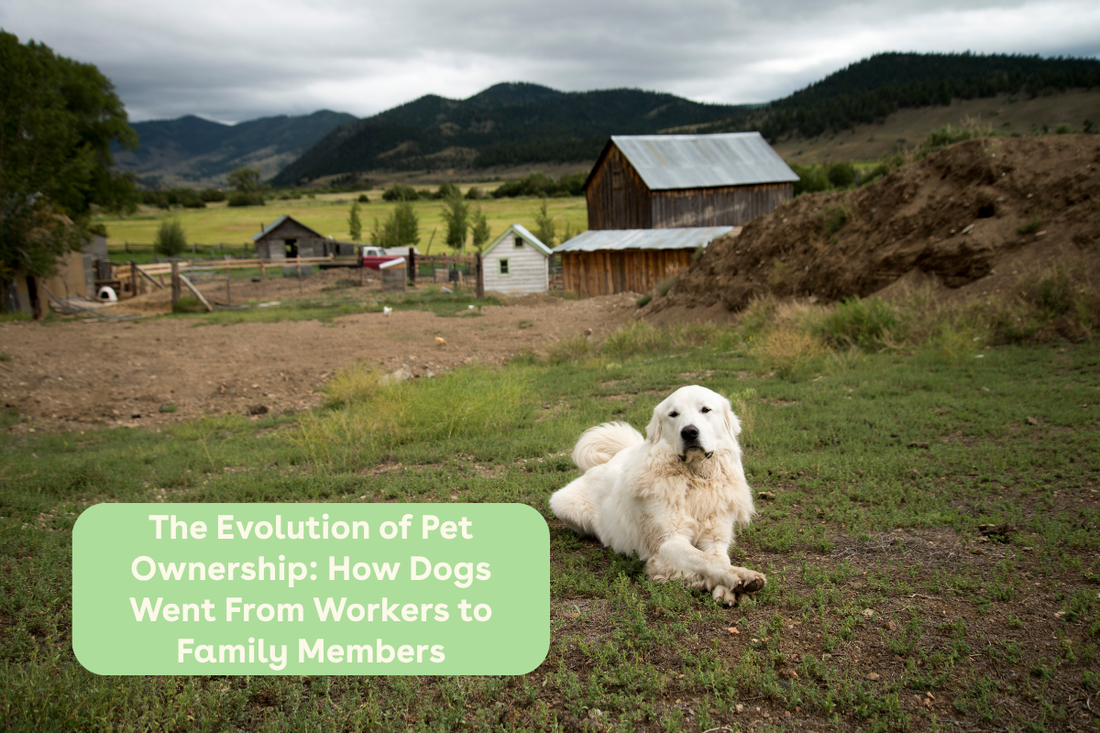
For thousands of years, dogs have stood beside humans.
They've hunted alongside us, guarded our homes, protected livestock, pulled sleds, carried supplies, and even helped cook meals. Today, however, most dogs have a very different job.
Instead of spending their days herding sheep or tracking game, many dogs spend their afternoons lounging on the couch, joining us on coffee runs, and sleeping at the foot of the bed.
It's one of the biggest lifestyle changes any domesticated animal has experienced.
But while our relationship with dogs has changed dramatically, their instincts haven't evolved nearly as quickly.
Understanding how dogs became our companions helps explain many of the behaviors we see today, and why training, enrichment, exercise, and nutrition are more important than ever.
A Timeline of Pet Ownership

Before 10,000 BCE: Partners in Survival
Long before agriculture, humans and wolves began forming a unique relationship. Scientists believe certain wolves started following human camps, scavenging leftover food while providing an early warning system against predators.
Over thousands of years, those wolves gradually became the first domesticated dogs.
These early dogs weren't pets in the modern sense, they were partners.
They helped:
- Track and hunt prey
- Guard camps
- Alert humans to danger
- Carry supplies
- Increase hunting success
Humans benefited from better survival, while dogs gained reliable food and protection. It was one of history's earliest mutually beneficial relationships.
🐶Debunking Alpha Dogs, Dominance, and Pack Leadership | Pupford
Ancient Civilizations (10,000 BCE–500 CE): Dogs Earn Their Keep
As humans settled into farming communities, dogs became specialists.
Different populations were selectively bred for different jobs, creating the foundation for many breeds we know today.
Some dogs became:
- Livestock guardians
- Sheep and cattle herders
- Hunting companions
- Property guardians
- Sled pullers
- Vermin controllers
Even in ancient Egypt, Greece, and Rome, some dogs were cherished companions, but for most people, a dog's primary purpose was still practical. Their value came from the work they performed.
The Middle Ages to the 1700s: Specialized Workers
As societies grew, so did the variety of canine jobs. Breeds became increasingly specialized.
Border Collies gathered sheep over rugged hillsides.
Terriers hunted rats in barns.
Pointers located birds.
Newfoundlands hauled fishing nets.
Mastiffs protected homes.
Every breed was developed because humans needed a particular skill.
A dog's instincts weren't accidents, they were carefully selected over generations to perform specific tasks exceptionally well.
❤️Understanding Dog Breed Groups: Insights from "Meet Your Dog" by Kim Brophey – Pupford
The 1800s: The Rise of the Family Dog
The Industrial Revolution changed almost everything, including dogs' jobs.
As more people moved into cities, they no longer relied on dogs for farming, hunting, or hauling equipment.
At the same time, attitudes toward animals began to shift.
Instead of being viewed primarily as workers, dogs increasingly became companions.
During the Victorian Era, owning dogs as household pets became more common, particularly among middle-class families. Dog shows emerged, breed clubs formed, and selective breeding expanded beyond working ability to include appearance and temperament.
For many historians, this period marks the beginning of the modern relationship between humans and dogs as family members.
The Early 1900s: From Workers to House Pets
Dogs still worked on farms and ranches, but family life looked different than it had just decades before.
More dogs slept indoors.
Veterinary medicine became increasingly available.
Commercial dog food appeared. 👉 Learn about the History of Dog Food!
People began investing more in caring for their dogs rather than simply relying on them for labor. The idea that dogs deserved healthcare, proper nutrition, and comfortable living conditions became increasingly widespread.
The Late 1900s: The Pet Care Boom
Beginning in the 1950s and accelerating through the 1980s and 1990s, pet ownership transformed dramatically.
Dogs weren't simply "the family pet." They became family.
This era introduced many things we now consider normal:
- Regular veterinary wellness visits
- Preventative healthcare
- Premium dog foods
- Professional grooming
- Dog training classes
- Doggy daycare
- Pet insurance
- Interactive toys
- Purpose-built enrichment products
The pet industry rapidly expanded to support dogs not just surviving, but thriving.
Today: Dogs Are Family
Modern dogs often celebrate birthdays, travel on vacations, have social media accounts, and sleep in our beds.
According to many surveys, most pup parents consider their dog a member of the family (I know I do!)
This stronger emotional bond has led to incredible advancements in:
- Veterinary medicine
- Canine nutrition
- Behavioral science
- Positive reinforcement training
- Mental enrichment
- Preventative healthcare
- Senior dog care
- Rehabilitation and physical therapy
Never before have we understood canine health and behavior as well as we do today.
One Thing Hasn't Changed: Dogs Still Have the Same Instincts

Although dogs' jobs have changed dramatically over the last two centuries, their genetics haven't changed nearly as quickly.
A Border Collie may live in a suburban neighborhood instead of managing hundreds of sheep.
A Labrador Retriever may retrieve tennis balls instead of ducks.
A Beagle may follow neighborhood scents instead of tracking rabbits.
A Siberian Husky may nap on the couch instead of pulling a sled.
The behaviors that once made these breeds successful workers are still deeply rooted in their DNA.
Those instincts don't disappear simply because the job does.
What Happens When Dogs Don't Have an Outlet?

Many of the behavior challenges pup parents experience today aren't signs that a dog is "bad."
They're often signs that a dog's natural needs aren't being met.
For example:
- Herding breeds may chase children, bikes, or moving cars.
- Terriers may dig, shred toys, or obsessively hunt small animals.
- Sporting breeds may constantly carry objects or become frustrated without games that engage their noses.
- Guardian breeds may bark at unfamiliar people approaching the home.
- Scent hounds may become completely absorbed in following interesting smells.
These behaviors once helped dogs excel at important work.
Today, they can become frustrating if we don't provide appropriate outlets.
Rather than trying to eliminate natural instincts, modern dog training focuses on teaching dogs where and when those behaviors are appropriate while providing healthy ways to satisfy those needs.
Modern Problems Require Modern Solutions

Fortunately, today's pup parents have more resources than ever before. (Just think of how many resources Pupford has! 😉)
Instead of relying on daily farm work, we can intentionally meet our dogs' physical and mental needs through enrichment and training.
Some of the best ways include:
- Positive reinforcement training sessions
- Nose work and scent games
- Puzzle toys
- Food enrichment
- Chews
- Fetch and retrieving games
- Flirt poles
- Structured walks that allow safe sniffing
- Breed-specific activities like herding, dock diving, agility, or tracking
These activities don't just tire dogs out—they give them opportunities to express natural behaviors in healthy, appropriate ways.
How the Pet Industry Has Evolved

The growth of the pet industry reflects how much our relationship with dogs has changed.
A century ago, many households owned little more than a leash, a bowl, and perhaps a kennel.
Today, pup parents can choose from products designed to support nearly every aspect of a dog's wellbeing.
This includes:
- Freeze-dried and fresh food options
- Functional treats
- Dental chews
- Enrichment toys
- Long-lasting natural chews
- Training tools
- GPS trackers
- Orthopedic beds
- Supplements
- Mobility aids for senior dogs
- Interactive cameras
- Smart feeders
- And more!
These innovations exist because our expectations have changed. We're no longer asking, "How can my dog help me?"
Instead, we're asking, "How can I help my dog live their healthiest, happiest life?"
The Future of Pet Ownership

As our understanding of canine behavior continues to grow, pet ownership is becoming more intentional.
Science has helped us recognize that dogs aren't trying to be stubborn, dominant, or spiteful. They're communicating through behavior, responding to their environment, and acting on instincts that humans carefully cultivated over thousands of years.
The future of dog care isn't about expecting dogs to suppress those instincts, it's about giving them appropriate ways to express them.
That means prioritizing positive reinforcement training, species-appropriate nutrition, enrichment, exercise, and experiences that help dogs thrive in a world that looks very different from the one they were originally bred for.
Recap: From Workers to Best Friends
Dogs have spent thousands of years adapting alongside humans, evolving from hunting partners and hardworking helpers into beloved family members. While their role in our lives has changed dramatically, the instincts that made them exceptional workers are still part of who they are.
Understanding that history helps us become better pup parents. When we recognize why our dogs sniff, chase, dig, retrieve, herd, or guard, we can replace frustration with empathy and provide healthy outlets that meet those natural needs.
Today's dogs may not spend their days herding sheep or pulling sleds, but they still deserve opportunities to use their minds, move their bodies, and engage in the behaviors they were bred to perform. With thoughtful training, enrichment, proper nutrition, and compassionate care, we can honor both where dogs came from and the incredible companions they've become.


