


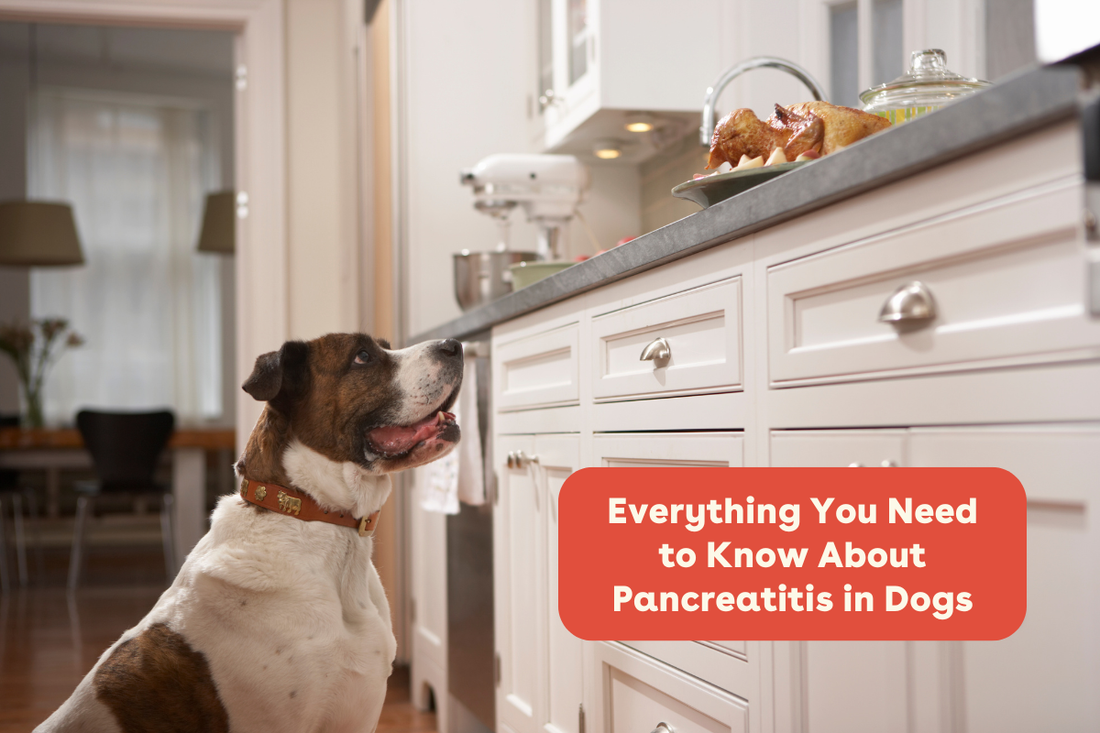
As the holidays fast approach, kitchens fill with the delicious smells of turkey, gravy, and all sorts of rich, high-fat dishes.
While these treats might tempt us (and our dogs!) this season can also bring a spike in a dangerous condition called pancreatitis.
If you’ve ever had your pup experience it, you know how scary it can be. Understanding what pancreatitis is, why it happens, and how to prevent it can make all the difference in keeping your dog happy and healthy year-round.
Table of Contents:
- What Is Pancreatitis in Dogs?
- Acute vs. Chronic Pancreatitis
- Common Causes of Pancreatitis in Dogs
- Symptoms of Pancreatitis in Dogs
- How Vets Diagnose Pancreatitis
- Treatment for Pancreatitis in Dogs
- Diet and Nutrition After Pancreatitis
- Prevention Tips for Pancreatitis
- Recovery and Long-Term Management
- Why Holiday Food Poses a Big Risk
What Is Pancreatitis in Dogs?

The pancreas is a small but mighty organ that sits near your dog’s stomach and plays two main roles:
- It produces enzymes that help digest food.
- It releases hormones like insulin that regulate blood sugar.
Pancreatitis happens when the pancreas becomes inflamed. Normally, digestive enzymes stay inactive until they reach the small intestine.
But during pancreatitis, these enzymes activate too early, right inside the pancreas, causing it to start digesting itself. That internal inflammation can lead to a lot of pain and can even affect other organs if left untreated.
Acute vs. Chronic Pancreatitis

There are two main types of pancreatitis in dogs:
-
Acute pancreatitis: This form comes on suddenly and can range from mild to severe. Some dogs recover quickly, while others may need hospitalization.
- Chronic pancreatitis: This is long-term, recurring inflammation of the pancreas. Dogs with chronic cases might show subtle symptoms over time, such as decreased appetite or mild digestive upset.
Even mild or single episodes of pancreatitis can cause long-term changes in the pancreas, which is why early detection and prevention matter.
Common Causes of Pancreatitis in Dogs

The most common trigger for pancreatitis is a high-fat diet or a sudden intake of fatty foods. That’s why we tend to see more cases around the holidays, when dogs sneak scraps of turkey skin, gravy, or buttery side dishes.
However, high-fat foods aren’t the only culprit. Other causes and risk factors include:
-
Dietary indiscretion: Dogs getting into the trash or eating table scraps.
-
Obesity: Overweight dogs are at higher risk.
-
Certain medications: Some steroids and seizure medications may increase risk.
-
Endocrine diseases: Conditions like diabetes mellitus or Cushing’s disease.
-
Genetics: Some breeds, like Miniature Schnauzers, Yorkshire Terriers, and Cocker Spaniels, are more predisposed.
- Trauma or surgery: Abdominal injury or surgery can occasionally trigger inflammation.
Even with these known risk factors, sometimes pancreatitis happens without an obvious cause, what vets call “idiopathic pancreatitis.”
Symptoms of Pancreatitis in Dogs

Pancreatitis symptoms can vary widely depending on how severe the inflammation is. Some dogs may only seem a little “off,” while others become extremely sick very quickly.
Common symptoms include:
- Loss of appetite
- Vomiting
- Diarrhea (sometimes with greasy stools)
- Abdominal pain: dogs may hunch over or adopt a “praying” position (front legs down, rear end up)
- Lethargy or weakness
- Fever
- Dehydration
In severe cases, pancreatitis can lead to systemic complications like shock or organ failure, so it’s crucial to contact your vet immediately if you suspect something is wrong.
How Vets Diagnose Pancreatitis

Diagnosing pancreatitis can be tricky because its symptoms mimic other gastrointestinal issues. Your vet will start with a physical exam and medical history, then likely recommend some combination of:
- Blood tests: To check for elevated pancreatic enzymes (like lipase or amylase) and to rule out other conditions.
- cPLI test (canine pancreatic lipase immunoreactivity): A specific test for pancreatitis.
- Ultrasound: To look for inflammation or swelling in the pancreas.
- X-rays: To rule out other causes of vomiting or abdominal pain.
- Urinalysis: To assess hydration and kidney function.
Your vet will use the combination of these results, along with your dog’s symptoms, to make a diagnosis and treatment plan.
Related Reading: How to Avoid Taking Your Pet to the Vet This Holiday Season - With Dr – Pupford
Treatment for Pancreatitis in Dogs

There’s no single “cure” for pancreatitis, but it can be managed effectively with supportive care. The goal is to rest the pancreas, control pain, prevent dehydration, and stop vomiting.
Treatment usually includes:
- Fluid therapy: To rehydrate your dog and restore electrolyte balance.
- Pain relief: Pancreatitis is painful, so vets use medications to keep your dog comfortable.
- Anti-nausea medication: To reduce vomiting and allow the digestive system to rest.
- Nutritional management: Once vomiting subsides, your vet may recommend small, frequent meals of a low-fat, easily digestible diet.
- Antibiotics (sometimes): Only if there’s a concern about secondary infection.
In mild cases, dogs may recover at home with rest, fluids, and dietary changes. Severe cases often require hospitalization for IV fluids and monitoring.
Diet and Nutrition After Pancreatitis

Once your dog is on the road to recovery, diet becomes the cornerstone of managing and preventing future flare-ups. The pancreas is sensitive, so it’s crucial to choose foods that won’t trigger inflammation again.
Key Dietary Guidelines
- Stick to low-fat diets. Look for formulas labeled as “low-fat” or “GI support.”
- Avoid table scraps. Even small bites of bacon, butter, or fatty meat can cause a recurrence.
- Feed smaller, frequent meals. This helps avoid overloading the digestive system.
- Ensure proper hydration. Keep fresh water available at all times.
If you’re not sure what to feed, ask your vet for a prescription low-fat food or discuss balanced freeze-dried raw options that are naturally lean.
For example, Pupford Freeze-Dried Pumpkin Treats are single-ingredient and low in fat, great for training or rewarding without upsetting sensitive stomachs. (And perfect for the holiday season! 🎃)
Prevention Tips for Pancreatitis

Prevention is all about consistency and mindfulness, especially during the holidays, when tempting foods are everywhere.
1. Keep Fatty Foods Out of Reach
Never give your dog fatty meats, gravy, or skin from poultry. Dispose of leftovers safely and keep trash bins secured.
15+ Foods Dogs Can (& Can't) Eat on Thanksgiving + Dog Thanksgiving Me – Pupford
2. Maintain a Healthy Weight
Overweight dogs are more likely to develop pancreatitis. Regular exercise and portion control go a long way in prevention.
3. Introduce New Foods Slowly
Sudden diet changes can upset the digestive system. Always transition gradually to any new food over 7–10 days.
4. Watch for Subtle Symptoms
If your dog shows signs of digestive upset or decreased appetite, don’t wait—call your vet. Early intervention can prevent severe flare-ups.
5. Be Cautious with Treats
Even healthy treats can add up. Opt for low-fat training treats or use small pieces of lean, cooked meats like chicken breast or turkey (without skin or seasoning).
How Many Treats Per Day for a Dog? How to Calculate for Your Pup! | Pu – Pupford
Recovery and Long-Term Management

Recovery from pancreatitis can take anywhere from a few days to several weeks, depending on severity. Most dogs that receive prompt treatment go on to live normal, healthy lives, but they may need to stay on a special diet permanently.
For dogs with chronic pancreatitis, it’s especially important to:
- Keep fat intake minimal.
- Avoid all table scraps, no matter how small.
- Monitor closely for any recurring symptoms.
- Schedule regular vet checkups and bloodwork.
Some dogs may also develop diabetes mellitus or exocrine pancreatic insufficiency (EPI) as a result of chronic pancreatitis. These are manageable conditions but require ongoing veterinary support.
Why Holiday Food Poses a Big Risk

We love including our dogs in family celebrations, but sharing holiday foods can be dangerous. Here’s why:
- Turkey skin, gravy, and buttery sides are loaded with fat.
- Bones (like turkey or ham bones) can splinter and cause blockages or internal damage.
- Desserts may contain xylitol or chocolate, both toxic to dogs.
Even a small amount of these foods can overwhelm your dog’s pancreas, especially if they’re already prone to digestive issues.
The best gift you can give your dog this holiday season is to keep their treats safe and simple, stick to vet-approved chews or low-fat, single-ingredient snacks.
🎄Check out these holiday themed enrichment activities to keep your pups included in the fun!
When to See a Vet

If your dog ever shows signs of vomiting, abdominal pain, or sudden lethargy, especially after eating fatty food, don’t wait it out. Pancreatitis can worsen quickly, and early treatment is the key to recovery.
Go to the vet immediately if your dog:
- Refuses food or water
- Vomits repeatedly
- Appears bloated or hunched in pain
- Has diarrhea or greasy stool
- Seems unusually weak or feverish
Even if symptoms seem mild, it’s worth checking in. Your vet can run simple blood tests to rule out pancreatitis before it becomes severe.
Recap: Protecting Your Pup’s Pancreas
Pancreatitis is one of those conditions that reminds us how closely diet and health are connected, for both humans and dogs. While it can sound intimidating, most dogs recover fully with quick veterinary care and ongoing prevention.
As the holidays roll in, resist the urge to share rich foods from your plate, and instead show your love with a safe, long lasting chew as a special holiday treat! (And don’t forget plenty of belly rubs too)


