


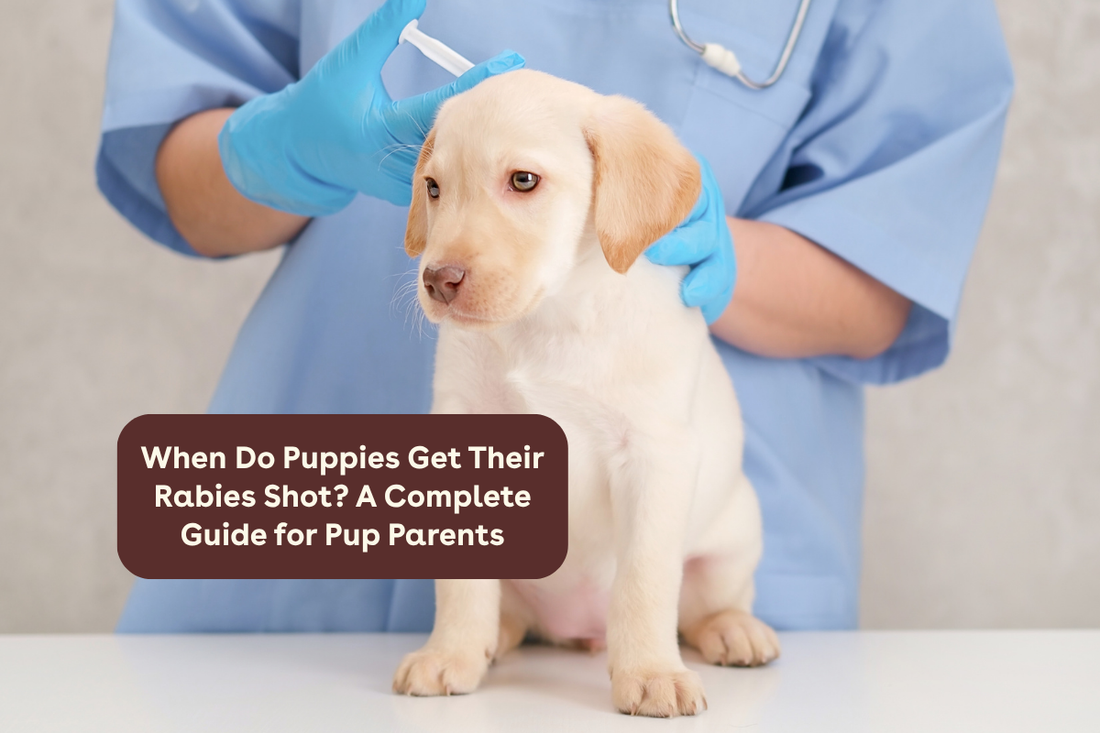
Bringing home a puppy comes with a long list of firsts — first night, first training session, first vet visit… and first vaccinations. Among those early vaccines, one of the most important (and often most regulated) is the rabies shot.
But when exactly do puppies get their rabies vaccine? Is it safe? Is it required? And what happens if you miss the timeline?
In this guide, we’ll walk through everything pup parents need to know about rabies vaccinations, including when puppies get their rabies shot, why it’s so important, what to expect, and how to keep your puppy safe and healthy.
When Do Puppies Get Their Rabies Shot?

Most puppies receive their first rabies shot between 12 and 16 weeks of age.
This timing isn’t random, it’s carefully chosen based on how a puppy’s immune system develops. Before this age, puppies still have maternal antibodies from their mother’s milk, which can interfere with how well vaccines work. By around 12–16 weeks, those antibodies begin to fade, allowing the rabies vaccine to be effective.
Here’s a typical puppy vaccination timeline:
6–8 weeks:
- First core vaccines (Distemper, Parvo, Adenovirus)
10–12 weeks:
- Booster vaccines
12–16 weeks:
- First rabies vaccine
- Final puppy booster vaccines
Your veterinarian may adjust this schedule slightly depending on your puppy’s health, size, lifestyle, and local regulations.
Want to learn about Puppy Vaccinations? 👉 Puppy Vaccines: Shot Schedules, List of Vaccines & More | Pupford
Why the Rabies Vaccine Is So Important

Rabies isn’t just another disease, it’s almost always fatal once symptoms appear. That’s why rabies vaccinations are taken so seriously.
Rabies is a viral disease that affects the nervous system and spreads primarily through bites from infected animals. Wildlife like raccoons, bats, skunks, and foxes are the most common carriers, but any mammal can transmit rabies.
What makes rabies especially concerning:
- It’s fatal once symptoms appear
- It can spread to humans (this is called a zoonotic disease)
- There’s no cure after symptoms begin
- It’s legally regulated in most areas
Because rabies poses a public health risk, most states and municipalities legally require dogs to be vaccinated.
Even if your puppy spends most of their time indoors, the rabies vaccine is still essential. Wildlife can still enter yards, garages, or even homes, and accidents can happen.
Is the Rabies Vaccine Required by Law?

In most places, yes, a rabies vaccination is legally required.
Laws vary depending on where you live, but many areas require:
- First rabies shot at 12–16 weeks
- Booster after 1 year
- Boosters every 1–3 years afterward
Failing to vaccinate your puppy for rabies can sometimes result in:
- Fines
- Quarantine requirements
- Difficulty boarding or traveling
- Legal liability if your dog bites someone
Your veterinarian will help you stay compliant with your local regulations and remind you when boosters are due.
What Happens at the Rabies Vaccine Appointment?

Your puppy’s rabies appointment is usually quick and straightforward.
Here’s what typically happens:
1. Physical Exam
Your veterinarian will check your puppy’s:
- Weight
- Temperature
- Heart and lungs
- Overall health
Vaccines are only given when puppies are healthy, so this step ensures it’s safe to proceed.
2. The Vaccine
The rabies vaccine is given as a small injection, usually in the shoulder or hip area. Most puppies barely notice it, especially with treats and gentle handling.
3. Documentation
After the vaccine, you’ll receive:
- Rabies certificate
- Vaccination record
- Reminder for booster
Keep this documentation in a safe place, you may need it for grooming, boarding, training classes, or travel.
💖Related Reading: Is Your Dog Scared of the Vet? Try These 7 Tips | Pupford
Are Rabies Vaccines Safe for Puppies?

Rabies vaccines are very safe and widely used. Most puppies experience no side effects at all.
However, mild side effects can occasionally occur, including:
- Mild soreness at injection site
- Slight fatigue
- Reduced appetite
- Mild fever
These symptoms usually resolve within 24–48 hours.
Rarely, more serious reactions may occur. Contact your veterinarian if you notice:
- Swelling of the face
- Vomiting
- Difficulty breathing
- Severe lethargy
- Hives
Serious reactions are uncommon, but it’s always best to monitor your puppy after any vaccination.
What Happens After Your Puppy Gets Their Rabies Shot?

After the rabies vaccine, most puppies can return to normal activities the same day. However, it’s a good idea to keep things calm for the next 24 hours.
Helpful post-vaccine tips:
- Avoid intense exercise
- Monitor for side effects
- Offer plenty of water
- Let your puppy rest
If your puppy seems slightly tired or sore, that’s completely normal.
Do Puppies Need a Rabies Booster?

Yes. After the first rabies shot, puppies will need boosters to maintain protection.
Typical booster schedule:
- First rabies shot: 12–16 weeks
- First booster: 1 year later
- Future boosters: Every 1–3 years depending on vaccine type and local laws
Your veterinarian will help determine the right schedule for your dog.
Can Puppies Go Outside Before Their Rabies Shot?

This is a common question for new pup parents.
Yes, puppies can go outside before their rabies shot, but you should take precautions:
Safe early outings include:
- Your backyard
- Carrying your puppy in public
- Visiting vaccinated dogs you trust
- Puppy classes requiring vaccination records
Avoid:
- Dog parks
- High-traffic pet areas
- Unknown dogs
- Wildlife exposure
This approach allows your puppy to start early socialization while still staying safe.
🐶Debunking Common Dog Socialization Myths: A Guide for Every Pup Parent – Pupford
What If You Adopt an Older Puppy?

If you adopt a puppy older than 16 weeks who hasn’t had a rabies shot yet, your veterinarian will typically administer it during your first visit.
Older puppies can still safely receive their rabies vaccine, it’s never too late to get started.
Indoor Dogs Still Need Rabies Vaccines

Some pup parents assume indoor dogs don’t need rabies vaccines, but that’s a myth.
Even indoor dogs can encounter:
- Bats entering homes
- Wildlife in backyards
- Unexpected escapes
- Exposure at vet offices or groomers
Rabies vaccination protects your dog, and everyone around them, regardless of lifestyle.
Common Questions About Puppy Rabies Vaccination

Can my puppy get rabies from the vaccine?
No. Rabies vaccines do not contain live rabies virus capable of causing infection.
How long does the rabies vaccine take to work?
It typically takes about 28 days for full immunity to develop after the first rabies shot.
Can my puppy be around other dogs after the rabies shot?
Yes, but make sure other dogs are vaccinated and healthy.
Do small breeds need different rabies timing?
No, all puppies regardless of size or breed, typically follow the same rabies timeline.
How Rabies Vaccination Fits Into Your Puppy’s Overall Health

Vaccines are just one piece of your puppy’s long-term health plan. Along with vaccinations, you can support your puppy’s wellbeing through:
- Balanced nutrition
- Positive reinforcement training
- Proper socialization
- Mental enrichment
- Regular vet visits
Healthy puppies grow into confident, well-adjusted adult dogs, and preventive care plays a big role in that journey.
Recap: Puppy Rabies Vaccination
Most puppies receive their first rabies shot between 12 and 16 weeks of age, followed by a booster one year later and regular boosters afterward.
While it may seem like just another appointment, the rabies vaccine is one of the most important steps you can take to protect your puppy, your family, and your community.
If you’re unsure about your puppy’s vaccine schedule, your veterinarian is always the best place to start. Staying on track early helps ensure your puppy grows up safe, healthy, and ready for all the adventures ahead.
Because when it comes to your puppy’s health, prevention is one of the greatest gifts you can give them.


