


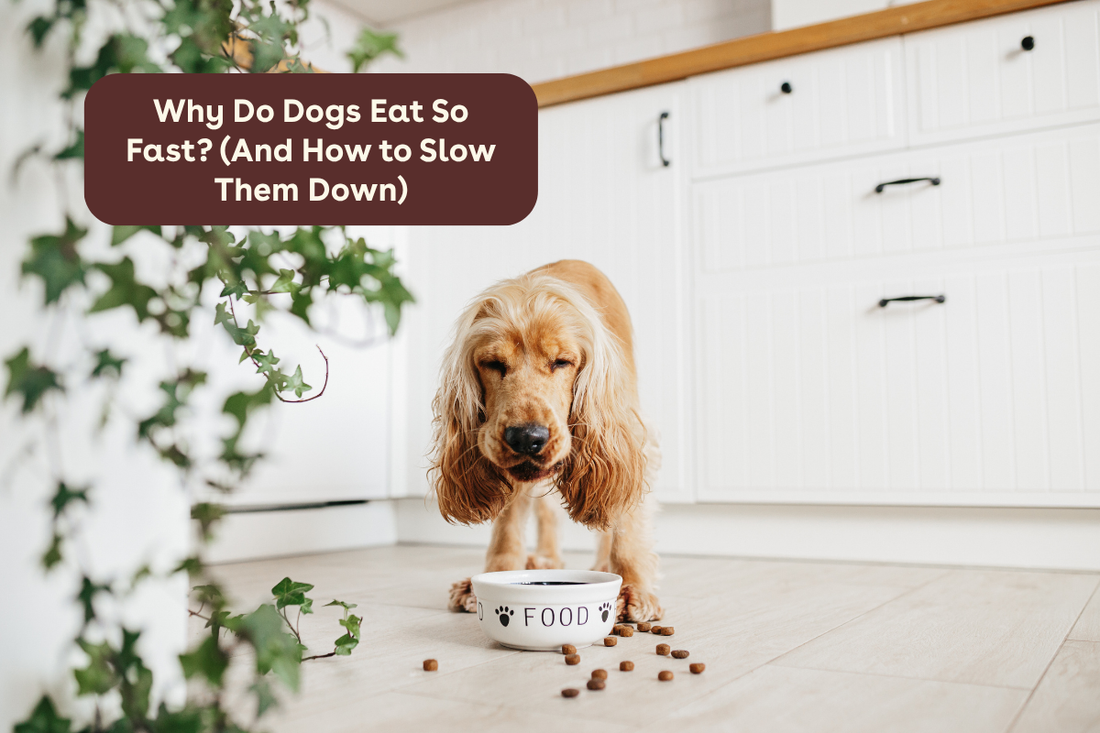
If you’ve ever poured your dog’s food into their bowl and watched it disappear in under 30 seconds, you’re not alone.
Many pup parents are surprised (and a little concerned) by just how quickly dogs eat. While it can look funny, fast eating can sometimes lead to discomfort, choking risks, or digestive issues.
So why do dogs eat so fast, and what can you actually do about it? Let’s break it down.
Why Do Dogs Eat So Fast?

There isn’t just one reason dogs inhale their food. In most cases, it’s a mix of instinct, learned behavior, and environment.
1. It’s instinct (thanks to their ancestors)
Even though most dogs today are well-fed and live comfortably, their ancestors weren’t so lucky. Wild canines often had to compete for food and eat quickly before another animal took it away.
That survival instinct still shows up in modern dogs. When food is available, many dogs feel the urge to eat it immediately, just in case it disappears.
2. Competition with other pets
If you have more than one dog (or even a cat that’s curious about dinner time), your dog may feel like they need to “beat the competition.”
Even subtle competition, like another pet walking by during meals, can trigger fast eating behavior.
🐶Navigating Multi-Dog Households: Training and Harmony Tips | Pupford
3. They’re really excited about food
Some dogs simply love eating. A lot. Mealtime is one of the most exciting parts of their day, and that excitement can lead to scarfing food down as fast as possible.
This is especially common in high-energy breeds or dogs that are very food-motivated.
4. Feeding schedule and hunger gaps
If your dog goes long stretches between meals, they may arrive at the bowl feeling extremely hungry. That can naturally lead to eating too quickly.
Irregular feeding times or skipped meals can make this worse.
5. Learned behavior
Sometimes dogs learn that eating fast is “normal” based on their environment. If they’ve always eaten quickly and nothing slows them down, the habit sticks.
In some cases, dogs even associate fast eating with getting more food later or being let outside quickly afterward, reinforcing the speed.
6. Food type and bowl design
The way food is served matters more than most pup parents realize. A wide, shallow bowl can make it easy for dogs to gulp large mouthfuls at once.
Certain kibble shapes or highly palatable foods can also encourage fast eating simply because dogs are more eager to finish it.
Is Eating Too Fast a Problem?

Occasional fast eating isn’t unusual, but consistently inhaling food can lead to a few concerns:
- Gagging or choking
- Vomiting after meals
- Gas and bloating
- Increased risk of digestive discomfort
- In some cases, a higher risk of serious issues like bloat in large breeds
If your dog regularly eats very fast and seems uncomfortable afterward, it’s worth making some changes.
How to Slow Down a Dog Who Eats Too Fast

The good news is that fast eating is usually manageable with a few simple adjustments.
1. Use a slow feeder bowl
Slow feeder bowls are designed with ridges or maze-like patterns that force dogs to eat around obstacles instead of gulping large bites.
This is one of the easiest and most effective solutions for most dogs.
2. Try puzzle feeders or enrichment toys
Turning mealtime into a mental workout can naturally slow your dog down. Puzzle feeders, snuffle mats, and treat-dispensing toys encourage sniffing, problem-solving, and smaller bites.
This also adds mental enrichment, which is just as important as physical exercise.
👉Shop puzzle feeders and mental enrichment toys here!
3. Split meals into smaller portions
Instead of feeding one or two large meals per day, consider dividing food into three or more smaller meals. This reduces hunger intensity and helps prevent “scarf mode.”
💖Free Feeding vs. 2 Meals vs. 3 Meals a Day for Dogs: What’s Best? | Pupford
4. Toss food in the grass
If you don’t have a slow feeder, you can scatter their food out in the grass. This is an easy (and free!) way to provide mental enrichment and slow down your pups’ eating.
6. Create a calm feeding routine
Dogs often mirror the energy around them. If mealtime is chaotic or rushed, they may mirror that energy.
Try feeding your dog in a quiet space, at consistent times, with minimal distractions.
When to Talk to a Vet
If your dog suddenly starts eating much faster than usual, or if fast eating comes with symptoms like vomiting, weight changes, or discomfort, it’s a good idea to check in with your veterinarian. Sudden changes can sometimes signal underlying issues like parasites, stress, or digestive concerns.
Recap: Why Do Dogs Eat So Fast?
Dogs eat fast for a mix of instinct, excitement, and learned habits, but that doesn’t mean they have to keep doing it that way. With a few simple changes like slow feeders, enrichment, and better routines, you can help your pup slow down and enjoy mealtime in a healthier way.
And honestly, slowing things down doesn’t just help digestion, it turns meals into a more enriching, calmer experience for your dog, too.
💖Ready to switch your pup to a food packed with real protein and superfoods? Shop Pupford Good Dog Food


