


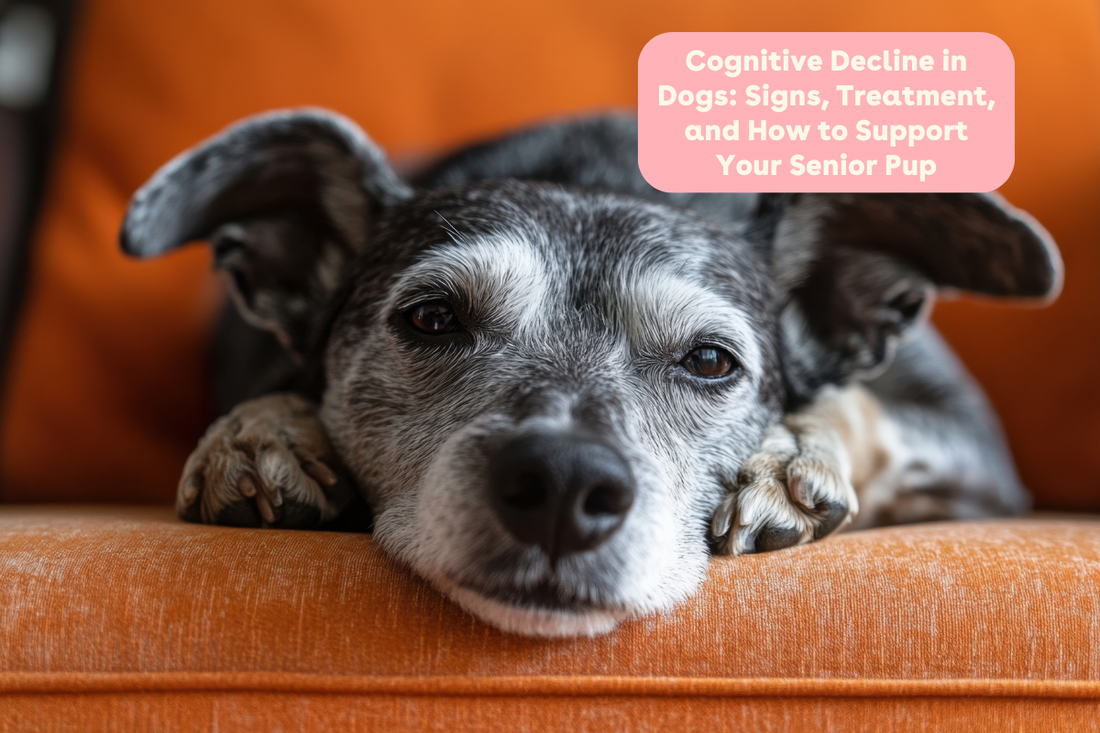
As pup parents, watching our dogs grow older is both heartwarming and bittersweet. Their gray muzzles and slower pace remind us of all the memories you’ve shared, but sometimes, you may notice subtle changes that go beyond normal aging. Maybe your dog seems confused in familiar places, wakes up pacing at night, or stares blankly at the wall.
These could be signs of cognitive decline (CD), also called canine cognitive dysfunction (CCD), a condition similar to dementia or Alzheimer’s disease in humans. The good news? With the right knowledge, care, and proactive habits, you can make life easier for your aging dog and even help slow down the progression of CD.
Let’s take a closer look at what cognitive decline is, what signs to watch for, and how you can support your pup’s mind and body as they age.
Table of Contents:
- What is Cognitive Decline in Dogs?
- Recognizing the Signs: The DISHAA Framework
- What To Look For During Daily Life
- What Is Cognitive Decline in Dogs?
- How to Help Slow Cognitive Decline
- Compassionate Support: Meeting Your Dog Where They Are
- When to See the Vet
- What To Look For in Other Diseases That Can Worsen CD
-
The Power of Observation
What is Cognitive Decline in Dogs?

Cognitive decline (CD) refers to age-related changes in a dog’s brain that affect memory, learning, and behavior.
Just like other organs, the brain ages over time, nerve cells deteriorate, communication between brain regions slows, and the brain itself begins to shrink.
In fact, studies estimate that 14–35% of dogs over the age of 8 experience some level of cognitive decline. The symptoms can range from mild forgetfulness to significant disorientation and behavior changes.
What Happens in the Brain
In both humans and dogs, cognitive decline involves similar neurological changes:
- Loss of neurons (nerve cells) in certain parts of the brain
- Reduced blood flow and oxygen to brain tissue
- Accumulation of proteins that interfere with cell communication
- Inflammation that damages brain structures
- Oxidative stress caused by free radicals that harm cells over time
These biological processes contribute to the changes you may see in your dog’s personality, routines, and responsiveness.
🐶Learn more about caring for a senior pup!
Recognizing the Signs: The DISHAA Framework

Veterinary behaviorists often use the acronym DISHAA to identify the key signs of cognitive decline:
Disorientation
Your dog may appear lost in familiar environments, wandering aimlessly, getting stuck in corners, or staring at walls. They might struggle to find their food bowl or get confused about which door leads outside.
Interactions (Changes in Social Behavior)
You might notice your dog seems withdrawn or less responsive to family members. Some dogs become clingier or anxious, while others lose interest in play or cuddling.
Sleep-Wake Cycle Changes
Many dogs with CD experience disrupted sleep patterns. They may sleep all day and pace at night, bark at unusual hours, or seem restless when they should be resting.
🐶Related Reading: Dog Sleeping Guide | Pupford
House Soiling
Dogs that were reliably housetrained may start having accidents indoors. This isn’t a “behavior problem”, it’s often a sign of confusion or memory loss about where to eliminate.
Anxiety
Increased restlessness, panting, whining, or pacing can all indicate anxiety. Dogs with CD often feel unsettled because their world feels unpredictable or unfamiliar.
Activity Changes
You might notice shifts in how much or how little your dog moves. Some become lethargic and uninterested in walks or toys, while others may pace aimlessly or exhibit repetitive movements.
If your senior dog shows two or more of these signs, it’s time to discuss them with your veterinarian.
What To Look For During Daily Life

It’s easy to dismiss small changes as “just getting old,” but early detection can make a huge difference. Keep an eye out for:
-
Changes in gait, mobility, or coordination: slipping on floors, hesitancy to use stairs, falling behind on walks
-
Vision or hearing loss: make sure hearing screens or vision checks are part of your senior wellness exam
-
Increased startle response or anxiety
-
Confusion about doorways, transitioning from area to area
-
Accidents in the house when previously none
- Cluster of small signs: new pacing patterns, sudden disinterest in toys, difficulty navigating
How to Help Slow Cognitive Decline

While aging is inevitable, there are many ways to support your dog’s brain health and improve their quality of life.
Let’s explore some of the best science-backed methods.
1. Keep Their Brain Active
Just like humans, dogs benefit from mental enrichment throughout their lives. Engaging your dog’s mind helps strengthen neural pathways and can slow the progression of CD.
Try These Activities:
- Hide and Seek: Hide treats or toys around the house and encourage your pup to find them.
- Food Puzzles: Use puzzle feeders that require your dog to problem-solve for their meal.
- Training Games: Reinforce old cues and introduce simple new tones to keep their mind sharp.
- Scent Work: Hide treats in boxes or under cups for your dog to locate using their nose.
Tip: Dogs never get too old to use their nose! Scent-based games are excellent for mental stimulation and help release “feel-good” hormones that reduce stress. Learn more about how to use your pup’s nose!
🐶Mental Enrichment for the Golden Years: How to Keep Senior Dogs Happy – Pupford
2. Build Early Safeguards Through Training
One of the most powerful ways to support your dog in later life is by building habits early on.
Use Hand Signals
Dogs often lose hearing as they age, so training with hand signals in addition to verbal cues makes it easier to communicate later. Even if your senior dog’s hearing fades, they can still respond to your visual gestures.
Strengthen Their Sense of Smell
Encourage scent-based games and activities throughout their life. When a dog’s vision or hearing decline, their sense of smell becomes their most reliable way to interpret the world. Strengthening this skill early ensures it remains a rich source of stimulation and comfort as they age.
🐶Learn fun facts about your dog’s sense of smell!
3. Support Brain Health with Diet and Supplements
Nutrition plays a crucial role in maintaining cognitive function.
Antioxidants
Antioxidants help neutralize free radicals, which can damage brain cells over time. Look for foods or supplements rich in:
- Vitamins C and E
- Beta-carotene
- L-carnitine
- Omega-3 fatty acids (DHA and EPA)
These nutrients have been shown to support memory, learning, and overall brain health in aging dogs.
Neuroprotective Supplements
Ask your veterinarian about supplements specifically designed for senior dogs, such as:
- SAM-e (S-Adenosylmethionine): Supports cellular repair and mood balance.
- Phosphatidylserine: Helps maintain cell membrane health.
- MCT oil (Medium Chain Triglycerides): Provides an alternate energy source for the brain.
Always consult your vet before adding any supplement, especially if your dog is on medication or has other health conditions.
🐶Learn how to choose the right food for your pup!
4. Encourage Physical Movement
Exercise doesn’t just benefit the body, it’s good for the brain, too.
Movement increases blood flow, delivering oxygen and nutrients that help keep brain cells healthy.
For older dogs, focus on low-impact activities like:
- Gentle walks on grass or padded surfaces
- Swimming or hydrotherapy
- Short sniff walks (letting them move slowly and explore smells)
- Controlled play sessions
- Toss treats in a grassy area, this encourages both movement AND sniffing
Adding rugs or traction mats around the home can help prevent slips and keep them more confident moving around.
5. Create a Supportive Environment
Dogs with cognitive decline can easily become confused or anxious in their surroundings. Small adjustments can make their world feel safer and easier to navigate.
Set Up Their Space Thoughtfully
-
Avoid clutter: Keep pathways clear to prevent confusion.
-
Use rugs: Provide traction and mark familiar routes.
-
Add ramps or stairs: Help them reach couches or beds without strain.
- Block off tight corners: So they don’t get stuck or trapped.
Use Visual and Scent Cues
-
Place visual markers (like mats) near doorways, food bowls, or water stations.
- Use consistent scents (like lavender near their bed) to help them orient themselves.
Offer Comfort and Routine
Dogs with CD thrive on predictability. Feed, walk, and rest at the same times each day. Speak gently, offer touch, and spend time near them, even quiet companionship helps them feel secure.
🐶Related Reading: Why your pup craves routine
Compassionate Support: Meeting Your Dog Where They Are

Supporting a dog with cognitive decline takes patience, empathy, and creativity. As your dog’s needs change, so will your routines.
Here are some compassionate ways to help:
-
Provide reassurance: If they wake up confused or anxious at night, sit with them and speak softly.
-
Avoid punishment: Accidents or confusion aren’t “bad behavior.” They’re signs your pup needs understanding.
-
Engage the senses: Gentle petting, brushing, soft music, or scent cues can calm and ground them.
- Prioritize comfort: Orthopedic beds, cozy blankets, and nearby water or food bowls can reduce frustration.
When to See the Vet

Any sudden or severe change in your dog’s behavior warrants a veterinary evaluation. Some medical conditions mimic or worsen cognitive decline, including:
- Pain or arthritis
- Thyroid imbalances
- Vision or hearing loss
- Vascular dementia caused by poor blood supply to the brain
Your vet may perform blood work, neurological exams, or imaging to rule out these issues and determine whether your dog is experiencing cognitive dysfunction.
Early diagnosis allows for more effective interventions and management.
What To Look For in Other Diseases That Can Worsen CD

Your dog’s brain is deeply influenced by their overall health. Conditions that limit mobility, cause pain, or reduce circulation will exacerbate cognitive decline. When you’re observing your pup, keep in mind:
-
Arthritis / osteoarthritis: Pain will discourage movement and exploration, reducing brain stimulation.
-
Poor blood supply / vascular issues: Like vascular dementia in humans, inadequate brain perfusion can harm cognitive function.
-
Vision or hearing loss: These sensory declines lead to confusion and anxiety, which accelerate cognitive decline.
-
Endocrine dysfunction (hypothyroidism or hyperthyroidism): Can cause lethargy, confusion, weight changes, mood changes.
- Nutrition or metabolic disorders: Poor diet or malabsorption means brain cells don’t get sufficient nutrients.
If you spot changes in gait, slipping on floors, increased hesitancy to do activities, or increased anxiety, mention them to your veterinarian.
These could be signs of pain, mobility issues, or vascular decline contributing to cognitive problems.
The Power of Observation

As your dog ages, you become their advocate.
Subtle changes that you notice, like hesitation on stairs, restlessness at night, less interest in toys, can provide critical clues about their cognitive health.
Keep a behavior diary to note changes in sleep, appetite, mobility, or responsiveness. Bring this information to your vet appointments, it helps paint a clearer picture of your dog’s daily life and challenges.
Recap: Cognitive Decline in Senior Dogs

Cognitive decline in dogs can be heartbreaking to witness, but it’s also an opportunity—to deepen your bond, to show compassion in new ways, and to celebrate the small moments that matter most.
Remember: your dog isn’t “forgetting” you—they’re navigating a world that feels a bit fuzzier than before. With your patience, gentle care, and the right tools, you can help them feel safe, loved, and understood.
Aging is a natural part of life, but it doesn’t have to mean the end of joy, curiosity, or connection. Whether your pup is still spry or well into their golden years, investing in their mental health today will help ensure many happy tomorrows together.


