


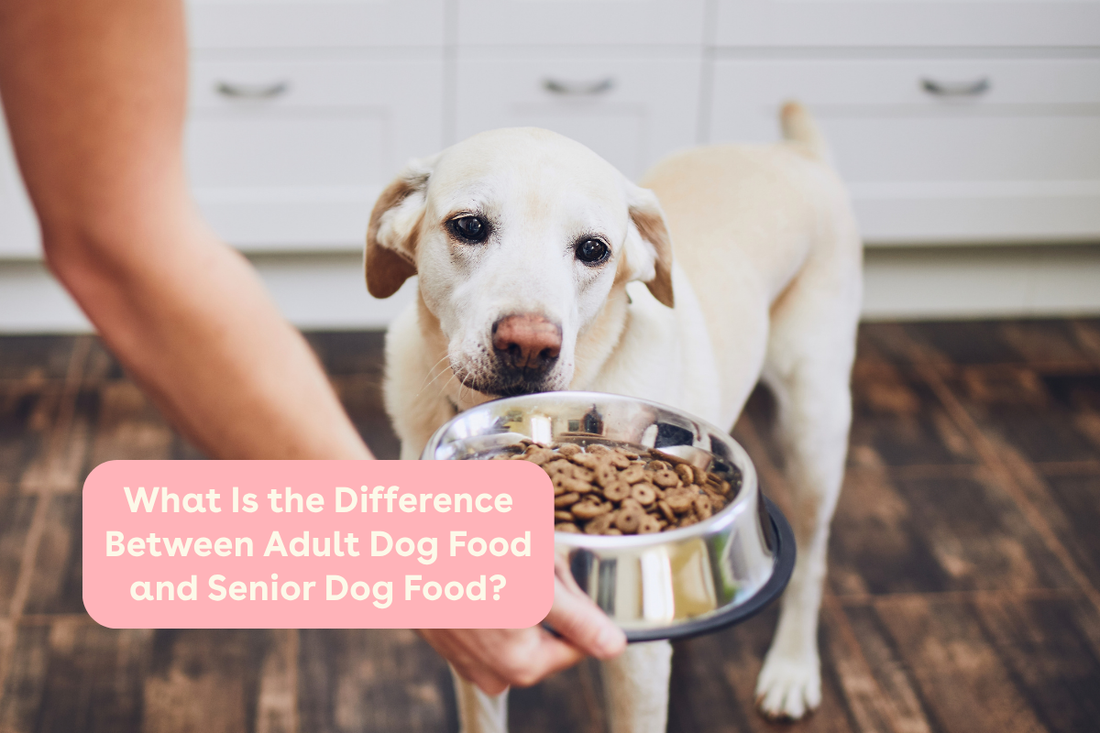
As dogs age, their nutritional needs begin to change. The food that helped your dog thrive during their energetic adult years may no longer fully support their joints, digestion, metabolism, or changing activity levels as they enter their senior years.
Walk through any pet food aisle and you’ll likely see labels like “adult formula,” “senior recipe,” and “all life stages.” But what do those labels actually mean? And does your dog really need a senior-specific food?
The truth is, aging affects every dog differently. Some dogs stay active and lean well into their later years, while others begin slowing down much earlier. Understanding the difference between adult dog food and senior dog food can help you make informed decisions that support your dog’s comfort, mobility, and overall quality of life.
Let’s break it down.
Table of Contents
- Why Nutrition Changes as Dogs Age
- Calories and Metabolism in Senior Dogs
- Protein Needs: Do Senior Dogs Need Less Protein?
- Joint Support and Mobility Nutrients
- Digestive Changes in Older Dogs
- Brain Health and Cognitive Support
- Weight Management in Senior Dogs
- When Is a Dog Considered a Senior?
- Do All Senior Dogs Need Senior Dog Food?
- Why Ingredient Quality Matters More Than Marketing
- Why Pupford Good Dog Food Works for Senior Dogs
Why Nutrition Changes as Dogs Age

A dog’s body changes significantly over time. Just like humans, aging dogs often experience shifts in metabolism, muscle mass, digestion, mobility, and energy levels.
Adult dogs are typically in their maintenance phase. Their food is designed to support steady energy, healthy body condition, and everyday wellness.
Senior dogs, however, may need additional nutritional support for:
- Joint health
- Muscle maintenance
- Cognitive function
- Digestive health
- Weight management
- Immune support
That doesn’t necessarily mean every senior dog requires a completely different food, but it does mean nutrition becomes increasingly important as dogs age.
💖Caring for Senior Dogs | Pupford
Calories and Metabolism in Senior Dogs

One of the biggest differences between adult dog food and senior dog food is caloric density.
As many dogs age, their metabolism naturally slows down. Older dogs are often less active than they were in their younger years, which means they may burn fewer calories throughout the day.
Senior dog food is frequently formulated with slightly fewer calories to help reduce the risk of unwanted weight gain. Maintaining a healthy body weight becomes especially important in older dogs because excess weight can place additional stress on aging joints and organs.
That said, not all senior dogs need lower-calorie food.
Some older dogs actually struggle to maintain weight due to muscle loss, reduced appetite, dental issues, or underlying health conditions. Highly active senior dogs may also continue needing calorie-dense nutrition.
This is why body condition matters more than age alone.
🐕Dog Body Condition Score (BCS) Chart & How to Find It | Pupford
Protein Needs: Do Senior Dogs Need Less Protein?

One of the most common myths surrounding senior dog nutrition is that older dogs need low-protein diets.
In reality, healthy senior dogs often benefit from adequate, highly digestible protein to help maintain lean muscle mass as they age.
As dogs get older, they naturally begin losing muscle tissue. Without sufficient high-quality protein, that muscle loss can accelerate, leading to weakness and reduced mobility.
Rather than drastically reducing protein, many veterinarians now emphasize the importance of:
- High-quality animal-based proteins
- Digestibility
- Proper amino acid balance
- Portion control based on activity level
The quality of the protein matters far more than simply lowering the percentage.
🐶A Guide to 7 Proteins in Dog Food: Choosing the Best for Your Dog | Pupford
Joint Support and Mobility Nutrients

Joint health becomes a much bigger focus in senior nutrition.
Years of running, jumping, playing, and everyday movement can gradually wear on joints. Many senior dog foods include ingredients aimed at supporting mobility and comfort, such as:
- Glucosamine
- Chondroitin
- Omega-3 fatty acids
- EPA and DHA
These nutrients may help support joint function and reduce inflammation associated with aging.
Senior dogs carrying excess weight may experience even greater joint stress, which is another reason maintaining healthy body condition is so important in older dogs.
🦴When to Start Joint Supplements for Dogs | Pupford
Digestive Changes in Older Dogs

Some senior dogs experience digestive changes as they age.
You may notice:
- Increased stomach sensitivity
- Changes in stool quality
- Reduced appetite
- Difficulty digesting rich foods
Senior dog foods sometimes include additional fiber or more digestible ingredients to support gastrointestinal health.
Highly processed foods or formulas packed with fillers can become harder for aging dogs to tolerate. Ingredient quality and digestibility often matter even more during the senior years.
💖Dog Digestion and Gut Health: An Interview with Dr. Greg Sunvold PhD | – Pupford
Brain Health and Cognitive Support

Cognitive changes can occur as dogs age, especially in senior and geriatric dogs.
Some dogs may begin showing signs of cognitive decline, including:
- Confusion
- Disrupted sleep patterns
- Increased anxiety
- Forgetting routines
- Changes in social behavior
Certain nutrients are often emphasized in senior dog food to help support brain health, including omega-3 fatty acids and antioxidants.
🐶Cognitive Decline in Dogs: Signs, Treatment, and How to Support | Pupford
While nutrition cannot stop aging, supporting brain health through balanced nutrition may help dogs maintain cognitive function longer.
Related Reading: Mental Enrichment for the Golden Years: How to Keep Senior Dogs Happy
Weight Management in Senior Dogs

Weight management becomes increasingly important as dogs enter their later years.
Even small amounts of excess weight can impact:
- Joint comfort
- Mobility
- Heart health
- Energy levels
- Overall quality of life
On the other hand, unexplained weight loss in senior dogs can also signal underlying health concerns.
Monitoring your dog’s body condition score, muscle tone, and energy level matters more than focusing solely on the number on the scale.
Senior nutrition should support healthy weight maintenance, not simply weight loss.
When Is a Dog Considered a Senior?

There is no universal age when every dog officially becomes a senior.
Breed size plays a major role:
- Small breeds often become seniors around 10–12 years
- Medium breeds around 8–10 years
- Large and giant breeds may be considered seniors as early as 6–8 years
Larger dogs generally age faster than smaller breeds.
However, age alone doesn’t tell the full story.
Some 10-year-old dogs remain highly active and athletic, while younger dogs may already be slowing down. Your dog’s mobility, weight, muscle condition, digestion, genetics and overall health matter more than a specific birthday.
Do All Senior Dogs Need Senior Dog Food?

Not necessarily.
Some senior dogs do very well on high-quality adult maintenance or all-life-stages formulas, especially if:
- They maintain healthy weight
- They remain active
- They digest their food well
- They have no major medical concerns
In many cases, feeding adjustments and portion control matter more than switching to a heavily marketed “senior” formula.
What matters most is whether the food supports your dog’s individual needs.
Why Ingredient Quality Matters More Than Marketing

The label “senior dog food” does not automatically guarantee better nutrition.
Some senior formulas simply lower calories while relying heavily on fillers or lower-quality ingredients. Others may reduce protein unnecessarily.
Regardless of life stage, dogs benefit from:
- Clearly named animal proteins
- Balanced fats
- Digestible ingredients
- Proper nutrient balance
- Minimal artificial additives
- Thoughtful formulation
A high-quality food formulated with digestibility and nutrient balance in mind can often support dogs well into their senior years.
Related Reading: 10 Ingredients to Avoid in Dog Food & Treats + Safe Alternatives
Why Pupford Good Dog Food Works for Senior Dogs

Pupford Good Dog Food is formulated to meet the nutritional levels established by AAFCO for all life stages, meaning it supports dogs from puppyhood through their senior years.
For senior dogs, that can be especially beneficial because the formula focuses on nutrient quality and digestibility rather than relying on unnecessary fillers or excessive processing.
Because senior dogs often benefit from simplified, highly digestible nutrition, many pup parents appreciate that Good Dog Food is:
- Shelf stable and convenient
- Minimally processed
- Rich in animal-based nutrition
- Formulated for complete and balanced feeding
- Suitable for dogs across multiple life stages
As always, monitoring your dog’s weight, mobility, coat condition, appetite, and energy level can help you determine whether their current nutrition is supporting healthy aging.
Recap: Adult Dog Food vs. Senior Dog Food
So what’s the difference between adult dog food and senior dog food?
Senior dog food is often designed to support the changing needs that come with aging, including joint health, weight management, digestion, and cognitive support.
Compared to adult maintenance formulas, senior dog food may contain:
- Fewer calories
- Additional joint-support nutrients
- More digestible ingredients
- Added omega-3 fatty acids and antioxidants
But not every senior dog needs a dramatically different formula.
What matters most is:
- Ingredient quality
- Digestibility
- Appropriate calorie intake
- Protein quality
- Your dog’s individual health and activity level
A thoughtfully formulated, nutrient-dense food can help support healthy aging while keeping your dog feeling their best through every stage of life.
As dogs enter their golden years, nutrition becomes less about chasing marketing labels and more about supporting comfort, mobility, lean muscle maintenance, and overall quality of life. Because at the end of the day, most pup parents want the same thing: as many happy, healthy years with their dogs as possible.


