


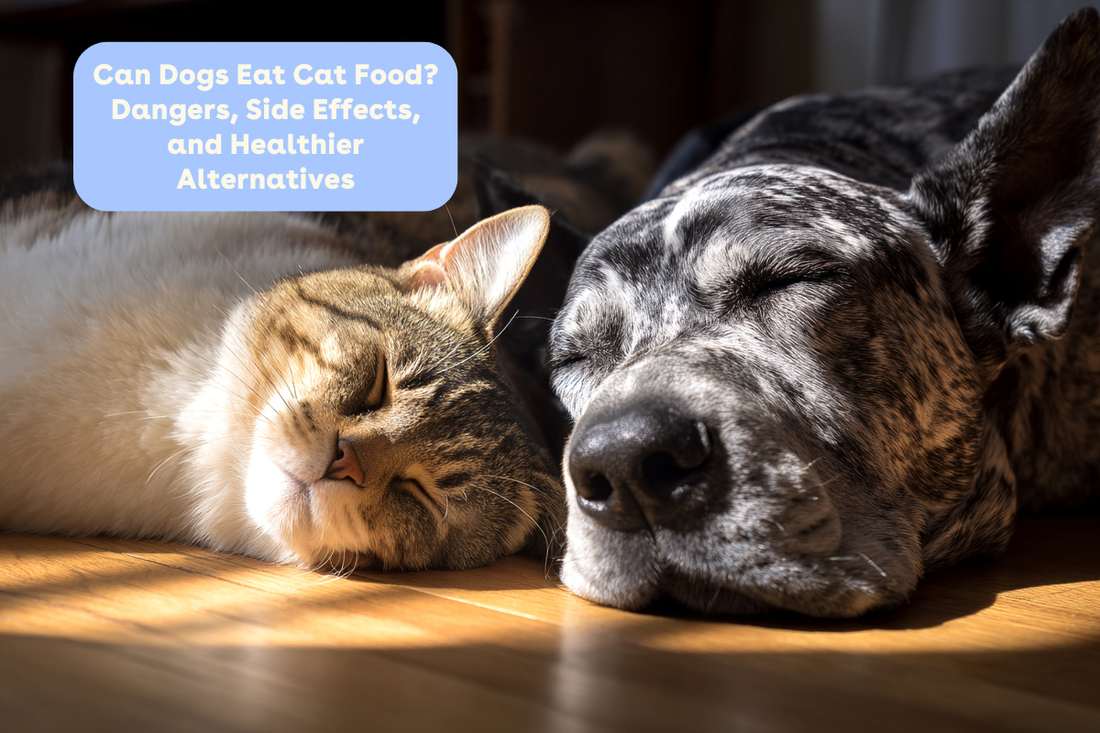
Having both a dog and a cat in your home can often lead to one surprisingly common question:
Can dogs eat cat food?
Maybe your pup snuck a few bites from the cat’s bowl.
Maybe you ran out of dog food late at night and wondered if cat food could work in a pinch.
Or maybe your dog simply seems obsessed with anything your cat eats.
Here’s the short answer: cat food isn’t toxic to dogs, but it’s not a healthy or appropriate substitute for dog food.
An occasional bite likely won’t cause harm, but regular access to cat food can lead to nutritional imbalances and long-term health issues.
In this guide, we’ll break down:
- Why cat food and dog food are formulated differently
- What happens if a dog eats cat food
- When it’s an emergency (and when it’s not)
- How to prevent food stealing in multi-pet homes
- Healthier alternatives if you’re out of dog food
Let’s take a closer look at whether cat food belongs in your dog’s bowl.
Are Dogs Allowed to Eat Cat Food?

Technically, yes, dogs can eat cat food in the sense that it’s not poisonous. Most commercial cat foods are made from animal proteins, fats, and carbohydrates that dogs can digest.
But “can eat” and “should eat” are very different things.
Cat food is designed to meet the unique nutritional needs of cats, which are obligate carnivores. Dogs, on the other hand, are omnivores with very different dietary requirements. Feeding cat food to a dog, especially on a regular basis, can quickly throw off that balance.
An occasional stolen bite from the cat’s bowl is usually harmless. Regular meals of cat food, however, can contribute to:
- Excess weight gain
- Digestive upset
- Pancreatitis
- Nutrient imbalances
- Long-term organ stress
So while a small amount isn’t an emergency, cat food should never replace a complete and balanced dog diet.
Why Do Dogs Love Cat Food So Much?

If you’ve ever had to guard your cat’s bowl from an eager dog, you’re not alone. Many dogs find cat food irresistible.
There are a few reasons for this:
1. Higher Protein and Fat Content
Cat food typically contains more protein and fat than dog food. These nutrients are highly palatable to dogs and trigger strong food-seeking behavior.
2. Stronger Smell
Cat food is often more pungent, especially wet or canned formulas. That strong aroma can be extremely enticing to a dog’s sensitive nose.
🦴Looking for a delicious dog treat your dog won’t be able to resist? Shop our Soft & Chewy Treats
3. Novelty Factor
Dogs are natural scavengers. Anything “off-limits” or different from their usual food automatically becomes more interesting.
This combination makes cat food a prime target for curious pups.
💖Try giving your dog a variety of treats with different smells and textures! Learn why choice based enrichment is so important for dogs
Key Nutritional Differences Between Dog Food and Cat Food

To understand why cat food isn’t appropriate for dogs, it helps to look at how their nutritional needs differ.
Cats Are Obligate Carnivores
Cats require:
- Very high levels of animal protein
- More fat for energy
- Specific amino acids like taurine and arginine
- Preformed vitamin A
- Arachidonic acid
Their bodies are designed to get nearly all nutrients from animal tissue.
Dogs Are Omnivores
Dogs need:
- Moderate protein levels
- Balanced fat content
- Carbohydrates for energy
- A wider range of vitamins and minerals from plant and animal sources
Dog food is formulated to support long-term health, weight management, joint health, digestion, and overall balance.
🐶Check out Pupford’s Freeze Dried Raw Good Dog Food!
What This Means in Practice
Cat food is:
- Higher in protein and fat
- More calorie-dense
- Lower in fiber
- Not balanced for a dog’s vitamin and mineral needs
Over time, this mismatch can lead to serious health consequences.
What Happens If a Dog Eats Cat Food?

The effects depend on how much your dog eats and how often it happens.
Occasional Small Amounts
If your dog steals a few bites once in a while, you may see:
- Mild stomach upset
- Soft stools or diarrhea
- Temporary gas
But, many dogs show no symptoms at all.
Larger Amounts or Frequent Access
Regularly eating cat food can increase the risk of:
1. Weight Gain and Obesity
Cat food is more calorie-dense. Even small portions can add significant extra calories to your dog’s daily intake.
2. Pancreatitis
The higher fat content can trigger inflammation of the pancreas, especially in dogs prone to pancreatitis.
Symptoms may include:
- Vomiting
- Abdominal pain
- Lethargy
- Loss of appetite
3. Digestive Issues
Low fiber and high fat can lead to:
- Chronic diarrhea
- Gas
- Poor stool quality
4. Long-Term Organ Stress
Excess protein and fat over time may place added strain on the liver and kidneys, particularly in senior dogs or dogs with preexisting conditions.
Is Cat Food Dangerous for Dogs?

In most cases, cat food is not toxic to dogs. However, there are a few situations where it can become dangerous.
Dogs with Certain Health Conditions
Cat food is especially risky for dogs with:
- Pancreatitis history
- Kidney disease
- Liver disease
- Obesity
- Sensitive stomachs
For these dogs, even a single high-fat meal can cause a serious flare-up.
Ingredients to Watch For
Some cat foods may contain ingredients that are problematic for dogs, such as:
- Onion or garlic powders
- Very high salt levels
- Certain preservatives
Always check labels if your dog has access to cat food.
Can Puppies Eat Cat Food?

Puppies should not eat cat food.
Growing dogs need precise ratios of:
- Calcium and phosphorus
- Protein
- Fat
- Micronutrients
Cat food does not meet these developmental needs and can interfere with:
- Proper bone growth
- Joint development
- Long-term skeletal health
Even short-term feeding of cat food to puppies is not recommended.
💡Learn everything you need to know in our Basic Puppy Nutrition Course!
What If Cat Food Is the Only Option?

Life happens. Sometimes you run out of dog food unexpectedly.
If cat food is truly the only option for one meal:
- Offer a small portion only
- Return to dog food as soon as possible
- Monitor for vomiting or diarrhea
Better emergency options include:
- Plain cooked chicken (no seasoning)
- Plain white rice
- Plain cooked eggs
- Dog safe fruits and vegetables
These are gentler and more appropriate short-term solutions.
How to Stop Your Dog From Eating Cat Food

In multi-pet households, food stealing is one of the most common challenges.
Related Reading: Navigating a Home With a Dog and a Cat: A Guide for Harmonious Coexist – Pupford
Here are practical strategies that work:
1. Feed in Separate Spaces
Place the cat’s bowl:
- On a counter or shelf
- In a room with a baby gate
- In a cat-only feeding station
2. Pick Up Bowls After Meals
Avoid free-feeding cat food if you have a dog who steals.
3. Use Training and Management
Teach cues like:
- “Leave it”
- “Place”
- “Go to bed” during feeding times
Positive reinforcement training is one of the most effective ways to manage multi-pet feeding routines.
🐶Learn these skills and more in Pupford Academy!
Healthier Treat and Food Alternatives for Dogs
If your dog is drawn to cat food because of its rich smell and meaty flavor, the goal isn’t to give in to that temptation, it’s to offer dog-appropriate options that are just as appealing, but far safer for long-term health.
High-quality dog treats made with simple, whole ingredients are a much better choice. In particular, freeze-dried training treats are a great alternative because they deliver intense flavor without the excess fat and unbalanced nutrition found in cat food.
Pupford’s freeze-dried training treats are a strong example of what to look for in a healthier option:
- Made with single-source proteins like beef liver, chicken, or salmon
- Minimal processing to preserve natural flavor and nutrients
- No fillers, grains, or artificial additives
- Naturally low in calories, making them ideal for frequent training
Because these treats are designed specifically for dogs, they provide the taste dogs crave while still supporting healthy digestion, weight management, and training success.
If your dog is constantly trying to steal cat food, offering a high-value dog treat like this during training sessions or enrichment time can help redirect that motivation into something much healthier.
Recap: Can Dogs Eat Cat Food?
So, can dogs eat cat food?
- An occasional bite is usually harmless.
- Regular feeding is not safe or appropriate.
- Long-term use can lead to serious health problems.
Dogs thrive best on diets specifically formulated for their species, life stage, and health needs. While cat food may seem like a convenient backup, it should never replace a complete and balanced dog diet.
If your dog regularly seeks out cat food, managing feeding routines and offering high-quality dog treats can help protect their long-term health, while keeping peace in your multi-pet household.


