


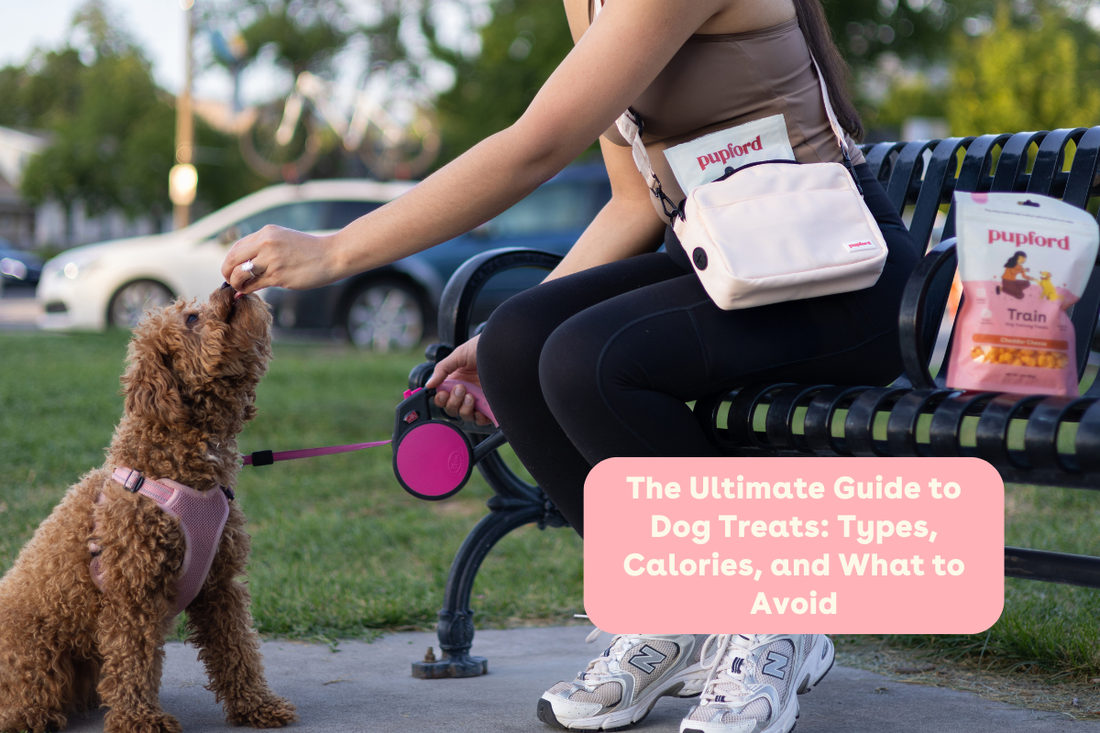
Dog treats are one of the simplest joys in a dog’s life, and one of the most powerful tools for pup parents.
Whether you’re rewarding good behavior, strengthening your bond, supporting training, or just sharing a moment of happiness, dog treats play a much bigger role than many people realize.
But not all dog treats are created equal.
From everyday snacks to high-value training rewards, from single-ingredient options to homemade recipes, choosing the right dog treats can have a real impact on your dog’s health, behavior, and learning.
In this guide, we’ll break down everything you need to know about dog treats, including how they differ from training treats, how many treats dogs should have per day, what ingredients to avoid, and why Pupford dog treats stand out as a trusted choice for modern pup parents.
Table of Contents:
- What Are Dog Treats?
- Dog Treats vs Dog Training Treats: What’s the Difference?
- Types of Dog Treats
- How Many Dog Treats Should a Dog Have Per Day?
- Choosing Healthy Dog Treats: Ingredients Matter
- Can You Make Your Own Dog Treats At Home?
What Are Dog Treats?

At their core, dog treats are supplemental foods given outside of a dog’s regular meals. They’re typically used for rewards, enrichment, bonding, or occasional indulgence. Unlike complete and balanced dog food, treats are not meant to provide all of a dog’s daily nutritional needs.
Dog treats come in many forms, soft, crunchy, freeze-dried, chewy, and even lickable. Some are designed purely for enjoyment, while others serve a specific purpose, like dental health, joint support, or training.
Because treats are extras, quality matters. High-quality dog treats can support training, motivation, and mental stimulation, while low-quality treats can contribute to weight gain, digestive upset, or long-term health issues.
Dog Treats vs. Dog Training Treats: What’s the Difference?

One of the most common points of confusion for pup parents is the difference between dog treats and dog training treats. While all training treats are dog treats, not all dog treats are ideal for training.
Dog Treats
Traditional dog treats are often larger, more calorie-dense, and designed for occasional rewards or enrichment. Think biscuits, dental chews, or longer-lasting snacks. These treats are great for:
- Casual rewards
- Bonding moments
- Enrichment activities
- Post-training celebrations
However, because they’re larger and higher in calories, they’re not always practical for repeated use during training sessions.
The Pupford Reward line is the perfect example of a traditional ‘dog treat’!
Dog Training Treats
Training treats are specifically designed to be:
- Small and bite-sized
- Low in calories
- Highly palatable
- Easy to chew and swallow
These qualities allow pup parents to reward desired behaviors frequently without overfeeding. During a single training session, a dog may earn dozens of reinforcements. Using standard dog treats for this would quickly add up the calories.
Pupford’s training treats are intentionally crafted with training in mind. Available in both Freeze Dried and Soft & Chewy, these training treats are small, lightweight, and packed with flavor, making them perfect for positive reinforcement without unnecessary fillers or excessive calories.
Why Dog Treats Are Essential for Positive Reinforcement Training

Positive reinforcement training relies on rewarding behaviors you want to see more of. Dog treats are one of the most effective reinforcers because food is a primary motivator for most dogs.
💡Learn more about primary and secondary reinforcers!
High-quality dog training treats:
- Increase motivation
- Improve learning speed
- Strengthen communication
- Build trust between dog and pup parent
Using the right treats, especially training-specific treats, allows you to reward quickly and consistently, which is essential for clear learning.
Types of Dog Treats

Dog treats come in many varieties, each serving a different purpose. Understanding these categories can help you choose the best option for your dog’s needs.
Freeze-Dried Dog Treats
Freeze-dried treats are minimally processed and typically made from real meat or fish. The freeze-drying process removes moisture while preserving flavor and nutrients.
Benefits include:
- High palatability
- Simple ingredient lists
- Lightweight and mess-free
- Ideal for training
Pupford’s freeze-dried dog treats are a standout in this category, using single-ingredient proteins like chicken, beef liver, and salmon.
🐶Check out our Freeze Dried Diced Chicken Breast reward treat!
Soft Dog Treats
Soft treats are easy to chew and often preferred by puppies, seniors, or dogs with dental sensitivities. These treats are commonly used for training but can sometimes contain more preservatives or fillers, so ingredient quality matters.
💖Shop Pupford Soft & Chewy Training Treats!
Crunchy Dog Treats
Crunchy treats, such as biscuits, can be satisfying and are often used as occasional rewards. While they may help with light dental scraping, they are usually higher in calories and less ideal for frequent training, but are loved by pups for occasional indulgences.
🦴Check out Pupford’s Peanut Butter Crunchies, a healthier alternative to other crunchy treats
Chews and Long-Lasting Treats
Chews provide valuable mental stimulation and help satisfy a dog’s natural urge to chew, which can reduce boredom and destructive behaviors in the home.
Examples include collagen chews, bully sticks, and dental chews, all of which vary in texture, durability, and nutritional value. While these long-lasting treats can be great for enrichment and stress relief, they should always be given under supervision to ensure safe chewing and prevent choking or breakage.
Because many chews are calorie-dense, it’s also important to factor them into your dog’s daily calorie intake and adjust meals accordingly.
🐶Shop our full line of Engage Chews!
How Many Dog Treats Should a Dog Have Per Day?

A common guideline is that treats should make up no more than 10% of a dog’s daily calorie intake. The remaining 90% should come from a complete and balanced dog food.
For example:
- A dog eating 500 calories per day should have no more than 50 calories from treats
- A dog eating 1,000 calories per day should have no more than 100 calories from treats
This is where low-calorie training treats become especially important. During training, it’s easy to exceed that 10% threshold without realizing it.
Pupford’s low-calorie training treats make it easier to stay within healthy limits while still reinforcing behavior effectively.
Related Reading: Treat Truth: The Sneaky Side of Calories in Dog Treats | Pupford
Choosing Healthy Dog Treats: Ingredients Matter

When shopping for dog treats, the ingredient list tells the real story. High-quality treats should be made with recognizable, purposeful ingredients.
Ingredients to Look for in Dog Treats
- Named animal proteins (chicken, beef, salmon)
- Single-ingredient or limited-ingredient formulas
- Minimal processing
- No artificial colors or flavors
Ingredients to Avoid in Dog Treats
Some common ingredients are best avoided, especially when used frequently:
- Artificial preservatives like BHA, BHT, and ethoxyquin
- Artificial colors and dyes
- Added sugars or sweeteners
- Propylene glycol
- Generic meat by-products
- Excessive fillers like corn syrup
Choosing cleaner dog treats can reduce the risk of digestive upset, allergies, and unnecessary calorie intake.
Take a deeper dive 👉10 Ingredients to Avoid in Dog Food & Treats + Safe Alternatives
Can You Make Your Own Dog Treats at Home?

Homemade dog treats can be a fun and rewarding option for pup parents who want full control over ingredients. Simple recipes using dog-safe foods can work well for occasional treats.
Benefits of Homemade Dog Treats
- Full ingredient transparency
- Customization for allergies or sensitivities
- Cost control
- A fun activity the whole family can participate in
Considerations and Limitations
- Homemade treats can be calorie-dense
- Shelf life is shorter
- Nutritional balance can be inconsistent
Recap: The Ultimate Guide to Dog Treats
Dog treats are more than just extras, they’re an integral part of training, enrichment, and everyday life with your dog. I mean who doesn’t love to spoil their pup with a little something special?
Choosing the right treats means considering size, calorie content, ingredient quality, and purpose.
Whether you’re rewarding a perfect recall, reinforcing calm behavior, or simply sharing a joyful moment, high-quality dog treats make all the difference.
Let us know in the comments below, what is your pups favorite treat and why do you love giving it to them? 👇


