


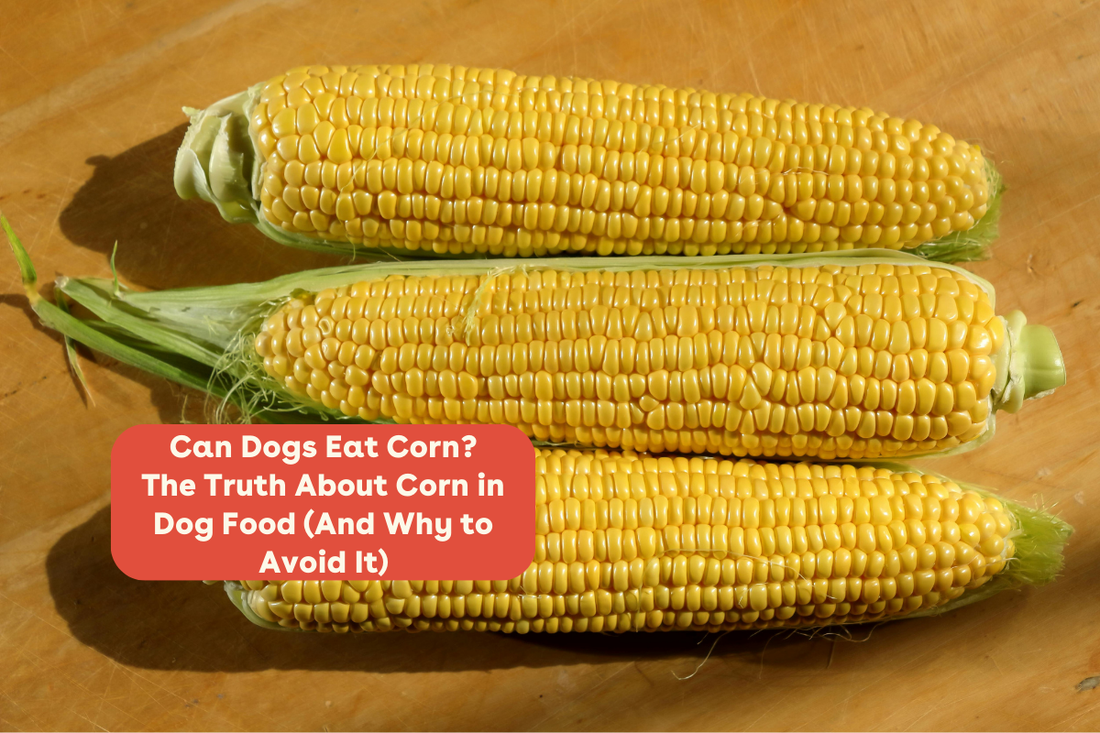
If you’ve ever been at a summer barbecue, you’ve probably seen your dog eyeing that buttery ear of corn like it’s the greatest thing on earth. And honestly, it makes sense, corn smells good, tastes sweet, and shows up in a surprising number of dog foods and treats.
But that raises an important question: can dogs actually eat corn?
The answer isn’t as simple as yes or no. While small amounts of plain corn aren’t necessarily toxic to dogs, there are several important reasons why corn is far from an ideal ingredient, especially when it becomes a major part of your dog’s diet.
In this guide, we’ll break down everything you need to know about corn for dogs, including:
- Whether corn is safe at all
- Why it’s commonly used in dog food
- Why it’s often considered a low-quality filler
- The serious dangers of corn cobs
- Better alternatives to support your dog’s health
Let’s dig in.
Can Dogs Eat Corn?

Technically, yes, dogs can eat corn in small amounts, as long as it’s:
- Plain (no butter, salt, or seasoning)
- Cooked
- Removed from the cob
Corn itself is not toxic to dogs. It contains carbohydrates, small amounts of protein, and some vitamins like B vitamins. Because of this, you’ll often see corn listed as an ingredient in commercial dog foods.
But here’s the important distinction:
“Not toxic” does not mean “beneficial.”
Corn falls into the category of ingredients that dogs can eat, but likely don’t need, and in many cases, would be better off without.
🌽BBQ Foods Dogs Can and Can't Eat - Chicken, Chips & More | Pupford
Why Is Corn So Common in Dog Food?

If corn isn’t especially beneficial, why is it in so many dog foods?
The answer comes down to cost and manufacturing efficiency.
Corn is:
- Inexpensive
- Widely available
- Easy to process
- High in calories
For pet food manufacturers, this makes it an appealing ingredient to bulk up formulas while keeping costs low.
You’ll often see corn listed in several forms, including:
- Ground corn
- Corn gluten meal
- Corn flour
When combined, these can make up a significant portion of the food, even if they’re listed separately on the ingredient label.
From a business perspective, it makes sense. But from a nutrition standpoint, it raises concerns.
Instead, look for a dog food with whole ingredients and real protein, like Pupford Good Dog Food!
Corn as a “Filler” Ingredient

One of the biggest criticisms of corn in dog food is that it’s often used as a filler.
A filler is an ingredient that adds bulk and calories but provides relatively little nutritional value compared to higher-quality options.
Dogs are omnivores, meaning they can digest both animal and plant-based foods. However, their bodies are still optimized to thrive on diets rich in:
- High-quality animal protein
- Healthy fats
- Bioavailable nutrients
Corn, on the other hand, is primarily:
- High in carbohydrates
- Low in essential amino acids
- Less biologically appropriate for dogs
Why Fillers Matter
When a dog food relies heavily on fillers like corn, it can lead to several issues:
1. Lower Nutritional Density
Your dog may be eating enough calories but not getting the nutrients they truly need.
2. Digestive Strain
Some dogs struggle to digest large amounts of corn, leading to gas, bloating, or loose stools.
3. Blood Sugar Spikes
Corn is a high-glycemic ingredient, which means it can cause spikes in blood sugar, especially in less active dogs.
4. Displacement of Better Ingredients
Every scoop of corn is taking the place of more beneficial ingredients like meat, organs, or nutrient-rich vegetables.
In short, corn can “fill up” your dog without truly fueling them.
💖10 Ingredients to Avoid in Dog Food & Treats + Safe Alternatives | Pupford
Is Corn Ever Beneficial for Dogs?

To be fair, corn isn’t completely devoid of nutrients.
It does contain:
- Some fiber
- Linoleic acid (a fatty acid)
- Small amounts of vitamins and minerals
But here’s the key issue:
There are far better sources of these nutrients.
For example:
- Fiber can come from vegetables like pumpkin or carrots
- Fatty acids are more effectively sourced from fish or animal fats
- Vitamins and minerals are more bioavailable from whole, minimally processed foods
So, while corn contributes something, it’s rarely the best option.
Corn Allergies and Sensitivities in Dogs

Corn is also sometimes associated with food sensitivities or allergies, though it’s not the most common culprit (proteins like chicken or beef are more frequent triggers).
That said, some dogs do react poorly to corn, showing symptoms like:
- Itchy skin
- Ear infections
- Digestive upset
- Excessive licking or chewing
If your dog struggles with chronic skin or digestive issues, removing corn from their diet may be worth exploring, especially as part of an elimination diet guided by a veterinarian.
The Serious Danger of Corn Cobs

While corn kernels themselves are only mildly problematic, corn cobs are a completely different story.
In fact, corn cobs are one of the most dangerous food-related hazards for dogs.
Why Are Corn Cobs So Dangerous?
Dogs don’t chew corn cobs the way humans do. Instead, many dogs will:
- Try to swallow large chunks
- Or gulp down the entire cob
Because of their size, shape, and indigestibility, corn cobs can easily become lodged in the digestive tract.
What Happens If a Dog Swallows a Corn Cob?
A swallowed corn cob can lead to a life-threatening intestinal blockage.
This means the cob gets stuck somewhere in the digestive system, preventing food and fluids from passing through.
Symptoms of a blockage may include:
- Vomiting
- Loss of appetite
- Lethargy
- Abdominal pain
- Constipation or inability to pass stool
This is a medical emergency.
In many cases, surgery is required to remove the obstruction. Without treatment, a blockage can quickly become fatal.
Why Corn Cobs Are Especially Risky
Unlike some foreign objects, corn cobs:
- Don’t break down easily
- Can absorb moisture and expand
- Have a shape that makes them prone to getting stuck
Even small dogs, and surprisingly large dogs, can run into serious trouble with corn cobs.
Long story short, never give your dog a corn cob. And just as importantly: never leave them accessible.
Trash cans, outdoor cookouts, and kitchen counters are common sources of accidental ingestion.
🐶Counter Surfing Dogs: The Unfortunate Reality of Keeping Dogs off the – Pupford
Corn vs. Higher-Quality Dog Food Ingredients

When comparing corn to more premium ingredients, the difference becomes clear.
High-Quality Ingredients Offer:
- Complete amino acid profiles
- Better digestibility
- Higher nutrient absorption
- Support for skin, coat, and overall health
Examples include:
- Real meat and organ meats
- Fish rich in omega-3 fatty acids
- Whole vegetables with functional benefits
Corn Offers:
- Calories
- Carbohydrates
- Limited nutritional value
This is why many higher-end dog foods choose to avoid corn altogether and focus on more biologically appropriate ingredients.
Here’s a look at some of the ingredients in Pupford Good Dog Food 👇

The Role of Carbohydrates in a Dog’s Diet

It’s worth noting that dogs don’t require carbohydrates in the same way humans do.
They can utilize carbs for energy, but they can also efficiently derive energy from:
- Protein
- Fat
When carbohydrates are included, it’s generally better to choose:
- Lower-glycemic options
- Whole-food sources
- Ingredients that provide additional nutrients
Corn, especially in processed forms, doesn’t check many of those boxes.
🦴7 Ways To Enhance Your Dog’s Diet | Pupford
When Is Corn Okay for Dogs?

If you’re wondering whether you can ever give your dog corn, here’s a practical guideline:
Corn is okay if it’s:
- Plain
- Cooked
- Off the cob
- Given in small amounts
Think of it as an occasional treat, not a dietary staple.
For example, a few kernels dropped on the floor? Not a big deal.
A diet built around corn? That’s where problems can start.
Better Alternatives to Corn for Dogs

If you’re looking for healthier options to include in your dog’s diet, there are plenty of better choices.
Nutrient-Dense Alternatives
- Pumpkin (great for digestion)
- Sweet potatoes (fiber + vitamins)
- Blueberries (antioxidants)
- Carrots (low-calorie crunch)
Protein-Rich Options
These ingredients provide far more nutritional value and support your dog’s overall health in a meaningful way.
Choosing a Better Dog Food

If you’re evaluating your dog’s food and noticing corn high on the ingredient list, it might be worth reconsidering.
Look for foods that prioritize:
- Real, named animal proteins
- Minimal processing
- Whole, functional ingredients
- Limited or no fillers
This kind of approach aligns more closely with what dogs need to thrive, not just survive.
Recap: Should Dogs Eat Corn?
So, can dogs eat corn?
Yes, but that doesn’t mean they should eat much of it.
While small amounts of plain corn aren’t harmful, it’s far from an ideal ingredient. Its role as a filler in many dog foods, combined with its limited nutritional value, makes it something you’ll generally want to minimize.
And when it comes to corn cobs, the answer is simple: Absolutely not.
They’re one of the most dangerous food items your dog could ever swallow.
At the end of the day, your goal as a pup parent is to provide food that supports your dog’s health, energy, and longevity. That means focusing on high-quality, nutrient-dense ingredients, and being mindful of the ones that don’t add much value.
Because what you feed your dog every day doesn’t just fill their bowl, it shapes their life.


