


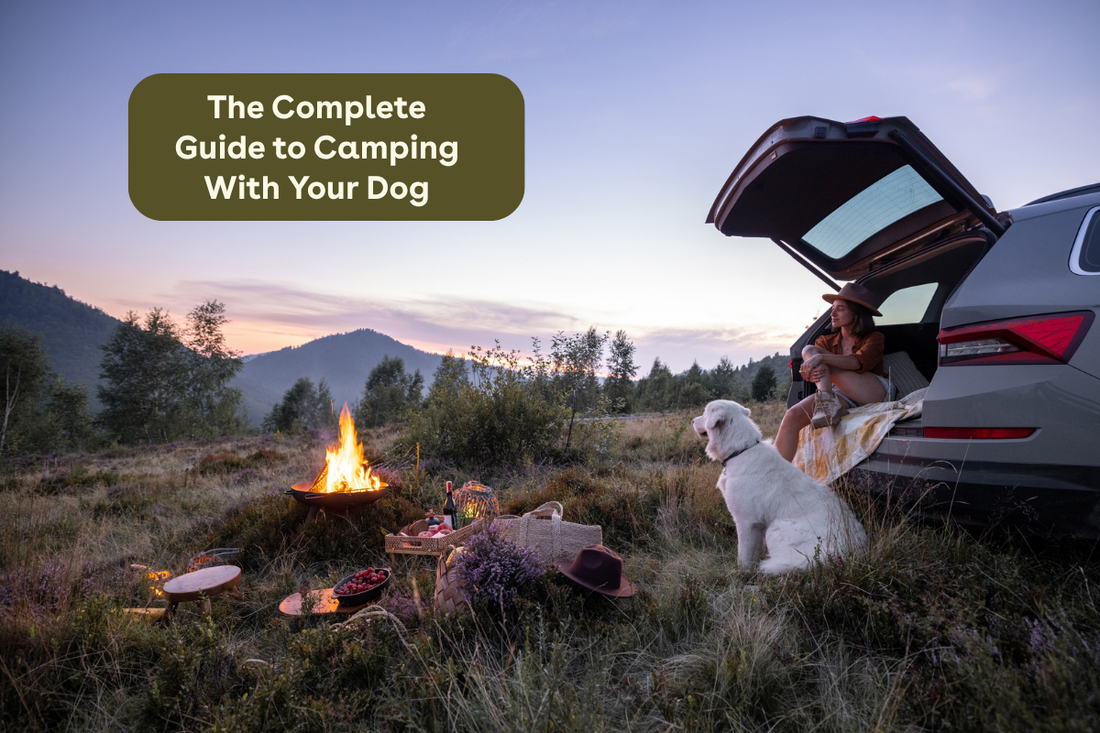
There's nothing quite like exploring the outdoors with your best friend by your side. Whether you're pitching a tent in the mountains, parking an RV by a lake, or heading into the backcountry, camping with your dog can create unforgettable memories.
But successful camping with dogs takes more than packing a leash and a food bowl. Preparation, training, and safety all play a huge role in ensuring both you and your pup have an enjoyable trip.
This complete guide covers everything you need to know before heading into the great outdoors together.
Is Camping Good for Dogs?

For many dogs, absolutely.
Camping provides opportunities to:
- Explore new environments
- Experience enriching sights and smells
- Exercise naturally
- Strengthen your bond
- Practice real-world training skills
That said, camping isn't ideal for every dog. Very young puppies, senior dogs with mobility issues, dogs recovering from surgery, or dogs with severe anxiety may find camping stressful rather than enjoyable.
Consider your dog's personality, health, and training before planning your adventure.
Essential Camping Gear for Dogs
Just like you wouldn't head into the wilderness without supplies, your dog needs their own camping essentials.
Food and Water
Bring more food than you think you'll need.
Pack:
- Dog food
- Training treats
- Portable water bowl
- Extra drinking water
- Airtight food storage
Never assume natural water sources are safe for your dog. Lakes, rivers, and streams may contain bacteria, parasites, algae, or contaminants.
Leash and Long Line
Even if your dog has excellent recall, many campgrounds and public lands require dogs to remain on leash.
Bring:
- Standard 6-foot leash
- 15–30 foot long line for exploring
- Backup leash
- ID tags
- Harness (This is our favorite 👉Freedom Harness)
A long line allows your dog more freedom while still keeping wildlife, other campers, and your dog safe.
Sleeping Gear
Depending on the weather, your dog may appreciate:
- Portable dog bed
- Camping mat
- Blanket
- Sleeping bag designed for dogs (optional)
Providing a familiar sleeping surface also helps many dogs settle faster.
First Aid Kit
Include:
- Gauze
- Self-adhesive wrap
- Tweezers
- Tick remover
- Saline rinse
- Paw balm
- Antiseptic wipes
- Emergency veterinarian numbers
Don't forget any medications your dog normally takes.
💖Dog & Puppy First Aid: DIY First Aid Kits, Treatments & Courses | Pupford
Other Helpful Items
- Waste bags
- Cooling vest (summer)
- Dog jacket (cold weather)
- LED collar or light
- Reflective gear
- Towel
- Brush
- Paw protection
Training Before You Go

Camping is full of exciting sights, smells, and sounds that can make it difficult for even well-trained dogs to focus. Spending a little time practicing key skills before your trip can help keep your dog safe, reduce stress, and make the experience more enjoyable for everyone.
Reliable Recall
A dependable recall is one of the most important skills your dog can have outdoors. Even if you plan to keep your dog on a leash, accidents can happen, a gate may be left open, a leash could slip from your hand, or your dog might get startled. Practicing recall in a variety of environments and around increasing levels of distraction helps build reliability before you're surrounded by tempting wildlife scents and new adventures.
Remember to make coming back to you rewarding every time by using high-value treats, praise, or a favorite toy. You want your dog to think that returning to you is always worth it.
🦴Best Treats for Recall Training: Reward Your Dog for Coming When Called – Pupford
Settle on a Mat
Teaching your dog to relax on a designated bed or mat can make campground life much easier. Whether you're cooking dinner, sitting around the campfire, or chatting with neighboring campers, having a clear "place" cue gives your dog something productive to do instead of wandering around camp.
Start practicing this skill at home, then gradually introduce it in more distracting places like your backyard or a local park before expecting your dog to settle easily at a busy campground.
Loose Leash Walking
Campgrounds and trails are often shared with hikers, cyclists, children, and other dogs. A dog that can walk politely on a loose leash is safer, easier to manage, and more enjoyable to take along on adventures. If your dog tends to pull or zigzag, spend some time refreshing loose leash walking skills before your trip so you're both prepared for crowded trails and campsites.
🐕Loose Leash Walking Training: 5 Tips to Stop Pulling | Pupford
Leave It
The outdoors can be full of things you don't want your dog investigating, including discarded food, fishing hooks, mushrooms, wildlife scat, dead animals, and trash. A reliable "Leave It" cue allows you to redirect your dog's attention before they pick up something potentially dangerous.
Like any training skill, practice in low-distraction environments first before gradually increasing the challenge. Reinforcing your dog for making the choice to ignore tempting items can help keep them safe throughout your camping adventures.
👉Learn how to teach your pup all of these skills and more in Pupford Academy+!
Where Should Your Dog Sleep?
Every camping style comes with pros and cons.
Tent Camping
Many dogs do wonderfully in tents.
Advantages include:
- Staying close together
- Easier supervision
- More warmth on cool nights
Before your trip:
- Practice setting up the tent at home.
- Let your dog explore it.
- Reward calm behavior inside.
Bring a bed or blanket so your dog has a designated sleeping spot.
RV Camping
An RV provides:
- Climate control
- Better protection from weather
- Familiar sleeping arrangements
- More storage
However, avoid leaving your dog unattended in an RV for extended periods, especially during warm weather. Temperatures can rise quickly if power or air conditioning fails.
Camper Vans and Vehicles
Some campers choose to sleep in vehicles with their dog.
Make sure:
- Ventilation is adequate.
- Temperatures remain safe.
- Your dog has enough room to stretch comfortably.
Campground Safety

Camping comes with unique hazards that many dogs don't encounter in their everyday lives. Staying aware of your surroundings and supervising your dog throughout your trip can help prevent accidents and ensure everyone has a safe, enjoyable adventure.
Campfires
A crackling campfire is part of the camping experience, but it can also be dangerous for curious dogs. Your pup may accidentally step on hot coals, brush against a fire ring, knock over hot cookware, or investigate food left too close to the flames. Keep your dog a safe distance from the fire, especially while cooking, and consider using their "place" cue to encourage them to relax on a bed or mat nearby.
Human Food
Campground meals often include foods that aren't safe for dogs. Chocolate, onions, grapes, raisins, alcohol, and foods containing xylitol are all toxic, while fatty foods like hot dogs or burgers can lead to digestive upset or even pancreatitis in some dogs. Store food securely, clean up scraps promptly, and ask fellow campers not to share table food with your dog.
🍫Loose Leash Walking Training: 5 Tips to Stop Pulling | Pupford
Weather
Weather can change quickly when you're camping, so it's important to watch your dog closely throughout the day.
In hot weather, provide plenty of fresh water, access to shade, and frequent breaks. Signs of heat exhaustion include excessive panting, drooling, weakness, vomiting, and collapse, and require immediate action.
Cold weather presents its own challenges, particularly for puppies, senior dogs, and short-coated breeds. If your dog is shivering, seems lethargic, or is reluctant to move, it may be time to head inside, add an extra layer, or warm them up with blankets. Planning your activities around the weather and your dog's individual needs will help keep them comfortable no matter the season.
Wildlife Safety
The outdoors is home to countless animals your dog may rarely (or never) encounter at home. While exploring nature together is an amazing experience, it's important to remember that your dog’s curiosity can sometimes put them in dangerous situations. Teaching your dog to observe wildlife calmly, keeping them under control, and knowing what hazards to watch for can help prevent unwanted encounters.
Rattlesnakes
If you frequently camp, hike, or explore areas where rattlesnakes are common, consider enrolling your dog in a force-free rattlesnake avoidance course before your trip. These programs teach dogs to recognize the sights, sounds, and smells of rattlesnakes and make the choice to move away from them using reward-based training methods.
Avoid courses that rely on fear, intimidation, or punishment, as these approaches can create anxiety and may not teach your dog the skills needed to safely navigate a real-life encounter. A well-designed avoidance course focuses on building awareness and a positive response to moving away from danger.
Some veterinarians also offer a rattlesnake vaccine, which may help reduce the severity of symptoms if your dog is bitten. However, the vaccine does not prevent rattlesnake bites and should never replace proper avoidance training, supervision, and emergency planning. Talk with your veterinarian about whether the vaccine is appropriate based on your dog's lifestyle, where you travel, and the types of outdoor activities you enjoy.
If your dog encounters a rattlesnake, never allow them to approach, sniff, or investigate, even if the snake appears dead. Keep your dog on leash, calmly create distance, and seek veterinary care immediately if a bite occurs.
Bears
Bears are often attracted to food smells, including dog food and treats. Keep all food stored securely in bear-resistant containers when required, and avoid leaving bowls, chews, or leftover food outside overnight.
If you encounter a bear, do not allow your dog to bark at, chase, or approach it. A dog that runs toward a bear can unintentionally escalate the situation and put both you and your pup at risk.
Coyotes
Coyotes are common in many camping and hiking areas and may view small dogs as prey. Keep your dog close, especially during dawn, dusk, and nighttime hours when coyotes are most active.
Avoid allowing your dog to chase or investigate wildlife, as this can lead to dangerous encounters and may encourage them to wander farther from you.
Moose, Elk, and Deer
Large wildlife like moose, elk, and deer may appear calm, but they can become defensive if they feel threatened, especially when protecting young. Keep a safe distance and teach your dog to calmly observe wildlife without chasing, barking, or pulling toward them.
🐶Prey Drive in Dogs – Reduce It or Use It? + Training Tips | Pupford
Ticks and Fleas
Ticks and fleas are common in many outdoor environments and can carry diseases that affect your dog. Before your trip, talk with your veterinarian about appropriate parasite prevention based on your destination and activities.
After every hike or outdoor adventure, check your dog carefully, especially in areas where ticks commonly hide:
- Ears
- Between toes
- Armpits
- Belly
- Around the collar
- Under the tail
Removing ticks quickly and performing regular checks can help keep your dog healthy throughout your camping adventures.
💖Flea and Tick Prevention for Your Dog | Pupford
Paw Protection

Different camping environments can be tough on your dog's paw pads, especially when exploring unfamiliar terrain. Rocky trails, hot dirt, gravel, sharp sticks, thorns, burrs, and pine needles can all cause irritation, cuts, or discomfort if your dog isn't prepared.
Before and after hikes, take a few minutes to check your dog's paws for any signs of injury. Look between their toes, around their paw pads, and along their nails for trapped debris, cracks, or small cuts. If you notice dirt, burrs, or splinters, gently remove them and clean the area to help prevent irritation or infection.
For dogs spending a lot of time outdoors, a paw balm can help protect and moisturize dry or cracked paw pads. You can also consider using dog boots for particularly rough terrain or extreme temperatures, but make sure your dog has time to get comfortable wearing them before your trip.
For more seasonal paw care tips, check out our guide on summer paw protection.
Choosing Dog-Friendly Camping Areas
Not every campground allows dogs.
Before booking, verify:
- Dogs are permitted
- Leash requirements
- Breed restrictions
- Trail access
- Seasonal closures
Some national parks allow dogs only in developed campgrounds, not on hiking trails.
Always check regulations before arriving.
Avoid Watersheds and Protected Areas
Some recreation areas prohibit dogs to help protect drinking water sources, wildlife habitat, or fragile ecosystems.
These restrictions commonly apply in:
- Watersheds
- Protected wildlife areas
- Sensitive alpine environments
Respect posted signs and choose dog-friendly alternatives whenever possible.
Off-Leash Etiquette
 Even in designated off-leash areas, good manners matter.
Your dog should remain under voice control at all times.
Don't allow your dog to:
- Rush other campers
- Approach leashed dogs
- Chase wildlife
- Enter neighboring campsites
Not every person, or every dog, wants to interact.
A reliable recall helps ensure everyone enjoys the outdoors safely.
🐕7 Reasons to Follow Leash Laws | Pupford
Practice Leave No Trace
Responsible dog guardians help preserve trails for everyone.
Remember to:
- Pick up waste
- Pack out poop bags
- Stay on designated trails
- Prevent digging
- Respect wildlife
- Minimize barking
Following Leave No Trace principles helps protect natural spaces for future visitors.
Before You Hit the Trail

Many camping trips include hiking, making trail preparation just as important as campsite preparation.
If your adventure includes hiking, don't miss our guide to Dog Hiking Tips, where we cover trail etiquette, conditioning, packing lists, and hiking safety in more detail.
Recap: The Guide to Camping with Your Dog
Camping with your dog is one of the best ways to build confidence, strengthen your bond, and enjoy the outdoors together. A little preparation goes a long way toward creating a safe and memorable adventure.
Pack thoughtfully, brush up on your dog's training, respect wildlife and fellow campers, and always follow local regulations. Whether you're spending a weekend in an RV, sleeping under the stars in a tent, or exploring a new trail, good planning helps ensure every trip is one you'll both want to repeat.
With the right gear, reliable training, and a focus on safety, you and your pup will be ready for many happy camping adventures to come.


