


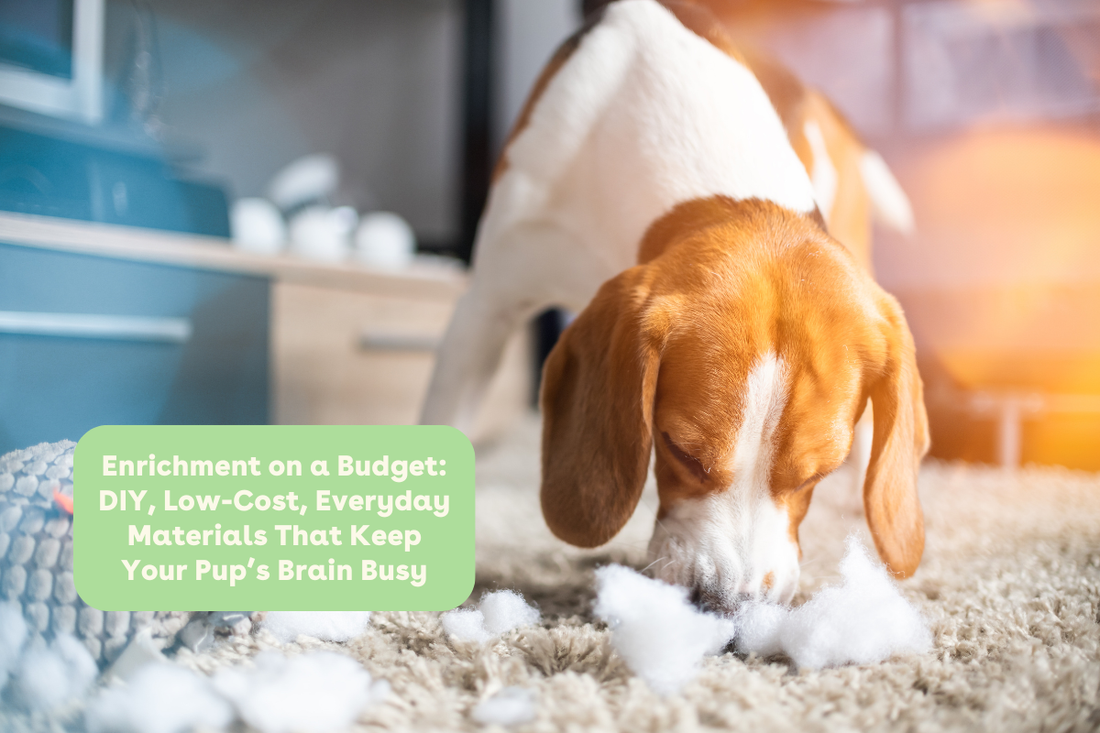
Keeping your dog mentally stimulated is just as important as giving them daily walks and physical exercise. Mental enrichment keeps your pup sharp, reduces boredom, and prevents unwanted behaviors such as chewing, barking, or digging.
But the idea that enrichment always requires expensive toys can be discouraging for many pup parents. The truth is, some of the best enrichment activities use everyday household items you likely already have lying around. With a little creativity, you can create engaging, stimulating experiences for your pup without spending a fortune.
In this guide, we’ll explore how to repurpose everyday items for DIY enrichment, provide step-by-step instructions for homemade games, discuss safety precautions, and give tips on rotating activities to keep novelty high. By the end, you’ll have a toolbox of budget-friendly ideas to keep your dog’s brain engaged.
Table of Contents:
- Why Enrichment Matters for Dogs
- Everyday Items You Can Use for DIY Dog Enrichment
- DIY Enrichment Games and Step-by-Step Instructions
- Safety Tips for DIY Enrichment
- Keeping Enrichment Novel Without Spending a Fortune
-
Benefits of Low-Cost Enrichment
Why Enrichment Matters for Dogs

Dogs are intelligent, social animals who need more than just food and walks to stay healthy and happy. Mental enrichment helps:
Prevent boredom-related behavior: Dogs left without stimulation may chew furniture, bark excessively, or develop anxiety.
🐶Learn how enrichment can reduce problem behaviors!
Build confidence: New challenges encourage problem-solving and self-assurance.
💖Check out additional tips to build your dog's confidence!
Support training: Many enrichment activities incorporate scent work, impulse control, and focus skills.
Strengthen the bond between pup and parent: Interactive games give you quality time together.
Enrichment comes in many forms, scent work, puzzle games, food challenges, and even physical obstacles.
The best part? You don’t need to buy specialized gadgets to create engaging experiences. Household items can often be repurposed into safe, effective enrichment tools.
Everyday Items You Can Use for DIY Dog Enrichment
Before diving into games and activities, it’s helpful to know what household materials are safe and versatile for enrichment. Here’s a non-exhaustive list:
-
Cardboard boxes: Great for hide-and-seek games, puzzles, and digging boxes.
-
Old towels or t-shirts: Perfect for snuffle mats or tug toys.
-
Recycled containers (plastic or cardboard): Can be used for treat-dispensing puzzles.
-
Muffin tins: Ideal for “find the treat” challenges.
-
Paper cups: Can be stacked or inverted to hide treats.
-
Paper, newspaper, or wrapping paper: Used for shredding or hiding food.
-
Safe kitchen scraps: Carrots, apples, or other dog-safe fruits and veggies for scent or taste-based enrichment.
-
Small rugs or blankets: Can be folded or layered for snuffle mats.
DIY Enrichment Games and Step-by-Step Instructions

Here are several step-by-step activities using household items that stimulate your dog’s mind.
1. The Muffin Tin Puzzle
Materials: Muffin tin, tennis balls or small cups, treats.
How to Play:
-
Place a treat in a few of the muffin tin’s compartments.
-
Cover each compartment with a tennis ball, toy, or small cup.
- Let your dog sniff and figure out how to remove the balls to get the treats.
Tips:
-
Start with only a few compartments covered, gradually increasing difficulty.
-
Always supervise to prevent chewing on non-food items.
Rotation Idea: Switch treats or use kibble some days and frozen safe treats on others for novelty.
🦴Check out our in-depth guide to the muffin tin game!
2. Towel or T-Shirt Snuffle Mat
Materials: Old towel or t-shirt, kibble or small treats.
How to Play:
-
Lay the towel flat and sprinkle kibble or treats in folds and creases.
-
Scrunch, roll, or fold the towel, hiding the treats inside.
-
Encourage your dog to sniff out the treats.
Tips:
-
Wash the towel regularly to avoid odor buildup.
-
Always supervise your pup, especially with new forms of enrichment
Variation: Layer multiple towels for added difficulty. You can also braid or knot strips of fabric to create a more challenging mat.
3. Box Hide-and-Seek
Materials: Cardboard boxes of varying sizes, treats or toys.
How to Play:
-
Scatter several boxes on the floor.
-
Hide treats or a favorite toy inside one or more boxes.
- Encourage your dog to “find it!”
Tips:
-
Start with only one box open for treats and gradually increase the number.
-
Ensure the boxes don’t have staples, tape, or sharp edges.
Rotation Idea: Change box sizes or stack them to increase the challenge.
4. Recycled Container Treat Puzzle
Materials: Plastic containers with lids (cleaned and safe), kibble, or small treats.
How to Play:
-
Place a few treats inside a container.
-
Secure the lid loosely so your dog can figure out how to open it (or you can just let them paw at it).
-
Supervise to prevent chewing on plastic.
Tips:
-
Avoid thin or brittle plastics that can break into sharp pieces.
-
For extra challenge, use multiple containers with increasing lid tightness.
Variation: Use different types of containers like spice jars, Tupperware, or dairy canisters (always clean and remove labels).
5. Paper Cup Shuffle
Materials: Paper or plastic cups, treats.
How to Play:
-
Place a treat under one cup while your dog watches.
-
Shuffle the cups around and encourage your pup to find the treat.
Tips:
-
Start slowly, letting your dog see the treat under the cup.
-
Use positive reinforcement when they find it to encourage problem solving.
Rotation Idea: Change the number of cups or hide multiple treats under several cups.
6. Scavenger Hunt
Materials: Any dog-safe treats or safe kitchen scraps.
How to Play:
-
Hide treats around a room or in the yard.
-
Encourage your dog to sniff them out.
-
Reward success with praise
Tips:
-
Start easy, then increase difficulty by hiding treats in more challenging spots.
-
Always ensure that hiding spots are safe and accessible.
Variation: Use scent trails or create a “treasure map” game for older or more advanced dogs.
7. DIY Tug Toy
Materials: Old t-shirt, towel, or fabric scraps.
How to Play:
-
Cut fabric into strips.
-
Braid strips tightly.
-
Tie knots at both ends.
-
Play tug-of-war with your dog using the homemade toy.
Tips:
-
Only use durable fabrics, and supervise to prevent ingestion.
-
Rotate out toys regularly to prevent fraying and choking hazards.
8. Shredding Box
Materials: Cardboard box, shredded paper or newspaper, treats.
How to Play:
-
Fill a box with shredded paper.
-
Hide treats inside.
-
Let your dog dig and forage through the paper.
Tips:
-
Make sure paper is clean and free of staples or ink that might be toxic.
-
Supervise to prevent ingestion of excessive paper.
Rotation Idea: Change treats, or add scent items like dried herbs safe for dogs to keep novelty fresh.
Watch our How-to Video!
Safety Tips for DIY Enrichment

When using household items for enrichment, safety must always come first. Here are some important considerations:
-
Avoid toxic materials: Never use chocolate, grapes, onions, or other foods that are toxic to dogs.
-
Prevent choking hazards: Remove small parts, staples, or items your dog can easily swallow.
-
Supervise at all times: Especially when introducing new DIY toys or puzzles.
-
Regularly inspect toys: Homemade toys can wear out faster than commercial toys. Replace if torn or frayed.
-
Mind your pup’s size and strength: Adjust difficulty levels according to breed, age, and chewing habits.
Keeping Enrichment Novel Without Spending a Fortune

Dogs, like people, can get bored with repetition. To keep enrichment engaging:
-
Rotate games: Swap out one game for another every few days.
-
Change materials: Use different boxes, towels, or containers for similar games.
-
Vary treats: Change flavors, textures, or types of food.
- Mix activity types: Alternate scent-based games, puzzles, and physical challenges.
By rotating and varying activities, you ensure your dog stays mentally engaged and avoids frustration from predictability.
Benefits of Low-Cost Enrichment

Using everyday household items for enrichment has several advantages:
-
Budget-friendly: No need to spend hundreds on toys or puzzles.
-
Customizable: You can adjust difficulty and materials to match your dog’s needs.
-
Encourages creativity: Both you and your dog benefit from problem-solving and exploration.
- Accessible: Materials are usually already on hand, making enrichment quick and easy to implement.
Recap: Enrichment on a Budget
Mental enrichment doesn’t have to be expensive. With a bit of creativity, everyday items like boxes, towels, cups, and safe kitchen scraps can transform into engaging, brain-boosting activities for your dog. By repurposing what you already have, you can provide variety, stimulate your dog’s senses, and strengthen your bond, all on a budget.
Remember, safety is key. Always supervise new enrichment activities, avoid toxic or small materials, and rotate games to keep your dog engaged. With these strategies, you can turn your home into a playground for your pup’s mind, proving that enrichment is more about creativity than cost.
By making enrichment part of your routine, you’ll see a happier, more confident, and mentally sharp dog, all without breaking the bank.
🐶Looking for even MORE enrichment ideas? Check out our Enrichment Activities Course!


