


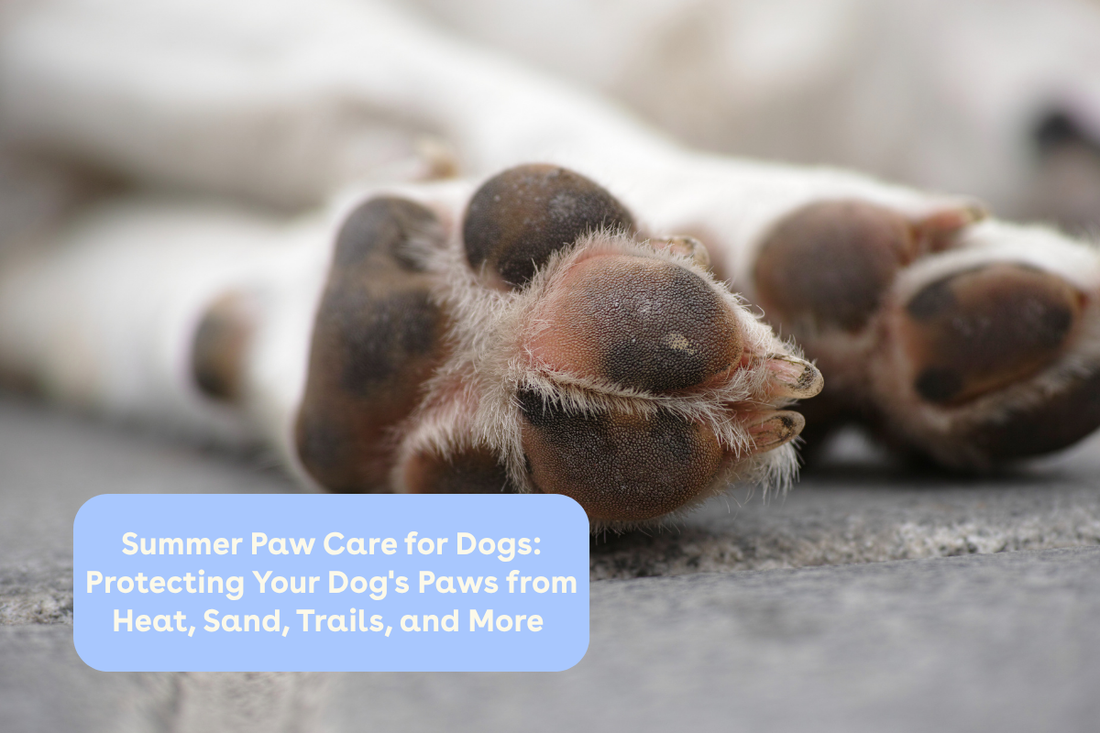
Summer is full of adventures with your dog. From neighborhood walks and beach trips to hiking trails and backyard play, warmer weather means more time spent outdoors.
While most dog parents think about keeping their dog cool and hydrated, one important area often gets overlooked: their paws.
Your dog's paw pads are tough, but they aren't indestructible. Hot surfaces, rough terrain, and environmental irritants can quickly lead to painful burns, cuts, and cracked paw pads that can put an end to summer fun.
Here's everything you need to know to keep your dog's paws healthy all season long.
Why Paw Care Matters

Dog paw pads act like natural shock absorbers, providing traction and protecting the bones, joints, and soft tissues in the feet. While they're designed to withstand everyday wear and tear, extreme summer conditions can overwhelm even the toughest paws.
Damaged paw pads can make walking painful and may increase the risk of infection if cracks or cuts develop.
A little prevention goes a long way.
How to Protect Your Dog from Hot Pavement

One of the biggest summer hazards is hot pavement.
Even if the air temperature feels comfortable, asphalt and concrete absorb heat quickly. On sunny days, pavement can become hot enough to burn your dog's paw pads within seconds.
The Seven-Second Test
Before heading out for a walk:
- Place the palm of your hand on the pavement.
- Hold it there for seven seconds.
- If it's too hot for your hand, it's too hot for your dog's paws.
Whenever possible:
- Walk early in the morning or later in the evening.
- Choose shaded routes.
- Walk on grass whenever possible.
- Take frequent breaks if you're spending time outdoors.
Signs of burned paw pads include:
- Limping
- Refusing to walk
- Excessive paw licking
- Blisters
- Redness
- Missing pieces of paw pad
If you suspect burns, rinse the paws with cool (not ice-cold) water and contact your veterinarian.
💦7 Hacks to Keep Dogs Cool in Summer Heat | Pupford
Beach Safety: Protecting Your Dog's Paws from Hot Sand

Beach days are fun, but sand presents its own challenges.
Dry sand can become extremely hot under direct sunlight. Running across hot sand can cause discomfort or burns similar to hot pavement.
Sand can also:
- Get lodged between the toes
- Cause skin irritation
- Rub the paw pads raw during long walks
- Hide sharp shells, glass, or fishing hooks
After visiting the beach:
- Rinse your dog's paws with fresh water.
- Dry thoroughly between the toes.
- Check for cuts or abrasions.
- Remove any debris caught between the paw pads.
☀️Safety Tips for Taking Your Dog to The Beach | Pupford
How Saltwater Affects Your Dog’s Paws

A dip in the ocean feels refreshing, but saltwater can leave paws dry and irritated.
Repeated exposure may contribute to:
- Dry skin
- Cracked paw pads
- Irritation between the toes
After swimming in the ocean:
- Rinse paws with clean water.
- Dry them well, especially between the toes.
- Inspect for redness or irritation.
This simple habit helps remove salt, sand, and other debris before they cause problems.
🐶How to Clean Dog Paws: After Walks & Before Coming Inside | Pupford
Keeping Your Dog's Paws Safe on Hiking Trails

Summer is hiking season, but trails expose your dog's feet to much more than dirt.
Common trail hazards include:
- Sharp rocks
- Gravel
- Thorns
- Burrs
- Splintered wood
- Rough terrain
- Hot exposed surfaces
Before heading out:
- Gradually build your dog's endurance if they're new to hiking.
- Carry plenty of water.
- Stay on established trails.
- Avoid hiking during the hottest part of the day.
Check out hiking gear recommendations from a certified dog trainer 👉 VIDEO: Hiking with Dogs – Gear, Recall, Trail Etiquette with Amber Aquart – Pupford
After every hike:
- Check each paw carefully.
- Remove burrs or plant material.
- Look between the toes.
- Watch for cuts, torn nails, or abrasions.
Even small injuries can worsen if left untreated.
🐕Hiking with Dogs: 17 Essential Tips [2025 Update] | Pupford
Watch Out for Foxtails

Depending on where you live, summer also brings foxtails.
These grass seed awns can become lodged between your dog's toes or penetrate the skin.
Signs include:
- Excessive licking
- Swelling
- Limping
- Sudden pain
If you notice these symptoms after spending time in grassy areas, inspect the paws immediately and contact your veterinarian if you suspect a foxtail is embedded.
💖Why Foxtails are Dangerous to Dogs: A Comprehensive Guide – Pupford
How to Prevent and Treat Cracked Paw Pads

Dry, cracked paw pads are common during summer, especially for active dogs.
Heat, rough surfaces, saltwater, frequent walking, and dehydration can all contribute to cracking.
Healthy paw pads should feel:
- Thick
- Flexible
- Slightly rough
- Free from deep cracks
Signs your dog's paws need attention include:
- Visible cracks
- Peeling
- Flaking
- Bleeding
- Tenderness
- Constant licking
Small surface cracks often improve with rest and moisturizing, while deep cracks or bleeding should be evaluated by your veterinarian.
Should You Moisturize Your Dog's Paws?

Yes, but use a product made specifically for dogs.
Human lotions often contain ingredients that aren't intended for dogs and may soften paw pads too much or be unsafe if licked.
- A dog-safe paw balm can help:
- Moisturize dry paw pads
- Protect against environmental irritation
- Support healing of minor cracks
- Keep noses and other dry skin areas hydrated
If your dog's paws are feeling rough after long summer adventures, Butter Up Paw, Nose & Skin Balm from Pupford is an easy addition to your routine. Made with natural ingredients like babassu, sunflower, mango butter, beeswax, ilipe butter, and helichrysum, it helps soften dry paw pads while supporting healthy skin. It's safe for puppies, adults, and senior dogs and can also be used on dry noses or other irritated skin.
Check Your Dog's Paws After Every Adventure

A quick paw check only takes a minute.
Look for:
- Cuts
- Burns
- Splinters
- Burrs
- Ticks
- Cracked paw pads
- Torn nails
- Objects stuck between the toes
Catching small problems early can prevent larger injuries later.
Speaking of health checks…. The Monthly Health Check: What Every Dog Parent Should Monitor at Home – Pupford
Keep Nails Trimmed

Long nails don't just affect your dog's gait, they also change how weight is distributed across the paw.
This can increase stress on the paw pads during walks and hikes.
Keeping nails at an appropriate length helps your dog move comfortably and reduces the chance of snagging or breaking a nail on rough terrain.
💅How to Trim Dog Nails at Home, Including Black Dog Nails | Pupford
Do Some Dogs Need Extra Paw Protection?

Some dogs are more likely to develop paw problems than others, including:
- Puppies
- Senior dogs
- Very active dogs
- Dogs new to hiking
- Dogs with sensitive skin
- Dogs living in especially hot climates
If your dog spends a lot of time on rough terrain or hot surfaces, protective booties may be worth considering for longer adventures.
Summer Paw Care Checklist
Before heading outside:
- Check pavement temperature.
- Bring water.
- Avoid peak afternoon heat.
- Plan shaded routes.
After every outing:
- Rinse dirty or sandy paws.
- Dry thoroughly.
- Inspect between the toes.
- Check for cuts, burns, or burrs.
- Apply a dog-safe paw balm if the pads seem dry.
Frequently Asked Questions
Can dogs burn their paws on pavement?
Yes. Asphalt and concrete can become hot enough to burn paw pads even when the air temperature feels moderate.
Is beach sand bad for dogs' paws?
Hot sand can burn paw pads, while sand and shells can cause irritation or cuts. Rinsing paws after the beach helps prevent problems.
Why are my dog's paw pads cracking in summer?
Heat, rough surfaces, hiking, sand, saltwater, and dehydration can all contribute to dry, cracked paw pads.
Can I put lotion on my dog's paws?
It's best to use a product specifically made for dogs. Human lotions may contain ingredients that aren't appropriate for dogs or may soften paw pads excessively.
How often should I check my dog's paws?
After every walk, hike, beach trip, or extended outdoor adventure during the summer.
Recap: Summer Paw Care
Summer adventures create some of the best memories with your dog, but they can also be hard on their paws.
By checking pavement temperatures, rinsing paws after the beach, inspecting feet after hikes, keeping nails trimmed, and moisturizing dry paw pads when needed, you can help your dog stay comfortable all season long.
Healthy paws mean more walks, more hikes, more games of fetch, and more time enjoying everything summer has to offer together.


