


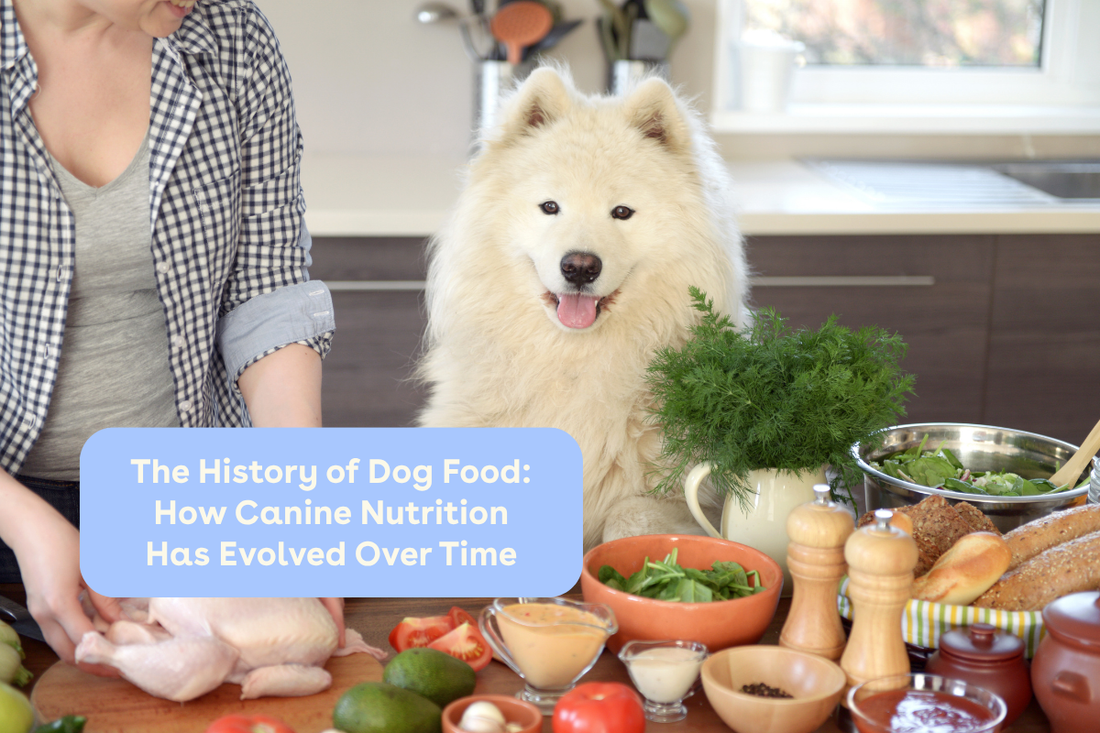
Today’s dog parents have more feeding options than ever before. Walk into a pet store and you’ll find shelves lined with kibble, canned diets, freeze-dried foods, air-dried recipes, fresh subscription meals, raw diets, toppers, supplements, and breed-specific formulas.
But dog food wasn’t always this advanced. For most of history, dogs simply ate whatever humans had available. The modern pet food industry is actually relatively young, and the way we feed dogs has changed dramatically over the last 150 years.
From table scraps and horse meat to ultra-processed kibble and modern fresh-food trends, the evolution of dog food reflects changing ideas about health, convenience, science, and the role dogs play in our lives.
Here’s a look at the fascinating history of dog food, how feeding trends have changed over time, and where canine nutrition may be headed next.
What Did Dogs Eat Before Commercial Dog Food?

For thousands of years, dogs survived on leftovers from human meals. Early domesticated dogs likely scavenged near human settlements and consumed scraps like:
- Bones
- Organ meat
- Grains
- Vegetable scraps
- Fish
- Broth
- Fat trimmings
Working dogs on farms or in hunting communities often ate whatever food was inexpensive and available. Their diets varied depending on geography, climate, and the family they lived with.
In many parts of the world, dogs were fed homemade porridges made from grains mixed with meat drippings or broth. Some working dogs received raw meat, while others survived primarily on stale bread, potatoes, or leftover stew.
At the time, dogs were generally viewed less as family members and more as workers or protectors. Nutrition science didn’t really exist yet, and few people thought deeply about balancing canine diets.
🐶The History and Evolution of Dog Breeds: A Basic Timeline | Pupford
Still, dogs managed to adapt remarkably well because they evolved alongside humans for thousands of years. Research suggests domesticated dogs became more capable of digesting starches compared to wolves, allowing them to thrive on scraps from human agriculture.
The Birth of Commercial Dog Food in the 1800s
The first true commercial dog food is widely credited to an American electrician named James Spratt.
In the mid-1800s, Spratt reportedly noticed dogs eating discarded hardtack biscuits near docks in England. Inspired by this, he created what became known as “Spratt’s Patent Meat Fibrine Dog Cakes.”
These early dog biscuits were made from ingredients like:
- Wheat meals
- Beetroot
- Vegetables
- Beef blood
- Meat
Spratt marketed the product primarily toward wealthy dog parents, especially owners of sporting and hunting dogs.
This marked a major shift in the perception of dog feeding. Instead of simply giving dogs leftovers, people began considering specially prepared food designed specifically for canine health.
By the late 1800s, dog biscuits had become increasingly popular in Europe and eventually the United States.
Early 1900s: The Rise of Canned Dog Food

The next major shift came in the early 20th century with the introduction of canned dog food.
One of the most influential early brands was Ken-L Ration, launched in the 1920s. Its flagship ingredient was horse meat, which was abundant and inexpensive at the time.
Canned food quickly became popular because it was:
- Convenient
- Shelf stable
- Higher in moisture
- Easier to feed than preparing homemade meals
During this period, dogs were increasingly transitioning from working animals to household companions. As urbanization grew, more families wanted convenient feeding solutions.
Marketing also began playing a larger role. Pet food companies advertised their foods as scientifically formulated and superior to scraps or homemade meals.
Still, nutrition standards remained inconsistent, and many products were focused more on affordability and shelf life than optimal health.
World War II and Ingredient Shortages
During World War II, rationing dramatically impacted the pet food industry.
Metal shortages limited canned food production, while meat rationing reduced ingredient availability. This forced manufacturers to explore alternative formats and ingredients.
These challenges helped accelerate the development of dry dog food.
At the time, dry foods were not particularly popular. Early versions were often difficult to digest and lacked palatability. But advances in manufacturing technology soon changed that.
The Explosion of Kibble in the 1950s and 1960s

The invention of extrusion technology transformed the pet food world forever.
Extrusion uses heat and pressure to cook ingredients into shelf-stable kibble pieces. This process allowed companies to produce dry food quickly, cheaply, and at a massive scale.
Kibble rapidly became dominant for several reasons:
Convenience
Dry food was easy to store, inexpensive, and required no refrigeration.
Long Shelf Life
Unlike canned food or homemade meals, kibble could sit on shelves for extended periods.
Marketing Around “Complete and Balanced”
Pet food companies increasingly promoted kibble as a scientifically complete diet that contained everything a dog needed.
Affordability
Kibble became one of the cheapest ways to feed dogs, especially as dog ownership expanded after World War II.
By the 1960s and 1970s, kibble had become the standard feeding method for millions of households.
The Rise of Nutrition Science
As pet ownership increased, veterinary nutrition research also expanded.
Organizations like the Association of American Feed Control Officials began establishing nutritional guidelines and standards for pet foods.
Manufacturers started formulating foods around measurable nutrient profiles rather than simply ingredient availability.
This era introduced concepts like:
- Protein percentages
- Essential fatty acids
- Vitamin supplementation
- Mineral balancing
- Life-stage nutrition
💖6 Nutrient & Vitamin Deficiencies in Dogs + Symptoms to Look For | Pupford
Dog food labels became more sophisticated, and veterinarians increasingly recommended commercially prepared diets over homemade feeding.
However, many foods still relied heavily on inexpensive fillers and by-products to reduce production costs.
🦴10 Ingredients to Avoid in Dog Food & Treats + Safe Alternatives | Pupford
The Low-Fat Craze of the 1980s and 1990s

Human diet trends heavily influenced dog food trends.
As low-fat diets became popular among people during the 1980s and 1990s, pet foods followed the same pattern.
Speaking of the 80’s and 90’s… Whatever Happened to White Dog Poop? 🤔
Many dog foods shifted toward:
- Reduced fat
- Higher carbohydrate levels
- Calorie-controlled formulas
- “Light” or “diet” recipes
This period also saw the rapid growth of veterinary prescription diets targeting issues like:
- Kidney disease
- Obesity
- Food sensitivities
- Digestive problems
At the same time, consumers began becoming more ingredient conscious. Terms like “premium,” “natural,” and “holistic” became increasingly common in pet food marketing.
Brands started emphasizing higher-quality protein sources and fewer artificial ingredients.
🐕A Guide to 7 Proteins in Dog Food: Choosing the Best for Your Dog | Pupford
The Grain-Free Boom of the 2000s
One of the biggest trends in modern pet food history was the rise of grain-free diets.
Inspired partly by the growing popularity of low-carb and paleo diets for humans, many pet food companies began marketing grain-free foods as more biologically appropriate for dogs.
These diets often replaced grains with ingredients like:
- Peas
- Lentils
- Chickpeas
- Potatoes
Consumers became increasingly interested in ideas like:
- Ancestral feeding
- Wolf-inspired diets
- Limited ingredients
- High protein formulas
This era also saw explosive growth in boutique pet food brands that focused on premium ingredients and smaller-batch manufacturing.
However, grain-free feeding later became controversial after investigations into potential links between certain grain-free diets and dilated cardiomyopathy (DCM) in dogs. Researchers are still studying the exact causes and contributing factors.
This period highlighted how quickly pet nutrition trends can shift based on emerging science and consumer perception.
Want to learn more? 👉What Is Grain-Free Dog Food? A Complete Guide for Pup Parents | Pupford
The Raw Feeding Movement

The 2000s and 2010s also brought one of the most talked-about trends in canine nutrition: raw feeding.
Suddenly, freezers everywhere were packed with chicken necks, beef organs, frozen patties, and enough raw meat to make dinner guests very confused.
Supporters of raw diets believed dogs would thrive on foods closer to what their ancestors may have eaten in the wild. These diets often included raw meat, bones, organs, vegetables, and supplements, all with the goal of creating a more natural, minimally processed way of feeding.
Fans of raw feeding frequently reported benefits like shinier coats, smaller stools, cleaner teeth, and increased energy levels. For many dog parents, raw feeding felt like a way to move away from heavily processed foods and toward something fresher and more biologically inspired.
But the trend also sparked major debate within the veterinary and nutrition world. Experts raised concerns about potential nutritional imbalances, harmful bacteria like Salmonella or E. coli, bone-related injuries, and safety risks for immunocompromised pets or humans in the household.
Whether people loved raw feeding or avoided it entirely, one thing became clear: dog parents were starting to pay much closer attention to ingredient quality and food processing.
That shift changed the pet food industry in a big way. Even traditional kibble brands began introducing freeze-dried raw toppers, raw-coated kibble, and minimally processed recipes to meet growing demand for fresher feeding options.
🐶Can Dogs Eat Raw Meat? A Science-Backed Look at Raw Feeding for Dogs | Pupford
Humanization of Pets Changed Everything

One of the biggest reasons dog food has changed so dramatically over the past few decades is simple: dogs stopped being “just pets” and officially became family.
These days, dogs have birthday parties, orthopedic beds, custom sweaters, Instagram accounts, and in some cases, a higher-quality mattress than the humans in the house. Naturally, that shift also changed the way people think about feeding them.
Modern dog parents aren’t just grabbing the cheapest bag of kibble off the shelf anymore. They’re reading ingredient labels, researching nutrition online, and asking questions like:
“Where is this protein sourced?”
“Why are there 14 ingredients I can’t pronounce?”
“Does my dog really need artificial colors shaped like tiny triangles?”
As pets became more humanized, expectations around dog food skyrocketed. Consumers started looking for foods made with recognizable ingredients, high-quality proteins, digestive support, minimal processing, and transparency around sourcing and manufacturing.
Terms like “human-grade,” “functional nutrition,” and “gut health” suddenly became part of everyday pet food conversations.
At the same time, many people began questioning ultra-processed foods and artificial additives, both in their own diets and their dogs’ diets. That growing skepticism pushed the industry far beyond the traditional kibble aisle.
Before long, pet stores were filled with fresh food subscriptions, freeze-dried raw diets, air-dried recipes, bone broth toppers, probiotic supplements, and refrigerated meals that honestly started looking better than some human lunches.
The message from consumers was clear: if dogs are family, people want to feed them like family too.
The Rise of Fresh, Freeze-Dried, and Air-Dried Foods

Over the last decade, dog food innovation has accelerated dramatically.
Several newer categories have exploded in popularity.
Fresh Dog Food
Fresh dog food companies deliver refrigerated meals made with minimally processed ingredients.
These foods often contain visible meats and vegetables and are marketed as closer to homemade feeding.
Freeze-Dried Raw
Freeze-drying removes moisture while preserving much of the food’s nutritional structure.
Freeze-dried foods, like Pupford Good Dog Food, offer some of the convenience of kibble with less processing than traditional dry foods.
Air-Dried Food
Air-dried diets slowly remove moisture using lower temperatures than extrusion.
These foods are often high in protein and nutrient dense.
Functional Nutrition
Modern diets increasingly focus on specific health goals like:
- Gut health
- Joint support
- Skin and coat health
- Weight management
- Cognitive support
Ingredients like probiotics, omega-3 fatty acids, prebiotics, collagen, and postbiotics have become increasingly common.
Digestive Health Became a Major Focus
Another big trend in modern dog nutrition? Gut health.
Yes, we’ve officially entered the era where dog parents discuss stool quality with the same seriousness people reserve for stock market predictions.
We even have a blog post all about the types of poop 👉7 Dog Poop Meanings + Types of Dog Poop Guide
But there’s a good reason for it. Researchers now understand far more about the canine microbiome, the massive community of bacteria living in a dog’s digestive system that can influence everything from digestion and immune health to skin condition and overall wellness.
As a result, today’s dog parents are paying much closer attention to signs that a food is, or isn’t, working well for their dog. Suddenly, things like chronic itching, frequent gas, loose stools, digestive upset, and food sensitivities became major conversations in the pet world.
And let’s be honest: nothing sends someone researching dog nutrition faster than being woken up at 2 a.m. by mysterious toxic puppy gas.
This growing focus on digestion completely reshaped the industry. Consumers started looking for foods made with more easily digestible proteins, higher-quality fats, limited ingredient recipes, probiotics, prebiotics, and fewer heavily processed ingredients.
Instead of simply aiming to meet minimum nutritional standards, many modern foods are now designed to actively support long-term health, better digestion, and overall wellness from the inside out.
In many ways, the conversation around dog food shifted from “Will this keep my dog full?” to “Will this help my dog truly thrive?”
💩Improve Dog's Gut Health: A Simple Guide | Pupford
Ingredient Transparency Is More Important Than Ever
Modern dog parents don’t just buy dog food anymore. They investigate it.
Gone are the days of tossing a random bag into the cart and calling it good. Today’s consumers flip bags over like detectives at a crime scene, scanning ingredient panels, guaranteed analyses, sourcing claims, and online reviews before making a decision.
People want to know:
Where was this made?
What kind of protein is being used?
Are these ingredients actually high quality?
Has this formula been tested?
And why does this kibble suddenly cost more than my groceries?
That shift has pushed pet food brands toward much greater transparency around ingredient sourcing, manufacturing standards, protein quality, feeding trials, and overall nutritional formulation.
At the same time, social media completely changed the pet food landscape. Now a single TikTok video, Reddit thread, or viral Instagram post can launch a new feeding trend overnight. One week everyone is talking about probiotics, the next week it’s air-dried food, bone broth toppers, or whether blueberries are secretly a superfood for dogs.
Pet parents are more educated and involved than ever before, which has led to a lot of positive change in the industry. But there’s also a downside: misinformation spreads just as quickly as good information.
With thousands of opinions online about what dogs “should” eat, evidence-based nutrition education has become more important than ever. Because somewhere between the passionate Facebook debates and dramatic TikTok food reviews, most dog parents are just trying to figure out what will genuinely help their dog live a healthier, happier life.
Where Dog Food Is Headed Next

The future of dog food will likely continue focusing on personalization, functionality, and ingredient quality.
Some emerging trends include:
Personalized Nutrition
Companies are developing diets tailored to:
- Breed
- Age
- Activity level
- Health conditions
- Microbiome analysis
Sustainable Proteins
Alternative proteins like insect protein and lab-grown meat are gaining attention for environmental sustainability.
Advanced Digestive Support
Expect continued growth in foods targeting gut health through probiotics, fiber blends, and microbiome-focused nutrition.
Hybrid Feeding
Many dog parents now combine multiple feeding styles, such as kibble with fresh toppers or freeze-dried additions.
This flexible approach allows families to balance nutrition, convenience, and budget.
What the Evolution of Dog Food Really Shows
The history of dog food reflects a broader shift in how humans view dogs.
In the past, feeding dogs was primarily about survival and convenience. Today, nutrition is increasingly seen as an important part of helping dogs live longer, healthier, and happier lives.
While no single food is perfect for every dog, modern pet parents have more choices and better information than ever before.
The best diets are typically those that:
- Meet a dog’s nutritional needs
- Support digestion and overall wellness
- Fit the family’s lifestyle and budget
- Use quality ingredients
- Are fed consistently and appropriately
As canine nutrition science continues evolving, dog food will likely keep moving toward more personalized, functional, and minimally processed approaches.
For dog parents looking for a modern option that prioritizes digestibility, convenience, and quality ingredients, foods like Pupford Good Dog Food reflect many of the positive trends shaping the future of canine nutrition. With high-quality ingredients and a focus on supporting healthy digestion, it represents how far dog food has come from the days of feeding scraps under the table.


