


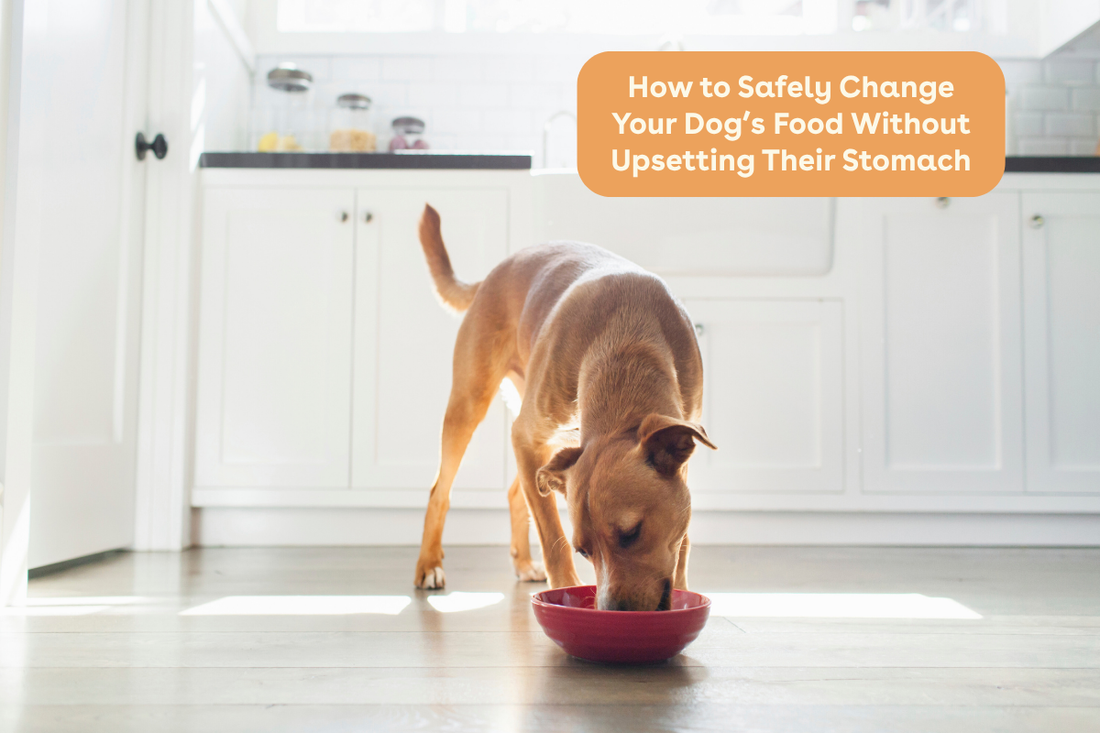
Switching your dog to a new food can be exciting, especially if you’re upgrading to a more nutritious option. But even a healthy change can cause digestive upset if you transition too quickly.
Vomiting, diarrhea, gas, bloating, or a sudden loss of appetite are all common signs that your dog’s digestive system is struggling to adjust. The good news? Most stomach issues during a food transition can be avoided with a slow, gradual approach.
Whether you’re changing foods because of allergies, digestion concerns, picky eating, or simply wanting higher-quality nutrition, this guide will walk you through the best practices for safely transitioning your dog’s food.
Why Dogs Need a Gradual Food Transition

Your dog’s digestive system is heavily influenced by their gut microbiome; the collection of beneficial bacteria that help break down food and absorb nutrients. When you suddenly introduce a completely different recipe, protein source, fat level, or ingredient blend, the digestive system may not have enough time to adapt.
Even if the new food is healthier, the abrupt change can temporarily overwhelm your dog’s stomach and intestines.
This is especially true when switching:
- From kibble to freeze-dried raw
- Between protein sources
- To a higher-protein food
- To a food with different fiber levels
- From heavily processed food to more nutrient-dense recipes
A slow transition gives your dog’s gut time to adjust gradually and helps reduce digestive stress.
🐕A Guide to 7 Proteins in Dog Food: Choosing the Best for Your Dog | Pupford
Common Signs Your Dog’s Stomach Is Struggling During a Food Change

Mild digestive changes can happen during a transition, but significant symptoms usually mean the process is moving too quickly.
Watch for signs like:
- Loose stool or diarrhea
- Constipation
- Vomiting
- Excessive gas
- Gurgling stomach sounds
- Decreased appetite
- Lethargy
- Frequent grass eating
- Sudden itching or ear irritation
If symptoms are severe or last more than a few days, contact your veterinarian.
The Best Way to Transition Your Dog to a New Food

The safest approach is to slowly mix increasing amounts of the new food into your dog’s current food over several weeks.
When transitioning to Pupford Good Dog Food, many dogs benefit from a slower, four-week transition schedule like the one below.
Week One: 25% New Food
Start by mixing about 25% of the new food with 75% of your dog’s current food.
This allows the digestive system to begin adapting without causing a sudden shock. During this phase, monitor your dog’s stool quality, energy levels, and appetite closely.
Week Two: 50% New Food
If your dog is handling the transition well, increase the ratio to an even 50/50 mix.
Some dogs may experience slightly softer stool at this stage, especially when transitioning to a more nutrient-dense food like freeze-dried raw. Mild changes can be normal, but severe diarrhea or vomiting means you should slow down the transition.
Week Three: 75% New Food
Move to 75% new food and 25% old food.
By now, many dogs begin fully adjusting to the new ingredients and may show improvements in stool quality, energy, coat condition, or appetite.
Week Four: 100% New Food
Once your dog is consistently tolerating the food well, you can fully transition to the new diet.
For sensitive dogs, there’s nothing wrong with extending the process longer than four weeks. Slower is often better when it comes to digestive health.
Why a Slow Transition Matters Even More With Freeze-Dried Raw

Freeze-dried raw foods are often more nutrient-dense and less processed than traditional kibble. That can be beneficial for digestion, but it also means your dog’s body may need additional time to adapt.
Pupford Good Dog Food is formulated with high-quality proteins and thoughtfully selected ingredients designed to support overall wellness and digestive health. However, because these recipes may contain different moisture levels, protein concentrations, and ingredient profiles than your dog’s previous food, a gradual transition is especially important.
Many pup parents notice improvements like:
- Firmer, more predictable stools
- Reduced gas
- Better appetite
- Improved energy
- Healthier skin and coat
But allowing the digestive system time to adjust is key to helping your dog experience those benefits comfortably.
💖Freeze-Dried Dog Food: The Ultimate Guide | Pupford
Tips to Help Prevent Stomach Upset During the Transition

Stick to Consistent Feeding Times
Feeding meals at the same time every day can help regulate digestion and reduce stomach stress during a transition.
Consistency helps your dog’s digestive enzymes and gut bacteria adapt more efficiently.
🐶Related Reading: Free Feeding vs. 2 Meals vs. 3 Meals a Day for Dogs: What’s Best? | Pu – Pupford
Avoid Introducing Multiple New Foods at Once
If you’re switching foods, try not to introduce several new treats, chews, supplements, or toppers at the same time.
If digestive issues occur, it becomes much harder to identify the cause.
Measure Food Carefully
Overfeeding during a transition can increase the risk of loose stool and digestive discomfort.
Always follow feeding guidelines and adjust portions gradually based on your dog’s age, activity level, and body condition.
Slow Down for Sensitive Dogs
Some dogs simply need more time.
Puppies, senior dogs, dogs with sensitive stomachs, or dogs with a history of digestive issues may benefit from transitioning over 5–6 weeks instead of four.
There’s no prize for rushing the process.
Support Gut Health During the Transition
A healthy gut microbiome can make dietary changes much easier on your dog’s digestive system.
Providing high-quality nutrition, consistent feeding routines, proper hydration, and gradual changes all help support healthy digestion.
And if you’re looking for nutrition designed with digestion in mind, Pupford Good Dog Food is formulated with quality ingredients and balanced nutrition to help support gut health and overall wellness while making mealtime simple and convenient.
Should You Switch Foods “Cold Turkey”?

In most cases, no.
Some dogs tolerate abrupt food changes surprisingly well, but many experience unnecessary digestive upset when switched too quickly.
The only time a veterinarian may recommend an immediate change is in specific medical situations, such as food contamination recalls or urgent dietary needs.
For the average healthy dog, gradual transitions are almost always the safer option.
What If Your Dog Refuses the New Food?
Some dogs are cautious about dietary changes at first.
If your dog seems hesitant:
- Warm the food slightly
- Add warm water for aroma and texture
- Feed in a calm environment
- Reduce treats between meals
- Slow the transition further
Avoid forcing the change too quickly. Patience and consistency usually help picky eaters adjust over time.
When to Contact Your Veterinarian
Occasional mild digestive changes can happen during a transition, but you should contact your veterinarian if your dog experiences:
- Persistent vomiting
- Severe diarrhea
- Blood in stool
- Refusal to eat for more than 24 hours
- Extreme lethargy
- Rapid weight loss
- Signs of abdominal pain
These symptoms may indicate something more serious than a simple food adjustment.
Recap: How to Safely Change Your Dog’s Food
Changing your dog’s food safely is all about patience and consistency.
A gradual transition helps protect your dog’s digestive system, supports gut health, and reduces the risk of stomach upset. While it may take a few weeks, slowing down the process can make a huge difference in how comfortably your dog adjusts to their new food.
Whether you’re transitioning to Pupford Good Dog Food or another high-quality food, giving your dog time to adapt can help set them up for long-term digestive success and healthier mealtimes moving forward.


