


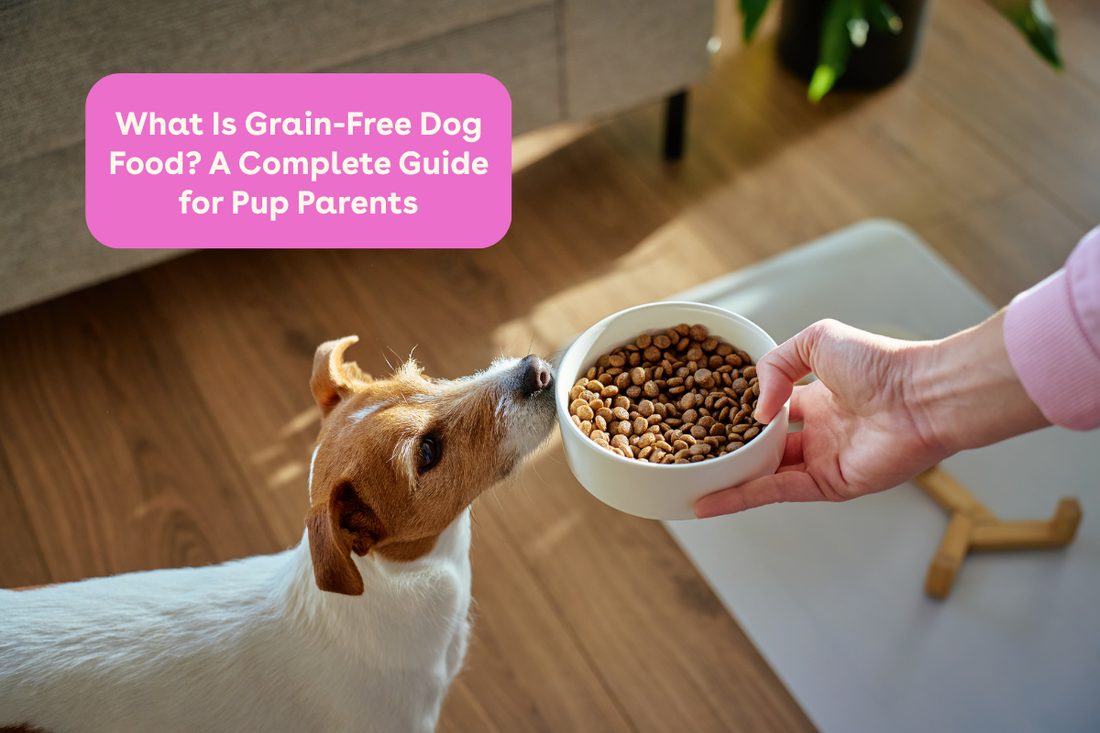
Grain-free dog food has become one of the most talked-about topics in pet nutrition. You’ve likely seen it on labels, heard about it from other pup parents, or wondered if it’s a healthier option.
But what exactly is grain-free dog food? Is it better? And does your dog actually need it?
In this guide, we’ll break it all down, clearly and honestly, so you can make the best decision for your dog.
What Is Grain-Free Dog Food?

Grain-free dog food is exactly what it sounds like: dog food made without traditional cereal grains.
These typically exclude:
- Wheat
- Corn
- Rice
- Barley
- Oats
Instead, grain-free recipes use alternative carbohydrate sources like:
- Sweet potatoes
- Peas
- Lentils
- Chickpeas
- Potatoes
These ingredients still provide energy and structure, ust without grains.
Why Do Grains Exist in Dog Food?

Before labeling grains as “good” or “bad,” it’s important to understand their role.
Grains in dog food:
- Provide digestible carbohydrates for energy
- Support healthy digestion with fiber
- Contain essential nutrients like B vitamins and minerals
- Help form kibble texture and structure
In other words, grains aren’t just fillers, they can be nutritious when used properly.
Is Grain-Free Dog Food Better?

Short answer: not necessarily.
Grain-free dog food isn’t inherently better or worse than grain-inclusive food. What matters most is the overall formulation and nutritional balance.
A high-quality dog food should include:
- Complete and balanced nutrition (AAFCO compliant)
- High-quality protein sources
- Healthy fats
- Digestible carbohydrates (grain or grain-free)
- Essential vitamins and minerals
You can find excellent options in both categories.
When Might Grain-Free Be a Good Choice?

1. Food Allergies or Sensitivities
Some dogs may have sensitivities to certain ingredients, but true grain allergies are relatively rare.
More common allergens include:
- Chicken
- Beef
- Dairy
If your dog shows signs like itching, ear infections, or digestive upset, a vet-guided elimination diet is the best way to identify triggers.
💖Is Your Dog Allergic to Everything? Here’s How to Find the Right Food – Pupford
2. Digestive Preferences
Some dogs simply do better on specific ingredient profiles.
- Grain-free formulas may:
- Improve stool quality
- Be easier for some dogs to digest
But results vary, there’s no universal rule.
🐶 A Guide to 7 Proteins in Dog Food: Choosing the Best for Your Dog | Pupford
3. Ingredient Philosophy
Some pup parents prefer grain-free diets because they:
- Want to avoid certain grains
- Prefer a diet closer to perceived ancestral feeding
While dogs can digest grains, this often comes down to personal preference.
Grain-Free vs. Gluten-Free: What’s the Difference?

These terms are often confused.
- Grain-free: No grains at all
- Gluten-free: No gluten (a protein found in wheat and some grains)
A food can be:
- Grain-free and gluten-free
- Grain-inclusive but gluten-free (like rice-based foods)
For most dogs, gluten isn’t an issue, but in rare cases, it matters.
Common Myths About Grain-Free Dog Food

Myth #1: Grains Are Just Fillers
Not true. High-quality grains provide nutrients and energy.
Myth #2: Dogs Can’t Digest Grains
Dogs have evolved to digest cooked grains effectively.
Myth #3: Grain-Free Means More Protein
Not always, many formulas replace grains with other carbs.
Myth #4: Grain-Free Is Always Healthier
Health depends on the full formula, not a single label.
How to Choose the Right Dog Food

Instead of focusing only on grain-free vs. grain-inclusive, look at the bigger picture.
Choose food with:
- Clearly named protein sources
- Balanced fat levels
- Digestible ingredients
- Transparent sourcing
- AAFCO “complete and balanced” statement
Every dog is different: age, activity, and health all matter.
🐕What Is the Difference Between Puppy Food and Adult Dog Food? | Pupford
Where Pupford Good Dog Food Fits In

When it comes to feeding your dog, quality matters more than trends.
Pupford Good Dog Food focuses on:
- Thoughtfully selected, high-quality ingredients
- A freeze-dried raw, scoop and serve formula
- Support for coat, joints, and digestion
- Multiple flavor options
Rather than focusing only on “grain-free,” it prioritizes balanced nutrition and functional ingredients, which is what truly supports long-term health.
👉Shop Pupford Good Dog Food today!
Should You Switch to Grain-Free Dog Food?

If your dog is thriving, there’s usually no need to switch foods.
You might consider grain-free if:
- Your vet recommends it
- You’re addressing a food sensitivity
- Your dog doesn’t seem to be doing well on their current diet
If switching:
- Transition slowly over 7–10 days
- Monitor digestion, energy, and coat health
- Adjust as needed
💖 Freeze-Dried Dog Food: The Ultimate Guide | Pupford
FAQ: Grain-Free Dog Food

Is grain-free dog food healthier?
Not necessarily. A balanced formula matters more than whether it contains grains.
Do dogs need grains in their diet?
No, but grains can be a healthy, digestible source of nutrients.
Is grain-free good for dogs with allergies?
Sometimes, but most dog allergies are caused by proteins, not grains.
Can grain-free food cause heart problems?
There may be a link in some cases, but research is still ongoing. Talk to your vet for more information.
What’s the best dog food overall?
The best food is complete, balanced, and works well for your dog’s individual needs.
Recap: What is Grain-Free Dog Food?
Grain-free dog food can be a great option for some dogs, but it’s not a magic solution.
The most important takeaway?
Your dog doesn’t need a trendy label, they need a well-balanced, high-quality diet that works for them.
Whether that includes grains or not is just one piece of the puzzle.
Focus on:
- Ingredient quality
- Nutritional balance
- How your dog responds
That’s what truly makes the difference.
If you’re ever unsure, your veterinarian is your best resource for personalized guidance. And remember feeding your dog well means understanding their individual needs and making informed, thoughtful choices.


