


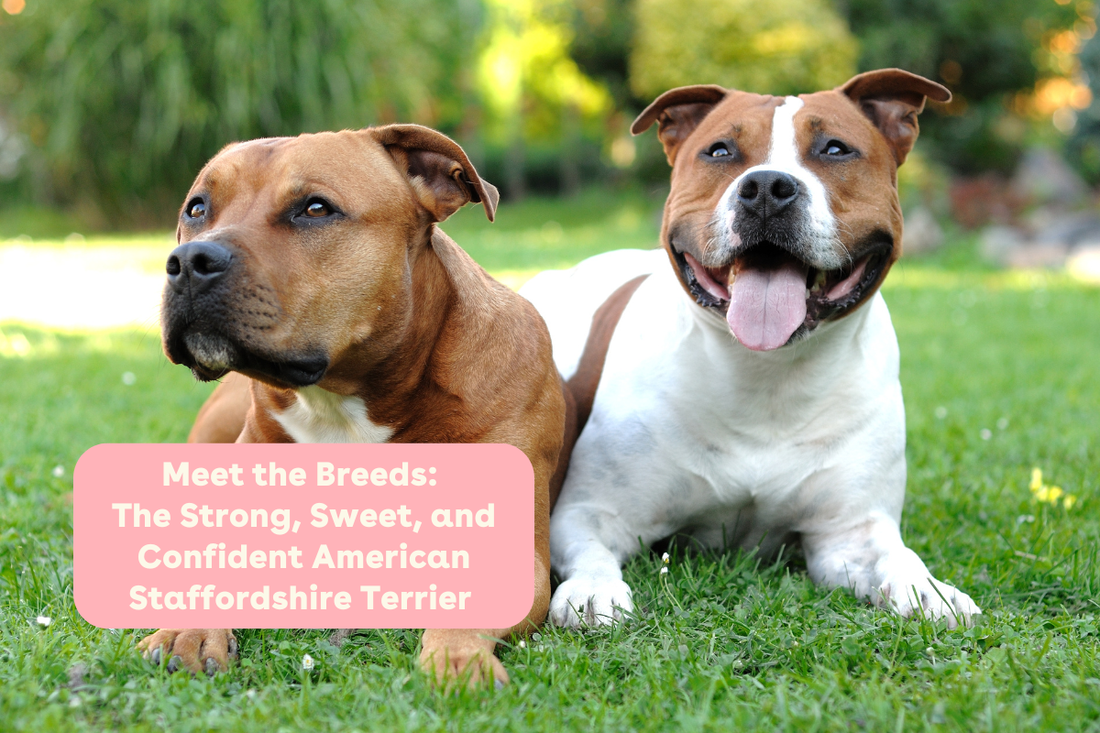
When you think of an American Staffordshire Terrier (affectionately known as the AmStaff) you might picture a muscular, energetic dog with a bold presence.
But don’t let that tough exterior fool you: underneath, you’ll find a loyal, playful, and sometimes goofy companion who thrives on love, attention, and a good game of fetch.
AmStaffs are the ultimate package of brains, brawn, and heart. They are fiercely devoted to their people, often forming unbreakable bonds, and they have enough energy to keep up with even the most active families. Whether you’re looking for a jogging buddy, a cuddle buddy, or a four-legged entertainer who keeps your life lively, the AmStaff is up for it.
In this guide, we’re going to dive deep into the world of AmStaffs—from their history and breed development to their daily needs, health, and even a few myths that just won’t quit. By the end, you’ll see why these dogs are lovable, capable, and endlessly fascinating.
Table of Contents
- History of the American Staffordshire Terrier
- Breed Development
- Roles in Society
- Life Expectancy and Health
- Comprehensive Care
- Busting Breed Myths
- Fun Facts About American Staffordshire Terriers
History of the American Staffordshire Terrier

The story of the AmStaff starts in 19th-century England, where clever breeders decided to combine the power of the Old English Bulldog with the spunk of terriers. The result? The bull-and-terrier, a dog that could do it all: work hard, run fast, and yes, historically, fight in blood sports like bull baiting (fortunately, those days are long gone!).
When these dogs arrived in the U.S., they quickly adapted to American life. They became farm helpers, vermin catchers, and all-around companions. Families loved their loyalty, intelligence, and protective instincts.
By 1936, the American Kennel Club recognized them as the Staffordshire Terrier, and in 1972 “American” was added to distinguish them from their British cousins.
Today’s AmStaffs are nothing like their fighting-dog ancestors, they’re affectionate, confident, and ready to steal your heart (and your spot on the couch).
Breed Development

American Staffordshire Terriers didn’t become the lovable powerhouse they are overnight. Breeders carefully selected for:
- Brains: These dogs are smart and quick learners. Positive reinforcement is key, and they’ll happily earn treats, praise, or playtime.
- Brawn: Muscular but agile, AmStaffs are built for activity. They love running, jumping, and basically anything that lets them move.
- Heart: Loyal to a fault, they bond deeply with their families.
Roles in Society

AmStaffs are versatile dogs who shine in many areas:
Family Companion:
Known as a “nanny dog” by some, AmStaffs are protective, gentle, and endlessly affectionate with children. Expect plenty of snuggles, tail wags, and silly antics.
Sporting Star:
If you like to be active, your AmStaff will match you step for step. They excel in agility, obedience, flyball, and even weight-pulling competitions.
They were practically born for weight pull (have you seen those quads?) Learn more about the weight pull sport!
Therapy & Working Dog:
Their intelligence and sensitivity make them ideal for therapy, search and rescue, and service work.
Stereotype-Busting Ambassador:
Despite their sometimes-misunderstood reputation, well-socialized AmStaffs are ambassadors for their breed, proving that love and training shape a dog’s behavior far more than their looks ever could.
In short, AmStaffs are versatile, loving, and energetic members of society, and they do it all with style and charm.
Life Expectancy and Health

American Staffordshire Terriers are generally healthy, robust dogs, with a lifespan of 12–16 years, though some individuals thrive even longer with proper care. Like all breeds, they have specific health considerations that every pup parent should know about.
Hip and Elbow Dysplasia:
These inherited conditions affect the joints and can lead to arthritis or mobility issues. Early screening, maintaining a healthy weight, and controlled exercise can help prevent problems from becoming serious.
Skin Allergies and Sensitivities:
AmStaffs can be prone to environmental allergies (like pollen or dust) and food sensitivities. Signs include itching, redness, or hot spots. Routine grooming and avoiding known triggers can minimize discomfort.
Related Reading: Your Dog Allergic to Everything? Here’s How to Find the Right Food – Pupford
Hypothyroidism:
A condition where the thyroid gland produces insufficient hormones, leading to lethargy, weight gain, and coat issues. This can typically be managed with medication.
Cataracts:
Like many breeds, AmStaffs can develop cataracts, which may affect vision over time. Regular eye exams can help detect issues early, and surgery is sometimes recommended in severe cases.
Dental Health:
Dental care is often overlooked, but it’s essential. Brushing your dog’s teeth, providing dental chews, and scheduling professional cleanings keep their mouth healthy.
Preventive care is key for a long, happy life. With regular vet visits, a balanced diet, appropriate exercise, and proper grooming, AmStaffs can remain energetic and vibrant well into their senior years. Many live into their mid-teens, continuing to be loyal companions right up to the end of their lives.
Comprehensive Care

Taking care of an American Staffordshire Terrier goes beyond feeding and walking, they thrive when their minds, bodies, and hearts are engaged. Here’s what an ideal care routine looks like:
Exercise:
AmStaffs are energetic and athletic, needing at least 60–90 minutes of exercise per day. This can include walks, runs, fetch, tug-of-war, and dog sports.
7 Ways to Tell Your Dog Isn’t Getting Enough Exercise | Pupford
Training and Socialization:
Early socialization and consistent, positive reinforcement training are crucial. AmStaffs are smart and motivated, so they excel in obedience classes, agility, and even advanced trick training. Socialization with children, adults, and other pets helps ensure a well-adjusted, confident dog.
3 Unexpected Benefits of Trick Training | Pupford
Nutrition:
A high-quality diet that suits their age, size, and activity level supports their muscular build and energy. Active adult AmStaffs benefit from a protein-rich diet, while seniors may need fewer calories but continued nutrient balance. Supplements like omega-3 fatty acids can support skin, coat, and joint health.
Grooming:
Their short coat is low-maintenance but weekly brushing helps remove loose hair and maintain healthy skin. Regular baths, ear cleaning, nail trims, and teeth brushing are all part of a full grooming routine.
Check out our best selling shampoo bar, Sudsy!
How to Reduce Dog Shedding - Even for Short Hair | Pupford
Mental Enrichment and Play:
These dogs love to solve problems and be challenged. Hide-and-seek, scent trails, agility courses, and treat-dispensing toys are excellent ways to keep them engaged. Even simple games like “find the treat under the cup” can stimulate their minds. Without enough activity, they may develop boredom-related behaviors like chewing or digging.
Here are 5 different types of enrichment to try with your pup!
Companionship:
AmStaffs are people-oriented dogs. They thrive on interaction and can develop separation anxiety if left alone for long periods. Including them in family life, whether cuddling on the couch, joining in workouts, or following you around the house, keeps them happy and emotionally healthy.
Proper care is about more than meeting basic needs; it’s about providing a life full of love, stimulation, and fun. An engaged, well-cared-for AmStaff is a happy, confident dog who gives back as much as they receive.
Busting Breed Myths

AmStaffs often carry a reputation that doesn’t match reality. Let’s set the record straight with some statistics and resources:
Myth: AmStaffs are inherently aggressive.
Reality: The American Temperament Test Society reports an 85% pass rate for AmStaffs, comparable to Labs and Goldens.
Myth: They are unsafe with kids.
Reality: Properly socialized AmStaffs are gentle, patient, and playful around children. Positive reinforcement training enhances this behavior.
Myth: AmStaffs can’t be trusted with other dogs.
Reality: Early socialization dramatically improves interactions with other dogs. Many AmStaffs thrive in multi-dog homes.
Myth: They are untrainable.
Reality: Highly intelligent and motivated, AmStaffs excel in obedience, agility, and training when guided with reward-based methods.
The takeaway: training, socialization, and love shape behavior far more than breed reputation.
Fun Facts About American Staffordshire Terriers

- Movie Star Roots: Remember “Pete the Pup” from The Little Rascals? That iconic ring around his eye belonged to an AmStaff mix.
- World War Hero: AmStaffs have made history in heroic ways. Sergeant Stubby, a dog who served in World War I, became the most decorated war dog in U.S. history, known for warning troops of gas attacks and capturing a German spy.
- Wide Color Palette: Their short coat comes in almost every color—brindle, blue, black, fawn, red, white, and combinations thereof. No two AmStaffs look exactly alike!
Recap: The Strong, Sweet, and Confident American Staffordshire Terrier
American Staffordshire Terriers are more than their muscular frame and bold looks—they’re playful, loyal, intelligent, and affectionate.
With proper training, socialization, and care, they can thrive as family companions, sport dogs, and therapy partners. If you’re ready to meet the challenge (and the cuddles), an AmStaff could be your perfect match.
Ready to start training? Sign up for our FREE 30 Day Perfect Pup course!


