


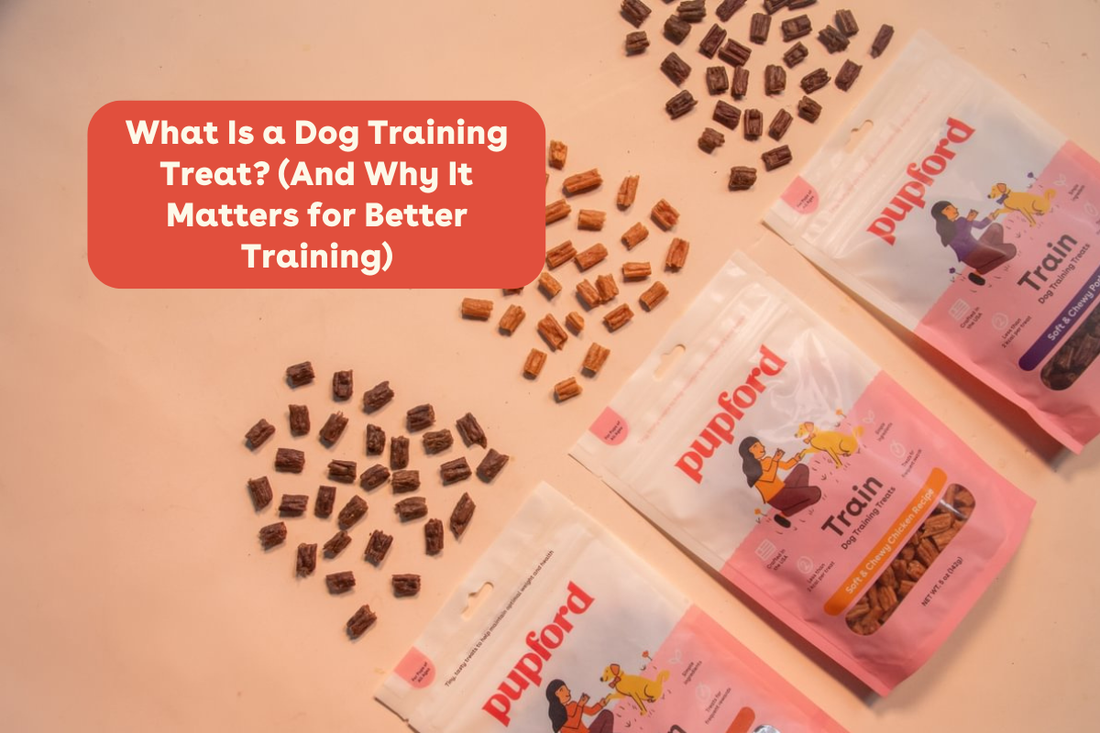
When it comes to teaching your dog new behaviors, reinforcing good manners, or building engagement, the treats you use matter more than you might think.
A dog training treat is a small, high-value reward specifically designed to support frequent reinforcement during training sessions. While it may look similar to a regular dog treat, it serves a very different purpose.
Training treats are intentionally made to be:
- Small
- Low calorie
- Highly motivating
- Easy to chew quickly
These features allow you to reward your dog repeatedly without overfeeding and without interrupting the flow of learning.
Let’s break down what makes a training treat different, and why using the right one can dramatically improve your dog’s progress.
Dog Training Treat vs. Regular Dog Treat

Not all treats are created equal. While any treat can technically be used during training, regular treats often aren’t ideal for the job.
1. Size Matters
Training requires repetition. A short five-minute session may include 20–50 rewards, especially when teaching something new.
Most standard dog treats are:
- Larger
- Higher in calories
- Designed for occasional enjoyment
Training treats, on the other hand, are intentionally tiny. Many are sized so you don’t have to break them apart (unless your pup is super tiny!) which keeps your timing precise and your session flowing smoothly.
🐶Learn why timing is so important in training how to properly use a clicker!
2. Calorie Control
Because training treats are given frequently, they need to be low calorie. Otherwise, you could easily exceed your dog’s daily calorie needs during just one training session.
Purpose-built training treats allow you to:
- Reinforce often
- Maintain a healthy weight
- Avoid digestive upset
- Train multiple times per day
This is especially important for puppies, small breeds, and dogs who are in structured weight management programs.
💖Related Reading: Treat Truth: The Sneaky Side of Calories in Dog Treats | Pupford
3. High Value = Higher Motivation
In positive reinforcement training, behavior increases when it is followed by something rewarding. The more valuable the reward, the stronger the reinforcement.
Regular treats may be fine for occasional rewards. But when you’re teaching a new skill, working around distractions, or practicing recall outside, you need something that truly captures your dog’s attention.
High-value training treats typically:
- Have a strong aroma
- Use real meat or single-ingredient proteins
- Deliver intense flavor in a small bite
When your dog thinks, “That was amazing,” they’re far more likely to repeat the behavior.
💡Mastering the 3 D's of Dog Training: Distance, Distraction, Duration | – Pupford
4. Texture and Speed
Training treats should be quick to eat. If your dog has to chew for 10 seconds after every repetition, the learning momentum slows down.
The best training treats are:
- Soft enough to eat quickly, or
- Freeze-dried and airy for fast consumption
Quick consumption keeps your dog engaged and ready for the next cue.
Why Using a Specific Training Treat Improves Results

Using a dedicated training treat instead of random table scraps or standard treats offers major benefits.
Clearer Communication
When you consistently use a specific treat during training, your dog learns that this particular reward predicts learning and engagement. It creates a clear “training context.”
That consistency builds focus.
Stronger Focus Around Distractions
If you’ve ever tried training outdoors or around other dogs, you know how quickly attention disappears. A high-value treat can compete with environmental distractions far better than kibble alone.
🐕Learn tips for training dogs in distracting environments
Better Engagement
Dogs work harder for rewards they love. When your dog is excited about what’s in your hand, they:
- Offer behaviors more eagerly
- Stay engaged longer
- Recover from mistakes faster
This creates a more positive, frustration-free learning experience for both of you.
Supports Humane, Positive Reinforcement
Using high-value training treats supports a force-free approach to training. Instead of correcting mistakes harshly, you reinforce what you want to see more of.
Behavior that is rewarded gets repeated.
Training treats make it easier to reinforce:
- Calm behavior
- Loose leash walking
- Recall
- Polite greetings
- Crate comfort
- Focus around distractions
The more opportunities you have to reward the right choices, the faster learning happens.
💖Related Reading: Are You Unknowingly Using Aversive Training Techniques? Understanding – Pupford
Types of Pupford Training Treats

Pupford offers several training-specific treat options designed to support consistent, high-frequency reinforcement. These treats are intentionally small and crafted with real ingredients to maximize motivation while keeping calories low.
Here’s a closer look at the main types.
Freeze-Dried Training Treats
Freeze-dried treats are one of the most popular options for training because they are lightweight, intensely flavorful, and easy to break apart if needed.
Pupford’s Freeze-Dried Training Treat flavors include:
- Chicken
- Beef Liver
- Turkey & Veggies
-
Surf & Turf
- Salmon
- Rabbit
- Sweet Potato
- Pumpkin
- Blueberry
- Duck & Veggies
- Mango
- Shrimp
These treats are made with limited ingredients and real protein sources, making them appealing even for picky eaters.
Why freeze-dried works well for training:
- Strong aroma increases engagement
- Light texture makes them easy to eat quickly
- Small size supports frequent reinforcement
- Single-ingredient options are helpful for dogs with sensitivities
Soft Training Treats
Some dogs prefer a softer texture, especially puppies, seniors, or dogs with dental sensitivity.
Pupford’s Soft & Chewy Training Treat flavors include:
- Chicken
- Pork
- Lamb
- Turkey
- Beef
Soft treats can be helpful for:
- Young puppies in early training stages
- Fast-paced sessions
- Dogs who prefer chewy textures
Because they’re easy to consume quickly, they help maintain momentum during shaping exercises or rapid repetition drills.
Cheddar Crunchies Training Treats
For dogs who love a little crunch, Cheddar Training Treats offer a different texture while still being sized appropriately for training.
These can be a great:
- High-value reward alternative to string cheese (and healthier too!)
- Change-up option to maintain novelty
- Motivation boost for dogs who enjoy cheese flavor
Rotating treat types can help maintain excitement and prevent boredom during ongoing training programs.
When Should You Use High-Value Training Treats?

Not every behavior requires the same reward level.
Think of treats on a value scale:
Low value: Kibble or minimally scented training treat
Medium value: Freeze-dried meat
High value: Strong aroma proteins or cheese
Use higher value treats when:
- Teaching a new skill
- Working around distractions
- Practicing recall
- Addressing reactivity or fear-based behaviors
- Training outdoors
Use medium or lower value treats when:
- Reinforcing known behaviors
- Practicing indoors
- Doing short review sessions
Strategic treat selection keeps motivation high without over-relying on the most exciting rewards.
How Many Training Treats Is Too Many?

Even low-calorie treats count toward your dog’s daily intake. A general guideline is that treats should make up no more than 10% of your dog’s daily calories.
Because training treats are small, you can often give dozens within that range, especially if you reduce kibble slightly during heavy training days.
You can also:
- Break treats into smaller pieces
- Use part of your dog’s meal as training rewards
- Combine food rewards with praise and play
The goal isn’t to eliminate food rewards, it’s to use them strategically.
🦴Take a deeper dive into dog treats: The Ultimate Guide to Dog Treats: Types, Calories, and What to Avoid | – Pupford
Can You Train Without Treats?

Yes, but treats are one of the most efficient tools for teaching new behaviors.
Food is:
- Immediate
- Clear
- Easy to deliver
- Universally motivating
Once behaviors are strong, you can gradually transition to intermittent reinforcement, meaning your dog doesn’t receive a treat every single time, but still occasionally earns one.
This maintains reliability while reducing dependence on constant food rewards.
But during the learning phase, training treats dramatically speed up progress.
Recap: Why Training Treats Matter
A dog training treat isn’t just a snack. It’s a communication tool.
The right training treat:
- Keeps sessions productive
- Strengthens motivation
- Supports positive reinforcement
- Protects calorie balance
-
Makes learning enjoyable
Purpose-built options like Pupford’s Freeze-Dried treats and Soft & Chewy training treats, are designed specifically for high-frequency reward use, making them ideal for puppies, adult dogs, and advanced training alike.
When you pair clear communication, consistent reinforcement, and a high-value reward, you’re setting your dog up for success.
Because training isn’t just about obedience, it’s about building a relationship based on trust, clarity, and positive experiences.
Ready to put those training treats to work? Sign up for our FREE Training Courses today!


