


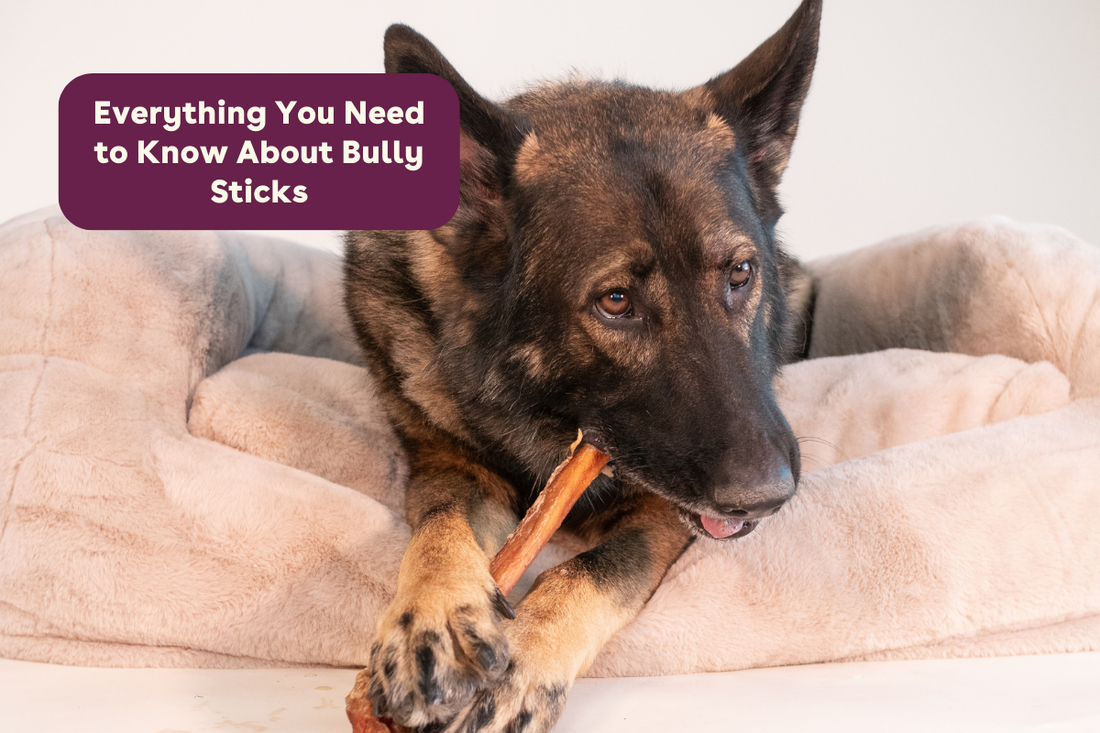
If you’ve ever walked down the chew aisle at a pet store, chances are you’ve seen bully sticks. These long-lasting chews are one of the most popular natural treats for dogs, and many pup parents choose them as a safer alternative to heavily processed chews.
Bully sticks are known for being simple, protein-rich, and highly appealing to dogs. But if you’re trying to make informed choices about what your dog chews on, you might still have questions. What exactly are bully sticks? How are they made? Are they safe? And how do you choose high-quality ones?
In this guide, we’ll break down everything you need to know about bully sticks, including what they are, how they’re made, health considerations, and why they can be a great chewing outlet for dogs.
Table of Contents:
- What Are Bully Sticks?
- How Are Bully Sticks Made?
- Why Dogs Love Bully Sticks
- Why Chewing Is Important for Dogs
- Are Bully Sticks Safe for Dogs?
- Bully Sticks vs. Rawhide
- Choosing High-Quality Bully Sticks
- Types of Bully Sticks
- How to Choose the Right Bully Stick for Your Dog
- How Often Can Dogs Have Bully Sticks?
- Storing Bully Sticks Properly
- Are Bully Sticks Good for Puppies?
- Sustainability and Whole-Animal Use
What Are Bully Sticks?

Bully sticks are a natural dog chew made from beef pizzle, which is the penis of a bull or steer. While that might sound surprising at first, it’s simply a single-ingredient animal product that has been cleaned, stretched, and dried.
In the pet treat industry, many parts of the animal that humans don’t typically consume are repurposed into dog chews. This “whole-animal” approach helps reduce waste while creating natural, protein-rich treats dogs enjoy.
Because bully sticks are made from real beef tissue, they typically contain:
- High-quality protein
- Naturally occurring amino acids
- No artificial additives (when sourced properly)
Unlike many processed dog chews, bully sticks are usually grain-free, rawhide-free, and made with just one ingredient.
For many pup parents, that simplicity is exactly what makes them appealing.
🦴How to Choose the Right Chew for Your Dog | Pupford
How Are Bully Sticks Made?

One reason bully sticks are considered a natural chew is that the production process is relatively straightforward compared to many other dog treats.
While the exact process varies slightly depending on the manufacturer, most bully sticks are made using the following steps.
Sourcing the Raw Ingredient
The process begins with raw beef pizzle sourced from cattle. High-quality manufacturers prioritize sourcing from farms and facilities that follow strict agricultural and food safety standards.
The quality of the cattle and the processing standards used during manufacturing can affect both the safety and durability of the final chew.
Cleaning and Preparation
Once sourced, the pizzle is thoroughly cleaned to remove impurities. During this stage, it may also be trimmed or shaped depending on the final product.
Some bully sticks are left straight, while others are braided, twisted, or formed into rings.
Drying or Baking
After preparation, the pieces are slow-dried or oven-baked at controlled temperatures. This step removes moisture while preserving the chew.
The drying process:
- Helps prevent bacterial growth
- Creates the firm texture dogs enjoy
- Allows the chew to be shelf-stable without preservatives
Drying can take anywhere from several hours to several days depending on the thickness of the chew.
Quality Testing
Reputable manufacturers conduct safety testing before packaging bully sticks. This may include testing for bacteria such as salmonella as well as checking moisture levels and product consistency.
These quality checks help ensure the chews are safe for dogs to consume.
Why Dogs Love Bully Sticks

Most dogs go crazy for bully sticks, and there are several reasons why.
Strong Natural Flavor
Because bully sticks are made from real beef, they have a scent and flavor that dogs find extremely appealing.
Even picky eaters often show strong interest in bully sticks.
Durable Texture
Bully sticks are firm but slightly flexible, which creates a satisfying chewing experience.
Dogs can slowly gnaw and soften the chew rather than finishing it immediately.
Long-Lasting Entertainment
Depending on your dog’s size and chewing style, a bully stick can keep them busy for 20–45 minutes or more.
For pup parents looking for a treat that provides enrichment and keeps their dog occupied, bully sticks can be a great option.
Why Chewing Is Important for Dogs

Chewing is more than just a fun activity for dogs, it’s an important natural behavior.
Providing appropriate chew items like bully sticks helps satisfy this instinct in a healthy way.
Mental Enrichment
Chewing engages your dog’s brain. The process of working through a tough chew provides a type of mental stimulation that helps prevent boredom.
Dogs who don’t have enough enrichment may be more likely to develop unwanted behaviors such as:
- Furniture chewing
- Excessive barking
- Digging
- Destructive behavior
Offering safe chewing outlets can help redirect that energy in a positive way.
🐕Chewing isn’t the only way to provide enrichment, learn 5 Types of Enrichment for Dogs with Examples
Stress Relief
Chewing can also be soothing for many dogs. Much like humans fidget when nervous, dogs may chew as a way to release stress.
This can be especially helpful for:
- Puppies during teething
- Dogs adjusting to a new environment
- Dogs experiencing mild anxiety
🐶Learn more about how chewing is a calming behavior
Encouraging Healthy Chewing Habits
Providing appropriate chews helps teach dogs what they are allowed to chew on, which can reduce the chances they’ll target shoes, furniture, or other household items.
💖Why Do Dogs Chew? Understanding the Why's and How's of Canine Chewing – Pupford
Are Bully Sticks Safe for Dogs?

Bully sticks are generally considered one of the safer natural dog chews, especially compared to alternatives like rawhide.
However, like any chew, they should still be used responsibly.
Digestibility
One major advantage of bully sticks is that they are highly digestible.
Because they are made from natural animal tissue, they soften as dogs chew them. This makes them easier for dogs to break down compared to many synthetic or heavily processed chews.
Choking Risks
The main safety concern with bully sticks is the small end piece that can remain after chewing.
Some dogs may attempt to swallow this piece whole.
To reduce risk:
- Always supervise chew sessions
- Remove the final small piece
- Consider using a bully stick holder
A bully stick holder can secure the chew and prevent dogs from swallowing the last portion.
Calorie Content
Bully sticks are relatively calorie-dense because they are made from pure protein.
Depending on size and thickness, a single bully stick can contain 80–150 calories or more.
For smaller dogs or dogs on controlled diets, this should be factored into their daily treat allowance.
💖How Many Treats Per Day for a Dog? How to Calculate for Your Pup! | Pupford
Bully Sticks vs Rawhide

Many pup parents choose bully sticks as an alternative to rawhide.
Although both products are designed to satisfy chewing behavior, they are very different in terms of composition and processing.
Rawhide Chews
Rawhide is made from the inner layer of animal hides. During manufacturing, hides are often processed using chemical treatments to remove hair and preserve the material.
Rawhide chews can be:
- Difficult for dogs to digest
- Highly processed
- More likely to cause blockages if swallowed
Bully Sticks
Bully sticks are:
- Made from a single ingredient
- Naturally digestible
- Free from harsh chemical processing
Because of these differences, many trainers and veterinarians prefer bully sticks over rawhide as a natural chew option.
Choosing High-Quality Bully Sticks

Not all bully sticks are created equal. The quality of ingredients and manufacturing practices can vary significantly between brands.
Here are a few things to look for when choosing bully sticks for your dog.
Single Ingredient
The best bully sticks contain just one ingredient: beef pizzle.
Avoid chews that contain preservatives, artificial flavors, or additives.
Transparent Sourcing
Reputable brands are transparent about where their ingredients come from.
Look for companies that source cattle from regions with strong food safety standards.
Odor-Reduced Options
Traditional bully sticks can have a strong smell.
Some manufacturers offer odor-reduced bully sticks, which are processed longer to remove odor without adding chemicals.
Size and Thickness Options
Dogs have different chewing styles, so having multiple size options is important.
High-quality brands often offer:
- Standard bully sticks
- Thick bully sticks for strong chewers
- Braided bully sticks
- Bully stick rings
Choosing the right size helps ensure a safer and longer-lasting chew.
Not to toot our own horn, but Pupford Bully Sticks are single ingredient AND sourced in the USA AND have reduced odor AND come in various size and thickness options 😉
Types of Bully Sticks

Bully sticks come in several shapes and styles, each offering a slightly different chewing experience.
Straight Bully Sticks
These are the most common type and work well for most dogs.
They come in different thickness levels to suit different chewing strengths.
Braided Bully Sticks
Braided bully sticks combine several sticks into one thicker chew.
They tend to:
- Last longer
- Provide more resistance for strong chewers
- Offer a more challenging chew experience
Bully Stick Rings
Ring-shaped bully sticks encourage dogs to chew from different angles, which can increase chew time.
Twisted or Spring Bully Sticks
Twisted versions add texture and durability while remaining easier to chew than very thick sticks.
How to Choose the Right Bully Stick for Your Dog

The best bully stick depends on your dog’s size, chewing style, and experience with chews.
Small Dogs
Smaller dogs typically do best with:
Medium Dogs
Medium-sized dogs often enjoy:
- Standard 6–12-inch bully sticks
- Moderate thickness
- Twisted or ring options
- Large Dogs and Power Chewers
Larger dogs or strong chewers usually need:
- Extra-thick bully sticks
- Braided bully sticks
- 12-inch lengths
Thicker sticks help prevent quick consumption and provide a longer chewing session.
How Often Can Dogs Have Bully Sticks?

Bully sticks should be considered a treat, not a daily meal replacement.
A helpful guideline is the 10% rule, which suggests that treats should make up no more than 10% of a dog’s daily calorie intake.
For many dogs, this means offering bully sticks:
- A few times per week
- Or in shorter chew sessions
Some pup parents allow their dog to chew for 15–20 minutes and then store the remaining portion for another day.
🦴Treat Truth: The Sneaky Side of Calories in Dog Treats | Pupford
Storing Bully Sticks Properly

Proper storage helps keep bully sticks fresh and safe.
To store bully sticks:
- Keep them in a cool, dry place
- Seal packaging tightly after opening
- Wash hands after handling
Many pup parents prefer storing bully sticks in airtight containers to reduce odor.
If a bully stick becomes overly soft, slimy, or develops an unusual smell, it should be discarded.
Are Bully Sticks Good for Puppies?

Bully sticks can be a helpful chew option for puppies, particularly during the teething phase.
As puppies lose their baby teeth and grow adult teeth, chewing can help relieve gum discomfort.
Benefits for puppies include:
- A healthy chewing outlet
- Mental enrichment
- Relief from teething discomfort
However, supervision is important.
Choose thinner bully sticks for puppies and limit chew sessions to prevent overconsumption.
💖The Ultimate Puppy Guide | Pupford
Sustainability and Whole-Animal Use

Many pup parents appreciate that bully sticks help support a whole-animal approach to food production.
Instead of discarding less commonly used parts of the animal, these ingredients are repurposed into dog chews.
This reduces waste and creates useful products from materials that might otherwise go unused.
Some companies also prioritize responsible sourcing practices such as:
- Grass-fed cattle
- Ethical livestock farming
- Transparent supply chains
Recap: Are Bully Sticks Worth It?
For many dogs, bully sticks are one of the best natural chew options available.
They offer a combination of benefits that appeal to both dogs and pup parents.
Bully sticks are:
- Single-ingredient chews
- Highly digestible
- Naturally flavorful
- Long-lasting and enriching
As with any treat, they should be given in moderation and with supervision. Choosing high-quality bully sticks and the right size for your dog can help ensure a safe and enjoyable chewing experience.
For dogs who love to chew (and most do) bully sticks can be a great way to support healthy chewing habits while providing valuable mental stimulation.


