


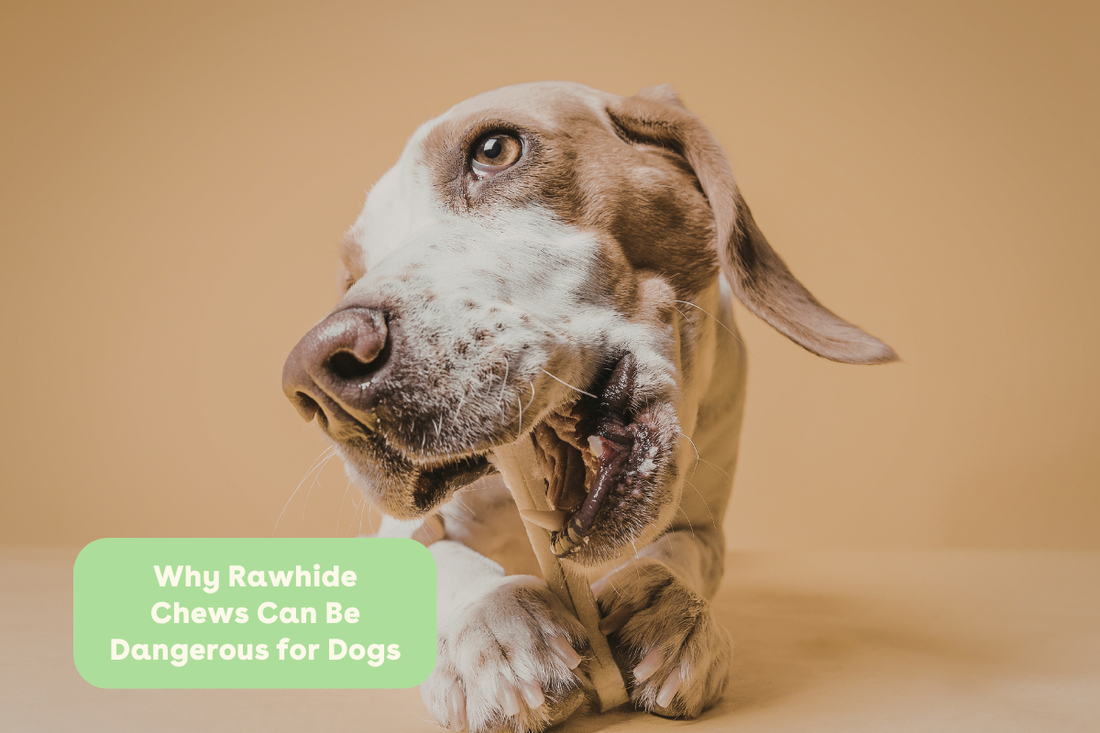
Walk down the chew aisle of almost any pet store and you’ll see stacks of rawhide bones in every shape and size imaginable. For decades, rawhide has been marketed as a long-lasting chew that keeps dogs busy and supports dental health. But in recent years, more veterinarians and trainers have started asking an important question:
Is rawhide actually safe for dogs?
If you’ve ever wondered whether rawhide is a smart choice for your dog, this guide will walk you through everything you need to know, from how rawhide is made to the real risks it poses, plus safer alternatives you can feel good about offering your pup.
Table of Contents
- What is Rawhide, Exactly?
- Why is Rawhide Bad for Dogs?
- Which Dogs Are Most At Risk?
- Why Do So Many Stores Still Sell Rawhide?
- Are There Any Safe Rawhide Options?
- Safer Alternatives to Rawhide
What Is Rawhide, Exactly?

Rawhide is made from the inner layer of cow or horse hides. During processing, the top layer of the hide is used for leather products. The inner layer is split off, cleaned, and pressed or shaped into bones, rolls, or twists.
While it might look like a natural chew, rawhide goes through significant processing before it reaches store shelves. In many cases, hides are:
- Soaked in chemical solutions to remove hair and fat
- Treated with preservatives
- Whitened or artificially flavored
Because of this manufacturing process, rawhide is not simply “dried meat.” It’s a heavily processed animal byproduct.
Why Is Rawhide Bad for Dogs?

Rawhide isn’t automatically dangerous in every situation. However, it carries serious and well-documented risks that every pup parent should understand.
Let’s break them down.
1. Choking Hazard
One of the biggest concerns with rawhide is choking.
When dogs chew rawhide, it softens and becomes slippery. Instead of breaking into digestible pieces, rawhide often loosens into large chunks. Some dogs (especially enthusiastic chewers, you know the ones) will try to swallow those chunks whole.
If that piece gets lodged in the throat, it can cause:
- Airway obstruction
- Gagging or coughing
- Panic
- Emergency veterinary intervention
Fast eaters and power chewers are especially at risk.
🐶Related Reading: How to Choose the Right Chew for Your Dog | Pupford
2. Intestinal Blockages
Even if a dog successfully swallows a chunk of rawhide, the danger isn’t over.
Rawhide is not easily digestible. Unlike muscle meat or certain natural chews, rawhide can swell in the stomach and remain largely intact as it moves through the digestive tract.
In fact, a peer-reviewed study published in Translational Animal Science evaluated the digestibility of various dog chews and found that many rawhide products have very low digestibility. Some tested rawhides showed only about 8–15% digestibility in simulated stomach conditions, far lower than many alternative chew types. That means a significant portion of the chew may not properly break down in the digestive system.
This lack of digestibility increases the likelihood that swallowed pieces remain intact as they travel through the intestines.
This can lead to:
- Intestinal blockage (obstruction)
- Severe abdominal pain
- Vomiting
- Lethargy
- Loss of appetite
In many cases, a blockage requires emergency surgery. Left untreated, it can become life-threatening.
3. Digestive Upset
Even when rawhide doesn’t cause a full blockage, it commonly causes digestive distress.
Because it’s difficult to break down, dogs may experience:
- Diarrhea
- Constipation
- Gas
- Vomiting
Dogs with sensitive stomachs are especially prone to these issues. If your dog already struggles with food sensitivities or allergies, rawhide can exacerbate those problems.
🦴Related Reading: 8 Reasons Your Dog's Stomach Is Gurgling & Making Noises | Pupford
4. Chemical Residue Concerns
Many rawhide products are manufactured overseas with limited quality control standards. During processing, hides may be treated with:
- Sodium sulfide
- Lime solutions
- Hydrogen peroxide
- Artificial dyes
- Flavor coatings
While not every rawhide product contains harmful levels of chemicals, transparency in sourcing and processing varies widely.
As a pup parent, it can be difficult to know exactly what your dog is chewing.
5. Dental Damage
Rawhide is marketed as a dental chew, but it can sometimes do more harm than good.
Some rawhide products become extremely hard when dry. Aggressive chewers may:
- Crack a tooth
- Fracture a molar
- Cause gum irritation
Broken teeth are painful and often require expensive dental procedures.
💖Related Reading: Can Dogs Eat Sticks? Why It’s Risky & How to Encourage Safer Chewing Habits – Pupford
Which Dogs Are Most at Risk?

While any dog can experience problems from rawhide, certain dogs face higher risk:
- Puppies who are still learning how to chew
- Senior dogs with weaker teeth
- Small breeds prone to swallowing large pieces
- Dogs who gulp instead of chew
- Dogs with a history of digestive issues
If your dog tends to inhale treats or guard chews, rawhide is especially risky.
Why Do So Many Stores Still Sell Rawhide?

Rawhide remains popular for a few key reasons:
- It’s inexpensive to produce
- It’s long-lasting (compared to some chews)
- It has strong historical brand recognition
For decades, rawhide was one of the few widely available chew options. Today, however, we have far safer and more digestible alternatives.
Are There Any Safe Rawhide Options?

Some companies now market “digestible rawhide” or “rawhide alternative” chews. These are typically made from compressed meat, collagen, or other digestible proteins rather than traditional hide.
If a product is labeled as:
- “Rawhide-free”
- “Highly digestible”
- “Collagen-based”
…it may be safer than traditional rawhide. However, supervision is still critical with any chew.
Safer Alternatives to Rawhide

If you’re looking for long-lasting chews that support enrichment and dental health without the risks of rawhide, consider these options:
1. Collagen Chews
Collagen chews are made from the corium layer of skin and are typically more digestible than traditional rawhide. They tend to break down more safely in the digestive tract and still provide that satisfying chewing experience many dogs crave.
For pup parents looking for a rawhide-free option, products like the Pupford Collagen Chews offer a more digestible alternative while maintaining durability for moderate chewers.
They may also support:
- Joint health
- Skin and coat health
As with any chew, choose the appropriate size for your dog and supervise chewing sessions.
2. Beef Tendons and Other Single-Ingredient Chews
Single-ingredient chews are often a safer choice because they are less processed and easier to digest than rawhide.
Options like beef tendons provide a natural texture and tend to soften gradually rather than breaking into large, indigestible chunks. For example, the Pupford Beef Tendons are made from a single ingredient and are designed to offer enrichment without the same blockage risks associated with rawhide.
Other similar options include:
- Beef trachea
- Dehydrated muscle meats
- Fish skins
Because these chews are typically more digestible, they are less likely to sit intact in the stomach.
3. Dental Chews
If your goal is supporting oral health, there are safer alternatives specifically formulated for that purpose.
The Pupford Dental Chews are designed to help reduce plaque and tartar buildup without relying on hardened hide. Choosing a digestible dental chew can help support fresh breath and oral hygiene without increasing the risk of choking or intestinal obstruction.
💦Dog Teeth Cleaning Costs + At-Home Dental Care Products | Pupford
4. Rubber or Nylon Chew Toys
Durable chew toys can provide safe, long-term chewing outlets without ingestion risks.
Look for products that:
- Are appropriately sized for your dog
- Have slight “give” to prevent tooth fractures
- Are designed for your dog’s chew strength
Always inspect toys regularly for wear and tear and replace them when damaged.
💖Check out our Best Dog Toys Guide for recommendations!
Recap: Is Rawhide Worth the Risk?
When you look at the full picture, choking hazards, intestinal blockages, digestive upset, chemical processing, and documented low digestibility, rawhide simply carries more risk than reward.
There are now safer, more digestible chew options that support your dog’s natural need to chew without exposing them to unnecessary danger.
As a responsible pup parent, your job isn’t to eliminate joy or enrichment, it’s to make informed decisions that prioritize long-term health and safety.
Your dog depends on you to choose wisely. And when it comes to rawhide, the safest answer is often to skip it entirely and opt for a better alternative.
Shop our entire line of safe, (rawhide free 😉) long lasting chews!


