


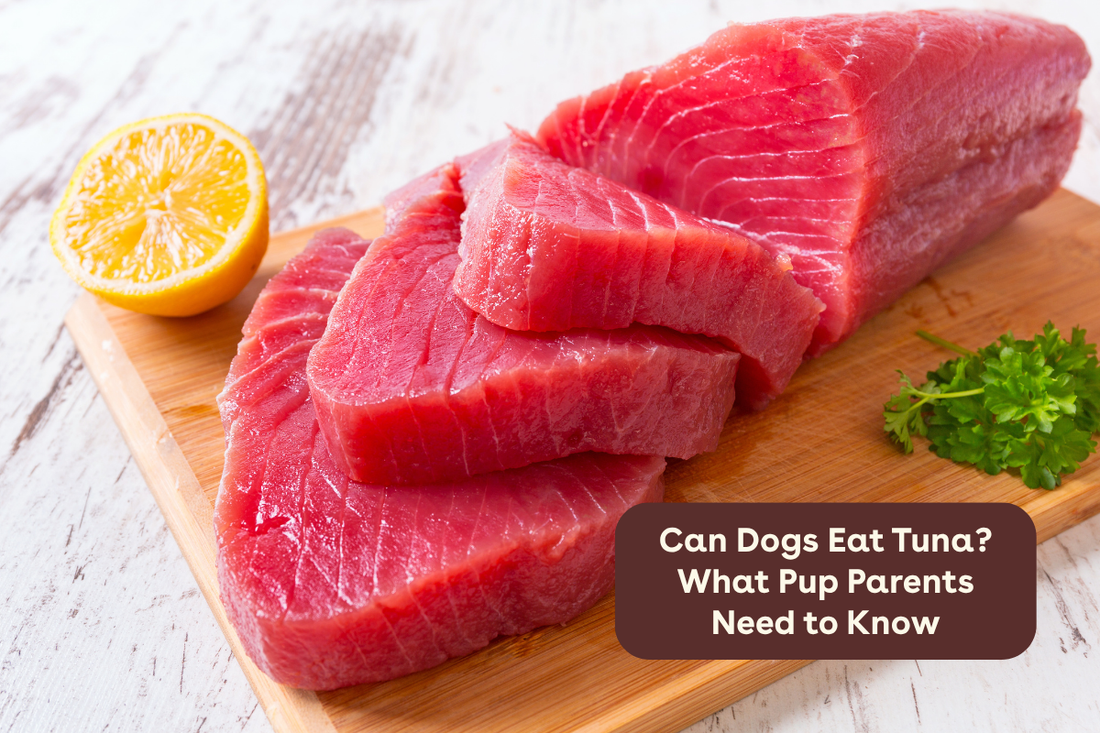
Tuna is a popular protein-packed food enjoyed by many people, but can dogs eat tuna too?
The short answer is: yes, dogs can eat tuna in moderation, but it isn’t the best fish option for every pup.
While tuna contains beneficial nutrients like protein and omega-3 fatty acids, it also has higher mercury levels than many other fish, which means it should only be offered occasionally and in small amounts.
Before sharing a bite of your tuna sandwich or opening a can for your pup, here’s what you need to know about feeding tuna safely.
Is Tuna Safe for Dogs?

Yes, dogs can eat tuna when it is plain, fully cooked, and served in moderation.
Tuna is not toxic to dogs, but it does come with some considerations. The biggest concern with tuna is its mercury content. Larger fish, like tuna, accumulate more mercury over their lifetime because they eat smaller fish and absorb mercury from the environment.
For humans, occasional tuna consumption is generally considered safe. For dogs, especially smaller dogs or pups who eat tuna frequently, the risk of mercury exposure is higher.
If you want to share tuna with your dog, think of it as an occasional treat, not a regular part of their diet.
Nutritional Benefits of Tuna for Dogs
When served safely, tuna can provide some nutritional benefits.
High-Quality Protein
Protein is an essential part of your dog’s diet. It helps support:
- Healthy muscles
- Tissue repair
- Immune function
- Overall energy levels
Tuna is a lean source of animal protein that many dogs find highly palatable.
👉Fish-Based Protein Dog Foods: Benefits, Health Perks | Pupford
Omega-3 Fatty Acids
Tuna contains omega-3 fatty acids, which support:
- Healthy skin and a shiny coat
- Normal inflammatory response
- Brain health
Omega-3s are commonly found in fish-based foods and supplements because of their role in supporting overall wellness.
Vitamins and Minerals
Tuna contains nutrients like:
- Vitamin D
- Vitamin B12
- Selenium
These nutrients play important roles in maintaining healthy body functions.
While tuna does offer nutritional value, dogs should get most of their nutrition from a complete and balanced dog food designed specifically for their needs.
Can Dogs Eat Canned Tuna?

Dogs can eat canned tuna, but you’ll want to choose the right type.
If you’re offering canned tuna, look for:
✅ Tuna packed in water
✅ No added salt
✅ No seasonings or flavorings
✅ No oils or sauces
Avoid tuna prepared with ingredients that can be harmful to dogs, such as:
- Garlic
- Onion
- Excess sodium
- Spices
- Heavy sauces
Many canned tuna products made for humans contain added ingredients that aren’t appropriate for dogs.
❌Top 5 Most Toxic Foods for Dogs (That Every Dog Owner Should Know) | Pupford
Can Dogs Eat Raw Tuna?
It’s best to avoid feeding dogs raw tuna.
Raw fish can contain bacteria or parasites that may make your dog sick. While some raw diets include carefully prepared fish, feeding raw tuna at home comes with risks.
If you want to incorporate fish into your dog’s diet, safer options include properly prepared fish or dog foods made with fish ingredients.
How Much Tuna Can Dogs Eat?

The amount of tuna your dog can safely eat depends on their size, overall health, and diet.
A small amount as an occasional treat is generally okay for most healthy dogs. However, tuna should not replace a balanced meal or become a frequent addition to your dog’s diet.
A few general guidelines:
- Small dogs: A small bite or teaspoon-sized amount occasionally
- Medium dogs: A few small bites occasionally
- Large dogs: A small serving occasionally
When introducing any new food, start with a small amount and monitor your dog for signs of digestive upset, including:
- Vomiting
- Diarrhea
- Gas
- Changes in appetite
If your dog has existing health concerns, talk with your veterinarian before adding tuna to their diet.
Can Puppies Eat Tuna?
Puppies can technically eat small amounts of tuna, but it is generally not recommended as a regular treat.
Puppies need carefully balanced nutrition to support their rapid growth and development. Too many extras can interfere with their nutritional balance or add unnecessary mercury exposure.
For puppy training, choose treats specifically designed for frequent rewards, like low-calorie, bite-sized training treats that support positive reinforcement without adding too many extra calories.
❤️Shop our full line of Training Treats
Healthier Fish Options for Dogs

If you’re looking for fish that may be a better regular option for your pup, consider fish that are smaller and typically lower in mercury.
Some dog-friendly fish options include:
Salmon
Salmon is rich in omega-3 fatty acids and is commonly used in high-quality dog foods. Always make sure salmon is fully cooked and free from seasonings.
Sardines
Sardines are small fish that are naturally lower on the food chain, meaning they tend to accumulate less mercury. They are also rich in omega-3 fatty acids.
Whitefish
Whitefish varieties can provide lean protein and are often easier to digest for many dogs.
Anchovies
Like sardines, anchovies are small fish that can provide beneficial fatty acids while generally having lower mercury levels.
Can Dogs Eat Tuna Every Day?
No. Tuna should not be a daily food for dogs.
While tuna contains beneficial nutrients, feeding it too often can increase mercury exposure and may create nutritional imbalances. Your dog’s main meals should come from a complete and balanced diet formulated for their life stage and health needs.
Think of tuna as an occasional snack, not a dietary staple.
Frequently Asked Questions
Can dogs eat tuna salad?
No, it’s best to avoid sharing tuna salad with your dog. Many tuna salad recipes contain ingredients like mayonnaise, onions, garlic, salt, or seasonings that may not be safe for dogs.
Can dogs eat tuna in oil?
It’s best to avoid tuna packed in oil. The extra fat can upset your dog’s stomach and add unnecessary calories.
Can dogs eat tuna steaks?
Dogs can eat plain, fully cooked tuna steak in small amounts. However, because tuna steaks come from larger fish, they may contain higher mercury levels.
What fish is best for dogs?
Lower-mercury fish like salmon, sardines, and anchovies are often better choices than tuna when looking to add fish-based nutrients to your dog’s diet.
Recap: Should Dogs Eat Tuna?
So, can dogs eat tuna? Yes, but only occasionally and in small amounts.
Tuna provides protein, omega-3 fatty acids, and important nutrients, but its higher mercury levels mean it isn’t the best fish choice for frequent feeding.
If you want to add fish-based nutrition to your dog’s routine, focus on balanced dog foods, like Pupford Good Dog Food Lamb & Salmon Recipe or treats made with carefully selected ingredients, like Pupford Freeze Dried Minnows.
Your pup’s everyday nutrition should provide everything they need to thrive, while occasional treats like a small bite of tuna can simply be a fun addition.
The best diet is one that supports your dog’s health, energy, and happiness for years to come.


