


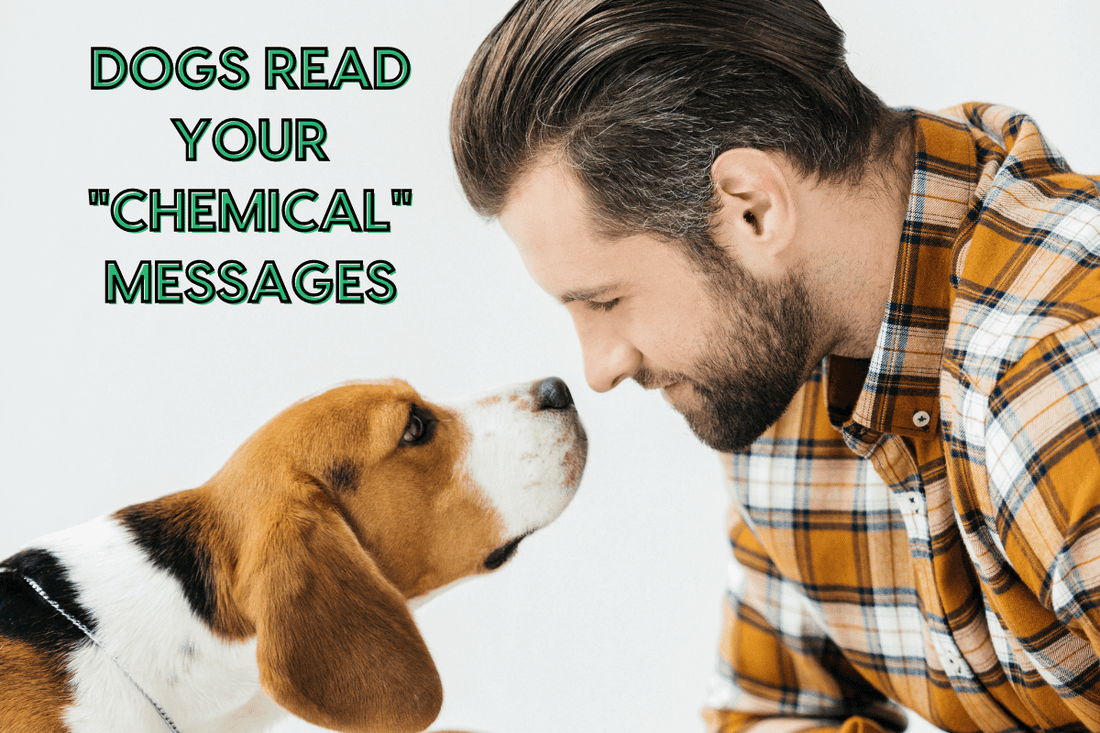
You've probably heard people say that our dogs can "read" our emotions and moods, but is there science to back that up?!
A group of researchers set out to answer that question and found an alarming answer. YES. Our dogs can and do pick up on the chemical changes in our bodies.
LISTEN TO PODCAST
Want to hear more podcasts like this? Please click here.
WATCH VIDEO
Want to see more videos like this? Please click here.
THE STUDY
The group started by having human participants watch either a clip that induced fear or happiness in the viewers. As they watched a clip, researchers collected a sample of their sweat.
The second part of the study is where the dogs became involved. In a room, the researchers placed a dog with 3 things in the room.
1. Their pup parent (not trying to interact with or sway the dog)
2. A stranger (not trying to interact with or sway the dog)
3. A sampling of the sweat collected from human participants
The sample of sweat was either (1) the "fear" sweat, (2) the "happy" sweat or (3) no sweat at all.
The dogs were hooked up to heart rate monitors. On top of that, the researchers were viewing to see where the dogs ventured, where they looked, etc.
The results were staggeringly clear.
When the dogs smelled the human "fear" sweat, their heart rates went up and they showed clear signs of fear and anxiety. The dogs would sometimes even try to hide or cower behind their humans.
When the dogs smelled the human "happy" sweat they had lower heart rates (than the "fear" test) and even showed more interaction with the strangers.
WHAT CAN WE LEARN?
A study like this has a couple of major takeaways.
First, our dogs DO pick up on changes in our emotions and feelings. Even when we may not think we are exhibiting new feelings or emotions, our body changes. And when the chemicals in our body change, our dogs take notice.
This is why dogs are so skilled at being emotional support animals because they can often sense problems before their human counterparts can. It also provides insight into how dogs judge us as humans.
Additionally, from a dog training and behavior standpoint, this study emphasizes the importance of our own emotions when we interact and train our dogs. If we are constantly feeling anxious or overwhelmed when training, our dogs will pick up on that and mimic those feelings.
Do you think your dog picks up on your emotions personally? Let me know how you've seen that in your own life by commenting below!


