


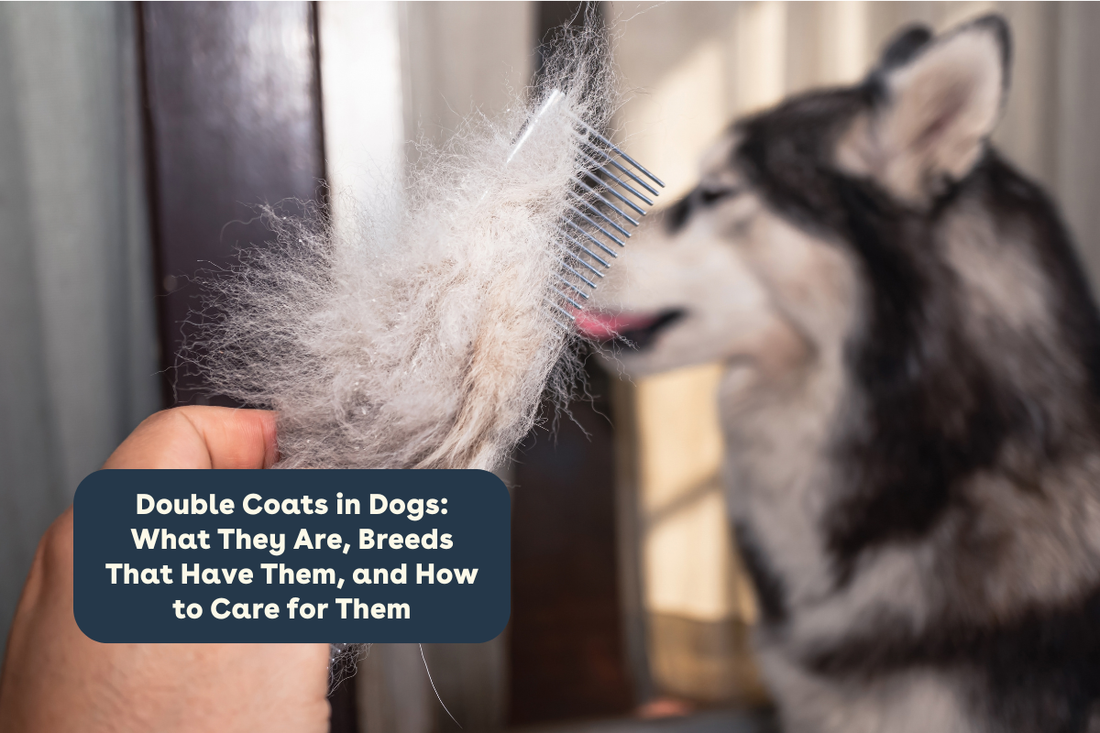
Dogs come in every shape, size, and coat style imaginable, but one thing many pup parents quickly notice is a coat that seems to shed fur everywhere—sometimes by the handful. If your dog has a soft, dense undercoat beneath a longer, protective topcoat, they probably have what’s called a double coat. Knowing what a double coat is, which breeds have it, and how to care for it properly can make grooming less of a chore, help control shedding, and keep your furry friend healthy, comfortable, and looking their best all year long.
Table of Contents:
- What Is a Double Coat in Dogs?
- Popular Double-Coated Dog Breeds
- How to Care for a Double Coat
- Why You Shouldn’t Shave a Double-Coated Dog
- Tips to Manage Shedding at Home
What Is a Double Coat in Dogs?

A double coat is a dog’s two distinct layers of fur:
-
Undercoat: This soft, dense layer lies close to the skin. It insulates dogs in winter and helps regulate body temperature in summer. The undercoat often sheds seasonally, a process sometimes called “blowing the coat.”
- Topcoat (guard hairs): This longer, coarser layer protects the undercoat from dirt, debris, and moisture. It also repels water and acts as a barrier against the elements.
Dogs with double coats are often better equipped for harsh weather conditions. Many double-coated breeds were originally bred for cold climates or outdoor work.
🐶Related Reading: What happens if you DON’T groom your dog
Signs Your Dog Has a Double Coat
Not all fluffy dogs have a double coat. Common signs include:
-
Thick fur around the neck, chest, and tail
-
Seasonal heavy shedding
-
Soft undercoat beneath a coarser topcoat
- Puffy or full appearance when the undercoat is dense
If your dog shows these traits, they likely have a double coat.
💖Learn how to keep your pup’s skin and coat healthy!
Popular Double-Coated Dog Breeds

Double coats are common in breeds bred for cold or harsh environments. Some well-known double-coated breeds include:
-
Siberian Husky – Thick undercoat keeps them warm in Arctic conditions.
-
Alaskan Malamute – Dense coat protects against freezing temperatures.
-
German Shepherd – Undercoat provides insulation; topcoat protects from weather.
-
Golden Retriever & Labrador Retriever – Water-resistant topcoat and insulating undercoat for retrieving in cold water.
-
Shiba Inu & Akita – Japanese breeds with weather-resistant double coats.
-
Samoyed – Famous fluffy white coat for Arctic survival.
-
Collies & Shetland Sheepdogs – Herding breeds with protective double coats.
How to Care for a Double Coat

Double-coated dogs require consistent grooming to stay healthy and comfortable.
Brushing
-
Brush regularly to prevent mats and tangles, especially the undercoat.
-
Use an undercoat rake or deshedding tool during shedding season.
- Daily brushing is often necessary for breeds like Huskies and Malamutes.
Bathing
-
Double-coated dogs don’t need frequent baths; overbathing can strip natural oils.
- Use a mild dog shampoo and dry the undercoat completely to prevent skin issues.
Health Considerations
-
Mats in the undercoat can lead to hot spots and skin irritation.
- Heat-sensitive breeds can overheat if shaved; provide shade, water, and cool areas.
Recommended Grooming Tools
-
Slicker brush
-
Undercoat rake
-
Dematting comb
- High-velocity dryer (optional for thick-coated breeds)
🫧Check out our At Home Grooming Course for more tips and tricks!
Why You Shouldn’t Shave a Double-Coated Dog

It’s a common misconception among pup parents that shaving a double-coated dog will help them stay cooler in the summer months. While it might seem like removing some of that thick fur would reduce heat, shaving can actually do more harm than good.
A dog’s double coat is designed by nature to regulate temperature year-round, not just in winter. The soft undercoat acts as an insulating layer, keeping your dog warm when it’s cold and protecting them from overheating when it’s hot. By removing the topcoat, you strip away the protective barrier that shields your dog’s skin from direct sunlight, environmental irritants, and even minor abrasions. Without this top layer, dogs are much more susceptible to sunburn, insect bites, and other skin injuries.
Shaving a double-coated dog can also permanently damage the structure of their fur. The undercoat and topcoat grow in specific patterns and textures, and cutting them too short can interfere with natural regrowth. In some cases, the fur may grow back unevenly, patchy, or softer than it should be, which reduces the coat’s natural insulation and protective qualities.
For breeds that rely on their coat for weather protection, such as Huskies, Malamutes, and Samoyeds, shaving can leave them vulnerable to both heat and cold in ways their coat is designed to prevent.
🦴Related Reading: Do Dogs Sweat? How Do They Regulate Body Temperature | Pupford
Tips to Manage Shedding at Home

Shedding is just part of life when you have a double-coated dog, and while it might feel like your pup is single-handedly redecorating your home with fur, there are ways to keep it under control.
First, keeping a clean environment is key. Regular vacuuming, especially in the areas your dog spends the most time, like their bed, your favorite chair, or the sunny spot by the window, can make a big difference. If you really want to win the battle against fur, invest in a vacuum designed for pet hair, it’s like giving yourself superhero powers against all that fluff.
Another simple trick is using washable blankets or pet beds in high-fur areas. These can be tossed in the laundry whenever your pup decides it’s shedding season (which is basically all the time for double-coated dogs).
Not only does this help protect your furniture, but it makes cleanup way less of a hassle. And let’s be honest, keeping a stockpile of lint rollers within arm’s reach is basically mandatory.
Regular grooming is your best weapon against shedding. Brushing your pup not only removes loose undercoat fur before it can spread across the house, but it also gives you some quality one-on-one time together. Plus, you can check their skin for irritation or hot spots, which can develop if mats start to form.
With a little routine, a trusty vacuum, plenty of washable covers, and a small army of lint rollers, shedding can be more manageable, turning what once felt like chaos into a part of life with a healthy, happy, and very fluffy pup.
Recap: Double Coats in Dogs
Double coats are a remarkable feature that provides warmth, protection, and extra fluff for cuddles. While they require more grooming than single coats, understanding your dog’s coat structure and following a proper care routine ensures they stay healthy, comfortable, and looking their best.
Embrace the beauty and function of a double coat, and your dog will thank you with a shiny, healthy, and comfortable coat year-round.


