


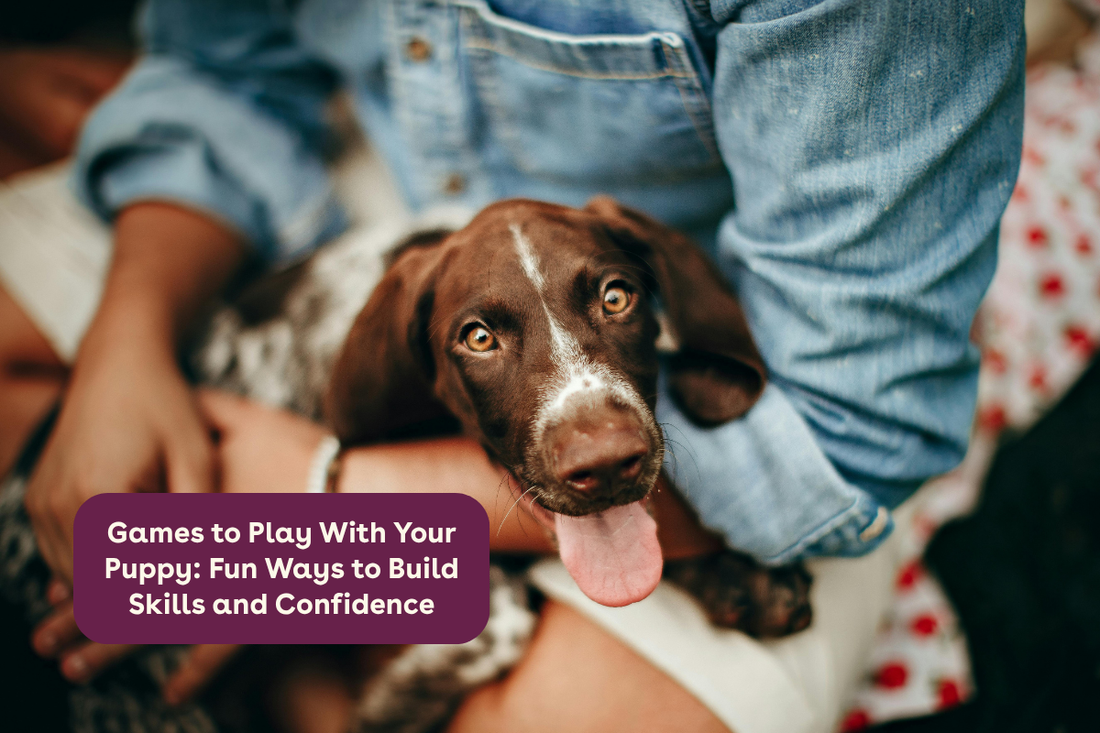
Bringing home a puppy is exciting, but it can also feel overwhelming. Puppies have endless energy, short attention spans, and an incredible curiosity about the world around them. While formal training sessions are important, some of the best learning happens through games.
Games allow your puppy to practice important life skills without the pressure of a structured training session. They help build confidence, strengthen your bond, improve communication, and provide mental enrichment that can tire a puppy out just as effectively as physical exercise.
The best part? Most puppy games require little to no equipment and can be played in your living room, backyard, or neighborhood park.
Whether you're raising an 8-week-old puppy or an energetic adolescent, these simple games can help create a happier, more confident dog.
Why Games Matter for Puppies

Many pup parents think training and play are separate activities, but they often overlap.
When you play games with your puppy, you're teaching valuable skills such as:
- Name recognition
- Recall (coming when called)
- Confidence around new environments
- Impulse control
- Focus around distractions
- Problem-solving abilities
- Comfort being alone
- Engagement with people
Games also help prevent boredom, which is often a major contributor to unwanted behaviors like chewing, digging, barking, and excessive energy.
A few minutes of purposeful play each day can have a huge impact on your puppy's development.
The Name Game

One of the first skills every puppy should learn is that hearing their name is a wonderful thing.
The Name Game teaches your puppy to quickly orient toward people when they hear their name, creating a foundation for attention and future training.
How to Play
Gather a few family members or friends and sit in a circle on the floor.
One person says the puppy's name one time.
When the puppy looks toward that person, mark the behavior with a "yes!" or clicker and reward with a treat.
👉New to clicker training? Learn everything you need to know here!
After the puppy finishes their treat, another person says the puppy's name.
Continue taking turns around the circle, just be sure to go in a random order so your puppy doesn’t pick up on any patterns.
If your puppy goes to someone who did not call their name, do not give them a treat. We want them to learn that their name equals a treat, not that just walking up to a person equals a treat.
Why It Works
This game teaches puppies that responding to their name predicts good things.
Over time, your puppy learns:
- Hearing their name is important
- Looking at people pays off
- Paying attention is rewarding
As your puppy improves, you can increase the distance between people or play in different environments.
Pro Tip
Only say your puppy's name once. Repeating it over and over can teach them that the first few repetitions don't matter.
The "Get It" Recall Game

A reliable recall can be one of the most important skills your puppy ever learns.
The "Get It" Game makes coming when called exciting and rewarding.
How to Play
Start in a low-distraction area with your puppy on a leash.
Toss a treat a few feet away and say "Get it!"
Allow your puppy to move toward and eat the treat.
As soon as they finish, enthusiastically say:
"Come!"
Take a few steps backward as they move toward you.
When they reach you, reward with multiple treats, praise, and affection.
Repeat several times.
Why It Works
The tossed treat creates distance naturally.
Your puppy learns that moving away from you is okay because coming back is even more rewarding.
This game creates a positive emotional response to recall instead of making it feel like the end of fun.
Progression Ideas
Once your puppy understands the game:
- Increase distance - switch from a regular leash to a long lead
- Practice in various places around the house and backyard
- Add mild distractions
- Practice in new places like on walks and at parks
Always make coming to you the best part of the game, be super fun and excitable!
🐕Once your pup has mastered this, sign up for our 7-Day Recall Challenge!
The Alone Time Game

Many puppies struggle with being alone because they have never learned that independence can be enjoyable.
The Alone Time Game helps build confidence and prevent separation-related issues.
💖The 10 Most Common Misconceptions About Dog Separation Anxiety | Pupford
How to Play
Place a comfortable mat, bed, or blanket in their crate with the door open.
Give your puppy a stuffed food toy, chew, or enrichment item on the mat.
Allow them to enjoy it while you remain in the room.
After a few sessions, begin moving farther away.
You might:
- Sit across the room
- Walk into another room briefly
- Return before your puppy becomes distressed
Gradually increase duration over time.
Why It Works
This game teaches puppies:
- Being alone is safe
- Independent activities can be rewarding
- Your departures are temporary
- They can play even if you are not around
Building this skill early can make a huge difference as your puppy grows.
Keep Sessions Easy
The goal isn't to test your puppy.
It's to create many successful experiences where alone time feels normal and pleasant.
Find It Game

Dogs naturally love using their noses.
🐶Are You Using Your Dog's Nose Enough? Pupford
"Find It" is a simple enrichment game that encourages scent work and mental exercise.
How to Play
Show your puppy some treats in your hand.
Toss them a short distance (preferably in a grassy area) and say:
"Find it!"
Allow them to search for and eat the treats.
As they improve, begin hiding treats:
- Behind furniture
- Under cups
- Around the room
- In fields or areas with tall grass
Why It Works
Sniffing is mentally exhausting in the best way.
Just a few minutes of scent work can help puppies settle down and relax.
This game also encourages confidence because your puppy learns to solve problems independently.
The Hand Target Game

Hand targeting is one of the easiest behaviors for puppies to learn.
It can later help with recalls, loose-leash walking, and positioning.
How to Play
Hold your hand with an open palm a few inches from your puppy's nose.
Most puppies will naturally investigate.
The moment their nose touches your hand, mark and reward.
Repeat several times.
Once they understand the game, begin moving your hand farther away.
Why It Works
Dogs love clear, simple objectives.
Touching your hand becomes a fun puzzle that helps build focus and engagement.
Many trainers use hand targets throughout a dog's life because they're so versatile.
The Box Exploration Game

Confidence-building is one of the most important parts of puppyhood.
The Box Exploration Game introduces novelty in a safe way.
How to Play
Gather a few safe household items such as:
- Cardboard boxes
- Towels
- Cushions
- Empty paper bags
Create a simple obstacle course.
Scatter treats throughout the area and let your puppy explore at their own pace.
Why It Works
New surfaces, textures, sounds, and objects help puppies develop resilience and confidence.
Allow your puppy to investigate voluntarily rather than forcing interactions.
The goal is curiosity, not bravery.
The Follow Me Game

This game teaches puppies that staying connected to you is rewarding.
How to Play
With treats in your pocket, begin walking around the house or yard.
Any time your puppy chooses to follow you, reward them.
Change directions frequently.
Encourage your puppy to pay attention to your movement.
Why It Works
Many loose-leash walking problems begin because puppies learn that the environment is more rewarding than their human.
The Follow Me Game teaches puppies that keeping an eye on you pays well.
The Trade Game

One thing we ALL know about puppies is that they pick up things they shouldn't.
Instead of chasing them, teach them that giving things up is rewarding.
How to Play
Offer your puppy a low-value toy.
Then present a higher-value treat.
When they release the toy, reward them.
Return the toy after they finish the treat.
Why It Works
Your puppy learns that people approaching their possessions is a good thing.
This helps build positive associations and can support healthy resource-guarding prevention strategies.
The Settle on a Mat Game

Teaching relaxation is just as important as teaching activity.
How to Play
Place a mat on the floor.
The moment your puppy steps onto it, reward.
Continue rewarding calm behaviors such as:
- Sitting
- Lying down
- Relaxing
Over time, increase the duration between rewards.
Why It Works
Many puppies need help learning how to relax.
This game creates a clear place where calm behavior is reinforced.
Eventually, the mat can become a valuable tool when guests visit, during meals, or while you're working.
The Hide-and-Seek Game

Hide-and-seek combines recall, scent work, and problem-solving.
How to Play
Have someone gently hold your puppy.
Hide somewhere nearby.
Call your puppy once.
Celebrate enthusiastically when they find you.
Why It Works
Finding you becomes exciting and rewarding.
This strengthens your relationship while improving recall skills.
Most puppies absolutely love this game.
Tips for Successful Puppy Play Sessions
Keep Sessions Short
Puppies learn best in short bursts.
Five minutes of focused play is often more effective than a long session.
End Before Your Puppy Gets Bored
Leave your puppy wanting more.
Ending while they're still engaged helps maintain enthusiasm for future training.
Use High-Value Rewards
Soft, tasty treats can make games much more motivating. Some of our favorites are the Soft & Chewy Training Treats.
When learning new skills, reward generously.
Adjust Difficulty Gradually
Avoid making games harder too quickly.
Success builds confidence.
If your puppy struggles, make the game easier again.
Focus on Fun
Games should feel enjoyable for both of you.
The goal isn't perfection. It's creating positive experiences that build skills over time.
Recap: Games to Play with Your Puppy
Some of the most effective puppy training doesn't look like training at all.
These activities strengthen your bond, build confidence, encourage good habits, and provide valuable mental stimulation during one of the most important developmental stages of your puppy's life.
Remember that consistency matters more than complexity. A few minutes of purposeful play each day can have a lasting impact on your puppy's behavior and relationship with you.
And if you're looking for step-by-step guidance on raising a confident, well-mannered puppy, check out our FREE Pupford Academy Courses for expert instruction on everything from socialization and recall to settling, independence, and everyday life skills.


