


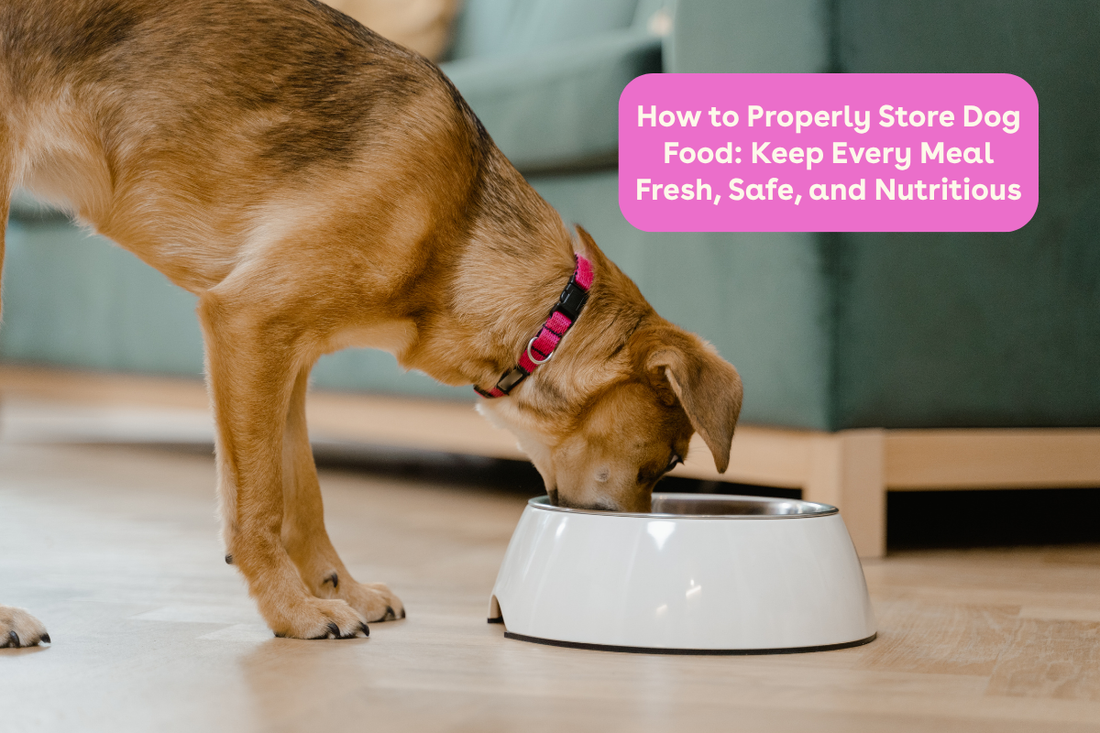
When it comes to your dog's health, choosing a high-quality food is only half the equation. How you store that food plays an important role in preserving its nutritional value, taste, and safety.
Whether you feed kibble, freeze-dried raw, canned food, or fresh meals, improper storage can lead to nutrient loss, spoilage, mold growth, or contamination. Fortunately, keeping your dog's food fresh is simple with the right storage habits.
Here's everything you need to know about properly storing dog food.
Why Proper Dog Food Storage Matters

Dog food is designed to provide balanced nutrition, but exposure to air, moisture, heat, and light can begin breaking down important nutrients over time.
Improper storage can lead to:
- Loss of vitamins and healthy fats
- Food becoming stale or less palatable
- Mold or bacterial growth
- Pest infestations
- Rancid fats that may upset your dog's stomach
Proper storage helps ensure every meal is as nutritious and safe as the day you opened the bag.
The Biggest Enemies of Dog Food
Four factors cause most dog food to deteriorate:
Air
Once opened, oxygen begins breaking down fats in the food. This oxidation can make food smell rancid and reduce its nutritional quality.
Heat
Warm temperatures speed up spoilage and can shorten the shelf life of food significantly.
Moisture
Moisture encourages mold, bacteria, and yeast growth. Even small amounts of humidity can affect dry food.
Light
Direct sunlight and UV exposure can degrade vitamins and accelerate oxidation.
Keeping food cool, dry, and sealed helps protect against all four.
How to Store Dry Dog Food (Kibble)

Dry food is the most commonly fed diet, but it's also the one most often stored incorrectly.
Keep It in the Original Bag
Many people pour kibble directly into a storage container, but the original bag actually helps protect the food.
Dog food bags are designed with materials that help limit exposure to oxygen and moisture. They also contain important information like:
- Lot number
- Expiration date
- Feeding guidelines
- Manufacturer information in case of a recall
Instead of dumping the food into a bin, place the entire bag inside an airtight container.
Use an Airtight Storage Container
Choose a food-grade container with a tight-fitting lid.
A quality airtight container helps:
- Reduce exposure to oxygen
- Keep moisture out
- Prevent pests
- Protect the food from odors
Wash and dry the container thoroughly before adding a new bag to avoid mixing old food residue with fresh food.
Store It in a Cool, Dry Location
Ideal storage locations include:
- Pantry
- Kitchen cabinet
- Indoor closet
- Climate-controlled storage room
Avoid storing dog food in:
- Garages
- Outdoor sheds
- Laundry rooms with excess humidity
- Direct sunlight
- Hot vehicles
Temperatures above about 80°F (27°C) can accelerate nutrient degradation.
🐶Kibble vs Freeze Dried & Dehydrated Dog Food vs Raw Diets | Pupford
How to Store Freeze-Dried Dog Food

Freeze-dried raw food is incredibly convenient because it offers many of the benefits of raw feeding without requiring refrigeration before opening.
To keep it fresh:
- Reseal the bag tightly after every use.
- Store it in a cool, dry place.
- Keep moisture out of the bag.
- Avoid leaving the package open for extended periods.
One of the biggest advantages of freeze-dried food is its shelf stability, making it easier to store than frozen raw diets while still maintaining excellent nutritional quality.
How to Store Canned Dog Food
Unopened canned food is relatively easy to store.
Keep unopened cans:
- At room temperature
- Away from heat sources
- Out of direct sunlight
Once opened:
- Cover the can or transfer leftovers to an airtight container.
- Refrigerate immediately.
- Use within 2–3 days for best quality.
Never leave opened canned food sitting at room temperature for more than about two hours.
How to Store Fresh or Refrigerated Dog Food

Fresh dog food requires the most attention.
Follow the manufacturer's storage instructions carefully.
Generally:
- Refrigerate immediately after opening.
- Keep containers tightly sealed.
- Use within the recommended timeframe.
- Freeze unused portions if appropriate.
Never leave fresh food sitting out for extended periods.
Can You Freeze Dog Food?
Yes, many types of dog food can be frozen.
Freezing works well for:
- Fresh food
- Homemade diets
- Raw diets
- Some canned foods after portioning
If freezing:
- Divide food into meal-sized portions.
- Use freezer-safe containers.
- Label with the freezing date.
- Thaw in the refrigerator rather than on the counter.
Dry kibble generally does not need freezing and may absorb moisture when thawed.
How Long Does Dog Food Stay Fresh After Opening?
Shelf life varies depending on the type of food.
Dry Kibble
Most dry foods stay freshest for about 4–6 weeks after opening when stored properly.
Freeze-Dried Food
Shelf life depends on the manufacturer, but resealed freeze-dried food generally stays fresh for several weeks after opening when stored correctly.
Canned Food
Opened canned food should usually be used within 2–3 days if refrigerated.
Fresh Food
Follow the expiration date and storage recommendations provided by the manufacturer.
Signs Dog Food Has Gone Bad

Before feeding your dog, check for signs that the food may have spoiled.
Watch for:
- Sour or rancid smell
- Visible mold
- Moisture inside dry food
- Discoloration
- Insects or pantry pests
- Unusual texture
- Your dog suddenly refusing food they normally enjoy
If anything seems off, it's safest to discard the food.
Common Dog Food Storage Mistakes
Even well-meaning pup parents sometimes make storage mistakes.
Leaving Food Open
An open bag allows oxygen and humidity inside, reducing freshness much faster.
Mixing Old and New Food
Always finish the previous bag before adding a new one. Mixing food can hide spoiled kibble and makes it harder to track lot numbers in the event of a recall.
Using Dirty Storage Containers
Crumbs and oils from previous bags can become rancid over time. Clean and dry containers thoroughly before adding fresh food.
Storing Food Outside
Extreme temperatures and humidity can damage food quickly. Indoor storage is almost always the better choice.
Buying More Than You'll Use
Buying in bulk can save money, but only if your dog will finish the food before it loses freshness. Purchase a bag size that matches your dog's eating habits.
Frequently Asked Questions

Should I pour kibble directly into a storage bin?
It's better to leave kibble in its original bag and place the entire bag inside an airtight container. The original packaging helps protect the food and preserves important recall information.
Can I store dog food in the garage?
It's generally not recommended. Garages often experience temperature swings and humidity that can shorten the shelf life of dog food.
How can I tell if dry dog food is rancid?
Spoiled kibble often smells sour, oily, or unusual. It may also change color or develop visible mold. If you're unsure, discard it.
Is an airtight container necessary?
While not absolutely required, an airtight, food-grade container is one of the best ways to protect dog food from air, moisture, and pests.
Does freeze-dried dog food need refrigeration?
Most freeze-dried dog foods do not require refrigeration before opening. Once opened, simply reseal the package and store it in a cool, dry location unless the manufacturer recommends otherwise.
Recap: How to Properly Store Dog Food
Choosing a nutritious dog food is one of the best ways to support your dog's long-term health, but proper storage is just as important. Keeping food protected from air, heat, moisture, and light helps preserve freshness, flavor, and essential nutrients.
With a few simple storage habits, you can make sure every bowl is as safe and nutritious as possible, helping your pup enjoy healthy meals from the first scoop to the last.
🐕 Shop our Freeze-Dried Raw Diet, Pupford Good Dog Food


