


Dental health is one of the most overlooked parts of a dog’s overall wellbeing. Most pup parents are focused on the big things: feeding a high-quality diet, getting enough exercise, practicing training, and making sure their dog gets plenty of love and attention. But oral care often ends up near the bottom of the list.
And let’s be honest, most of us have met a dog with some pretty impressive bad breath. “Dog breath” is almost treated like a normal part of life with dogs. But when does bad breath stop being funny and start being a sign of a real health problem?
In many cases, that strong odor coming from your dog’s mouth isn’t just unpleasant—it’s the first warning sign of periodontal disease. Periodontal disease is a progressive infection of the tissues that support the teeth, and it’s one of the most common health conditions in dogs.
In fact, veterinary research estimates that by the time dogs reach three years old, a majority already show signs of dental disease. What often begins as mild plaque buildup can gradually progress into painful inflammation, infection, and damage to the structures that hold teeth in place.
The good news is that periodontal disease develops slowly, which means there are many opportunities to catch it early and prevent serious complications. Understanding how this condition develops, what warning signs to watch for, and how to protect your dog’s teeth can make a huge difference in their long-term health and comfort.
Table of Contents:
- `What Is Periodontal Disease in Dogs?
- How Common is Periodontal Disease?
- What Causes Periodontal Disease in Dogs?
- The Stage of Periodontal Disease
- Signs and Symptoms of Periodontal Disease
- Health Risks of Untreated Periodontal Disease
- How Veterinarians Diagnose Periodontal Disease
- Treatment for Periodontal Disease
- Preventing Periodontal Disease
- Which Dogs Are Most at Risk?
- Creating a Dental Care Routine for Your Dog
What Is Periodontal Disease in Dogs?

Periodontal disease is an infection and inflammation of the tissues that support the teeth. These structures, known collectively as the periodontium, include the gums, the periodontal ligaments that anchor teeth in place, and the surrounding jawbone.
When these tissues are healthy, they form a strong support system that keeps each tooth stable and protected. But when bacteria begin to accumulate along the gumline, that support system can slowly start to break down.
The process usually begins with plaque. Plaque is a sticky film made up of bacteria, food particles, and saliva that forms on the surface of teeth throughout the day. This happens to humans and dogs alike.
If plaque is removed regularly through brushing or chewing, it usually isn’t a major problem. But when plaque is left on the teeth, it begins to harden into tartar (also called calculus). Unlike plaque, tartar cannot be removed with brushing alone and creates a rough surface where bacteria can thrive.
As bacteria build up along the gumline, they trigger inflammation in the surrounding gum tissue. This stage is known as gingivitis. You might notice red or swollen gums, mild bleeding, or that familiar “dog breath” becoming stronger.
The good news is that gingivitis is the earliest stage of periodontal disease and is still reversible with proper dental care and professional cleaning.
However, if the infection continues to progress, bacteria begin moving deeper below the gumline. This is when periodontal disease becomes much more serious. The infection can start damaging the periodontal ligament and the jawbone that hold the teeth in place.
Over time, this damage can cause gums to recede, teeth to loosen, and painful infections to develop around the tooth roots. In advanced cases, teeth may need to be extracted to eliminate the source of infection and relieve pain.
One of the biggest challenges with periodontal disease is that dogs are extremely good at hiding discomfort. Many dogs continue eating and behaving normally even when their mouths are painful. As a result, the disease can progress significantly before obvious symptoms appear.
That’s why small signs, like persistent bad breath or visible tartar along the gumline, shouldn’t be ignored. What might seem like a minor dental issue could actually be the early stages of a much larger health problem.
Periodontal disease is the most common health condition diagnosed in dogs. Veterinary dental studies estimate that more than 80% of dogs over the age of three have some degree of periodontal disease.
Smaller breeds tend to be affected more often than larger dogs. Breeds such as toy poodles, dachshunds, chihuahuas, and Yorkshire terriers frequently develop dental disease earlier in life. This is largely due to crowded teeth and smaller jaws that make plaque accumulation easier.
However, periodontal disease can affect any dog regardless of size, breed, or age if dental care is neglected.
What Causes Periodontal Disease in Dogs?

The primary cause of periodontal disease is bacterial plaque that builds up on the teeth. However, several factors can increase a dog’s risk.
Lack of Dental Care
Dogs that never receive dental care are much more likely to develop tartar buildup and gum disease. Brushing removes plaque before it hardens into tartar.
💖Dog Teeth Cleaning Costs + At-Home Dental Care Products | Pupford
Diet
Soft or sticky foods may cling to teeth more easily, allowing bacteria to multiply. While diet alone does not prevent dental disease, certain chewing textures can help reduce buildup.
Breed and Genetics
Small breeds are particularly prone to dental disease because their teeth are tightly packed together. This makes it easier for plaque to accumulate between teeth.
Age
Older dogs have had more time for plaque accumulation and gum damage to occur, making periodontal disease more common with age.
🐶Caring for Senior Dogs | Pupford
Misaligned Teeth
Dogs with crooked or crowded teeth may have areas where plaque accumulates more easily.
Lack of Chewing
Chewing naturally helps scrape plaque off teeth. Dogs that rarely chew appropriate items may experience faster buildup.
🦴Why Do Dogs Chew? Understanding the Why's and How's of Canine Chewing – Pupford
The Stages of Periodontal Disease

Periodontal disease progresses through several stages. Understanding these stages can help pup parents recognize the seriousness of the condition.
Stage 1: Gingivitis
This is the earliest and most reversible stage.
Signs include:
- Red or swollen gums
- Mild bad breath
- Slight gum irritation
At this stage, the infection has not yet affected deeper tissues. Professional cleaning and improved dental care can often reverse the damage.
Stage 2: Early Periodontitis
In this stage, inflammation begins affecting the structures that support the teeth.
Signs may include:
- Increased tartar buildup
- Persistent bad breath
- Gum recession
- Mild discomfort while chewing
Some attachment loss around the tooth may occur.
Stage 3: Moderate Periodontitis
Damage to ligaments and bone becomes more significant.
Symptoms may include:
- Noticeable gum recession
- Loose teeth
- Bleeding gums
- Difficulty chewing
At this point, some damage is permanent.
Stage 4: Advanced Periodontitis
This stage involves severe infection and bone loss.
Symptoms may include:
- Severely loose teeth
- Pain when eating
- Tooth loss
- Abscesses or facial swelling
Extraction of affected teeth is often necessary to eliminate infection and relieve pain.
Signs and Symptoms of Periodontal Disease

Many dogs continue eating and acting normally even when dental disease is present. Because of this, the condition often goes unnoticed until it becomes advanced.
Common signs include:
Bad Breath
Persistent bad breath is often the first noticeable symptom. While mild dog breath is normal, strong foul odors can signal bacterial infection.
Red or Bleeding Gums
Healthy gums should be pink. Inflamed, red, or bleeding gums are signs of gingivitis or periodontal disease.
Yellow or Brown Tartar
Visible tartar along the gumline is a clear sign that plaque has hardened and bacteria are accumulating.
Difficulty Chewing
Dogs with dental pain may chew more slowly, drop food, or avoid hard foods.
Pawing at the Mouth
Dogs experiencing oral discomfort may paw at their mouth or rub their face on furniture.
Excessive Drooling
Inflammation and infection can cause increased saliva production.
Loose or Missing Teeth
Advanced disease weakens the structures that hold teeth in place.
Health Risks of Untreated Periodontal Disease

Many people think of dental disease as a localized problem affecting only the mouth. However, untreated periodontal disease can impact a dog’s entire body.
Bacteria from infected gums can enter the bloodstream and spread to major organs. This process is called bacteremia.
Potential complications include:
Heart Disease
Oral bacteria can travel to the heart and contribute to infections affecting heart valves.
Liver Problems
The liver filters toxins from the bloodstream. Chronic bacterial exposure may increase stress on this organ.
Kidney Disease
Bacterial infections can damage delicate kidney tissues over time.
Chronic Pain
Dental infections are painful. Dogs often adapt to this pain, but it can significantly affect their comfort and behavior.
💖10 Signs a Dog Is In Pain + How to Help a Dog in Pain | Pupford
Tooth Loss and Bone Damage
Severe periodontal disease destroys the bone that supports the teeth.
For these reasons, veterinarians consider dental care an essential part of preventive healthcare.
How Veterinarians Diagnose Periodontal Disease

A veterinarian typically diagnoses periodontal disease through a dental exam. During routine checkups, your vet will inspect the teeth and gums for signs of tartar buildup, inflammation, or gum recession.
However, a full dental evaluation often requires anesthesia. This allows the veterinarian to:
- Examine below the gumline
- Take dental X-rays
- Measure periodontal pockets
- Perform a thorough cleaning
Dental X-rays are particularly important because much of periodontal disease occurs beneath the gumline, where it cannot be seen with the naked eye.
Treatment for Periodontal Disease

The treatment for periodontal disease depends on how advanced the infection has become.
Professional Dental Cleaning
Most dogs with dental disease require professional cleaning under anesthesia.
This process includes:
- Scaling plaque and tartar from teeth
- Cleaning below the gumline
- Polishing tooth surfaces
- Taking dental X-rays
Polishing helps smooth the enamel surface, making it harder for plaque to adhere.
Antibiotics
In some cases, veterinarians may prescribe antibiotics to control bacterial infection.
Tooth Extractions
If a tooth is severely damaged or loose, extraction may be necessary to remove the source of infection and pain.
While many pup parents worry about extractions, dogs usually recover well and often feel significantly better afterward.
Preventing Periodontal Disease

The good news is that periodontal disease is largely preventable with consistent dental care.
Prevention focuses on removing plaque before it turns into tartar.
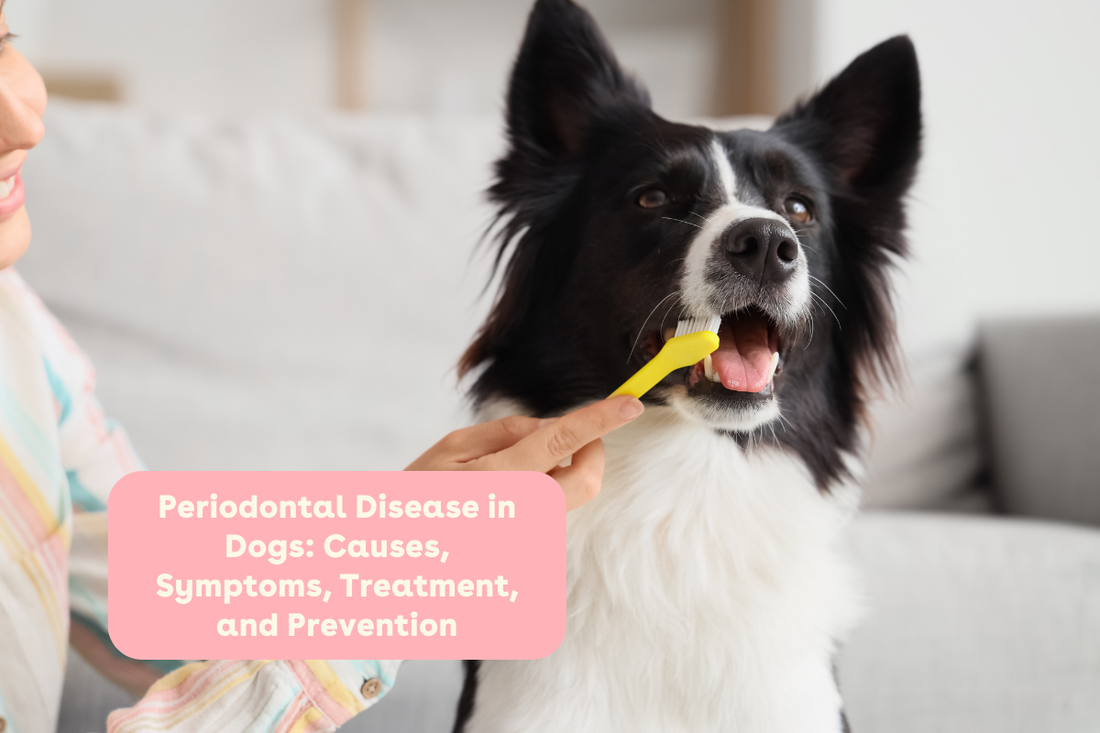
Brushing Your Dog’s Teeth
Daily tooth brushing is the most effective way to prevent plaque buildup.
Use toothpaste formulated specifically for dogs, as human toothpaste can be harmful if swallowed.
Start slowly by letting your dog get used to the taste of the toothpaste and the sensation of brushing.
Even brushing a few times per week can significantly reduce plaque accumulation.
🪥Add a toothbrush to your next Pupford.com order!
Dental Chews
Certain dental chews help mechanically scrape plaque off the teeth while your dog chews.
Look for products designed to support dental health and avoid extremely hard items that could crack teeth.
🦴Shop our entire line of Engage Chews
Dental Toys
Rubber chew toys with textured surfaces can help massage gums and reduce plaque buildup.
These toys also provide enrichment and mental stimulation.
Regular Veterinary Checkups
Routine veterinary exams allow dental issues to be detected early, before they progress into severe disease.
Many dogs benefit from professional dental cleanings every one to two years, though the exact schedule varies depending on the dog’s breed, age, and oral health.
Which Dogs Are Most at Risk?

While all dogs can develop periodontal disease, some are more prone than others.
Dogs at higher risk include:
- Small and toy breeds
- Dogs with crowded teeth
- Older dogs
- Dogs that rarely chew
- Dogs that never receive dental care
Because of these factors, some dogs require more proactive dental care than others.
Creating a Dental Care Routine for Your Dog

Building a dental routine does not need to be complicated. Consistency is far more important than perfection.
A simple routine might include:
- Brushing teeth several times per week
- Providing safe dental chews
- Offering appropriate chew toys
- Scheduling regular veterinary dental exams
Starting these habits early in a dog’s life makes the process much easier. Puppies that become comfortable with brushing often tolerate dental care well into adulthood.
However, even older dogs can learn to accept brushing with patience and positive reinforcement.
Recap: Periodontal Disease in Dogs
Periodontal disease is extremely common in dogs, but it is also largely preventable. Without proper dental care, plaque and tartar buildup can lead to painful infections, tooth loss, and even systemic health problems affecting the heart, kidneys, and liver.
By paying attention to early warning signs like bad breath, inflamed gums, and tartar buildup, pup parents can catch dental problems before they become severe.
Simple habits such as regular tooth brushing, providing safe chewing opportunities, and scheduling veterinary dental cleanings can dramatically reduce the risk of periodontal disease.
Taking care of your dog’s teeth isn’t just about fresh breath. It’s about protecting their long-term health, comfort, and quality of life.


