


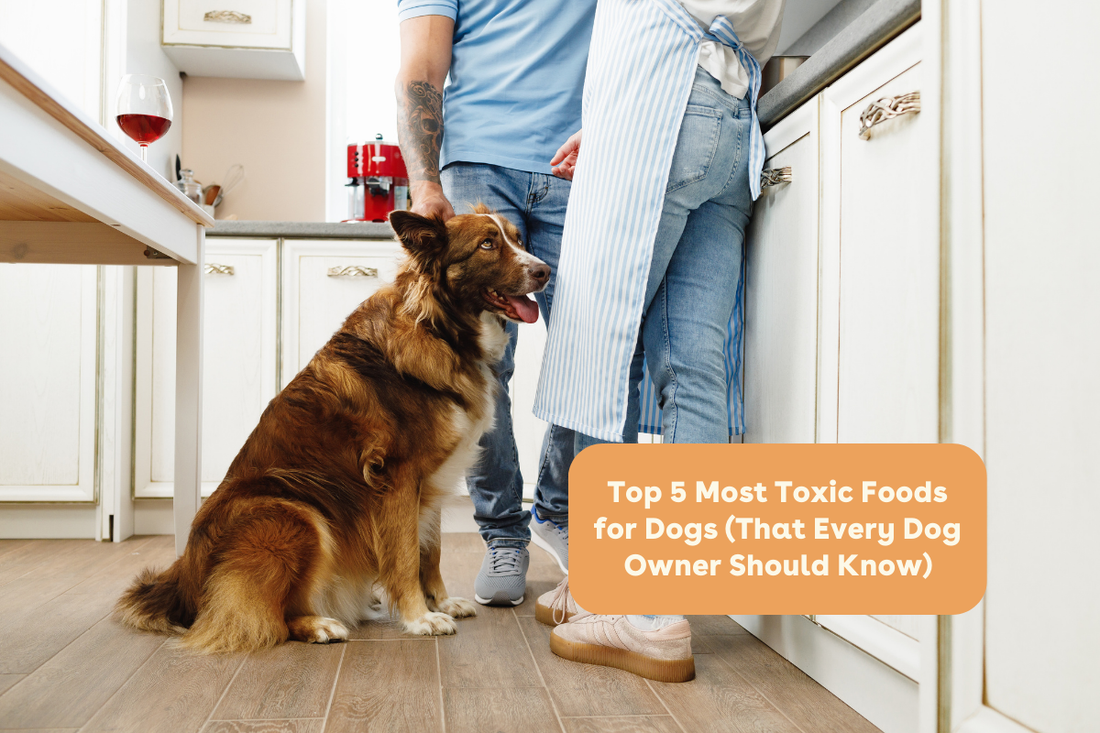
Sharing food is one of the simplest ways we bond with our dogs. But while many human foods are harmless, others can be extremely toxic, even in small amounts.
Some of the most dangerous foods for dogs are common household staples. Understanding which foods dogs can’t eat, and why they’re toxic, is one of the most important steps you can take to prevent accidental poisoning and keep your dog safe.
Below, we’ll break down the top five most toxic foods for dogs, what makes them dangerous, symptoms to watch for, and what to do if your dog gets into something they shouldn’t.
1. Chocolate 🍫

Chocolate is one of the most well-known dog toxins, and unfortunately, one of the most common accidental exposures.
Why Chocolate Is Dangerous
Chocolate contains two compounds that dogs metabolize very slowly:
- Theobromine
- Caffeine
Both are stimulants. While humans process these compounds relatively efficiently, dogs clear them much more slowly from their system. That means the chemicals build up and can reach toxic levels quickly.
The darker and more concentrated the chocolate, the more dangerous it is.
Most Toxic Types (from highest to lowest risk):
- Baking chocolate
- Dark chocolate
- Semi-sweet chocolate
- Milk chocolate
-
White chocolate (lowest risk, but still not safe)
Baking chocolate and dark chocolate contain significantly higher levels of theobromine compared to milk chocolate.
Symptoms of Chocolate Toxicity
Symptoms often appear within 6–12 hours and may include:
-
Vomiting
-
Diarrhea
-
Increased heart rate
-
Elevated blood pressure
-
Restlessness or hyperactivity
-
Tremors
- Seizures
In severe cases, chocolate toxicity can be fatal.
Small dogs are at greater risk because it takes less chocolate to reach a toxic dose. However, large amounts can be dangerous for dogs of any size.
What to Do If Your Dog Eats Chocolate
If your dog eats chocolate:
-
Determine what type and how much.
-
Call your veterinarian immediately.
- Contact the ASPCA Animal Poison Control Center if needed.
2. Grapes & Raisins 🍇

Grapes and raisins may seem harmless, they’re healthy snacks for humans, right? But for dogs, they can cause acute kidney failure.
Why Grapes and Raisins Are Dangerous
Unlike chocolate, we don’t fully understand what makes grapes and raisins toxic to dogs. The exact compound responsible is still unknown.
What we do know:
-
Even small amounts can cause severe toxicity.
-
Sensitivity varies widely between dogs.
- There is no safe amount.
Some dogs may eat a few grapes and show no immediate symptoms, while others may develop kidney failure after ingesting only a small quantity.
Because of this unpredictability, grapes and raisins should always be avoided.
Symptoms of Grape/Raisin Toxicity
Symptoms often begin within a few hours:
-
Vomiting
-
Diarrhea
-
Lethargy
- Loss of appetite
As kidney damage progresses:
-
Increased or decreased urination
-
Dehydration
-
Abdominal pain
- Bad breath (due to toxin buildup)
Without treatment, acute kidney failure can develop within 24–72 hours.
Important Reminder
Raisins are more concentrated than grapes. Foods that commonly contain raisins, like trail mix, cookies, granola bars, and baked goods, are also dangerous.
Always double-check ingredient labels before sharing human food with your dog.
💖39 Fruits & Vegetables Dogs Can Eat List + Ones to Avoid | Pupford
3. Onions & Garlic (Allium Family) 🧄

Onions, garlic, leeks, and chives belong to the Allium family. These ingredients are common in soups, sauces, seasonings, and prepared meals.
They are toxic to dogs in raw, cooked, powdered, and dehydrated forms.
Why They’re Dangerous
Allium vegetables damage a dog’s red blood cells.
Specifically, they cause oxidative damage that leads to the destruction of red blood cells, a condition called hemolytic anemia.
Garlic is more concentrated than onion, meaning smaller amounts can cause harm. However, both are dangerous.
Why This Toxicity Is Especially Concerning
Unlike chocolate or xylitol, symptoms may be delayed.
It can take several days for signs of anemia to develop after ingestion.
That delay sometimes makes it harder for pup parents to connect the symptoms to what their dog ate.
Symptoms of Allium Toxicity
-
Weakness
-
Pale gums
-
Lethargy
-
Rapid breathing
-
Increased heart rate
- Dark or reddish urine
If enough red blood cells are destroyed, oxygen delivery throughout the body becomes compromised, which can be life-threatening.
Hidden Sources to Watch For
-
Onion powder in seasoning blends
-
Garlic in sauces and marinades
-
Broths and gravies
-
Baby food
- Leftovers and restaurant food
Even small, repeated exposures (like frequent table scraps) can build up over time and cause damage.
4. Xylitol (Artificial Sweetener) 🍬

Xylitol is one of the most dangerous toxins for dogs, and one of the fastest acting.
It’s commonly found in:
-
Sugar-free gum
-
Sugar-free candy
-
Some peanut butters
-
Protein bars
-
Baked goods
-
Toothpaste
-
Mouthwash
Why Xylitol Is So Dangerous
In humans, xylitol doesn’t cause a major insulin response.
In dogs, it does the opposite.
Xylitol triggers a rapid and massive insulin release, which causes blood sugar to drop dangerously low, a condition called hypoglycemia.
In some cases, xylitol can also cause acute liver failure.
How Fast Do Symptoms Appear?
Symptoms can begin within 10–30 minutes of ingestion.
That makes xylitol exposure a true emergency.
Symptoms of Xylitol Toxicity
-
Vomiting
-
Weakness
-
Disorientation
-
Tremors
-
Seizures
- Collapse
If liver damage occurs, additional symptoms may include:
-
Yellowing of the gums or eyes (jaundice)
-
Bruising
- Continued lethargy
Without rapid treatment, xylitol poisoning can be fatal.
Prevention Tip
Be especially cautious with:
-
Sugar-free gum in purses or backpacks
-
“Healthy” baked goods
- Certain peanut butter brands
Many cases happen when dogs chew through a bag or container to get to the gum inside.
5. Alcohol 🍺

Alcohol may not seem like something a dog would intentionally drink, but exposures happen more often than people think.
Sources of alcohol toxicity include:
-
Beer, wine, and liquor
-
Unbaked bread dough (fermentation produces alcohol)
-
Certain desserts
- Fermented foods
Dogs are far more sensitive to alcohol than humans.
Why Alcohol Is Dangerous
Alcohol depresses the central nervous system.
Because dogs are smaller and metabolize alcohol differently, even small amounts can cause significant impairment.
Symptoms of Alcohol Toxicity
-
Vomiting
-
Disorientation
-
Loss of coordination
-
Tremors
-
Slowed breathing
- Low body temperature
In severe cases:
-
Coma
-
Respiratory failure
- Death
Unbaked bread dough presents an additional danger because it can expand in the stomach while fermenting, causing bloat and alcohol poisoning simultaneously.
What To Do If Your Dog Eats Something Toxic

If you suspect your dog has ingested any of these foods:
-
Stay calm but act quickly.
-
Remove access to the food.
-
Call your veterinarian immediately.
-
Contact the ASPCA Animal Poison Control Center (888-426-4435)
- If severe symptoms appear (seizures, collapse, difficulty breathing), go to an emergency vet right away.
Do not wait for symptoms to “see what happens.” Early intervention dramatically improves outcomes.
Why Prevention Matters More Than Panic

Most toxic exposures happen accidentally.
A dropped grape. A candy left on the counter. Gum in a backpack. Leftovers on the coffee table.
The good news? These situations are preventable.
Simple habits make a big difference:
-
Keep toxic foods out of reach.
-
Use secure trash cans.
-
Check ingredient labels before sharing treats.
- Educate guests and children about not feeding your dog table scraps.
🐶Related Reading: Counter Surfing Dogs: The Unfortunate Reality of Keeping Dogs off the – Pupford
Recap: Top 5 Most Toxic Food to Dogs
Living with a dog means sharing space, routines, and often food.
But some foods that are perfectly normal for us can be extremely dangerous for them.
To recap, the top five most toxic foods for dogs are:
- Chocolate
- Grapes & Raisins
- Onions & Garlic
- Xylitol
- Alcohol
Knowing what to avoid, and why, empowers you to protect your dog before a crisis happens.
If you’re ever unsure about a specific food, it’s always better to pause and double-check than to take a risk.
Your dog trusts you completely. And with a little awareness, you can keep them safe, healthy, and by your side for years to come.


