


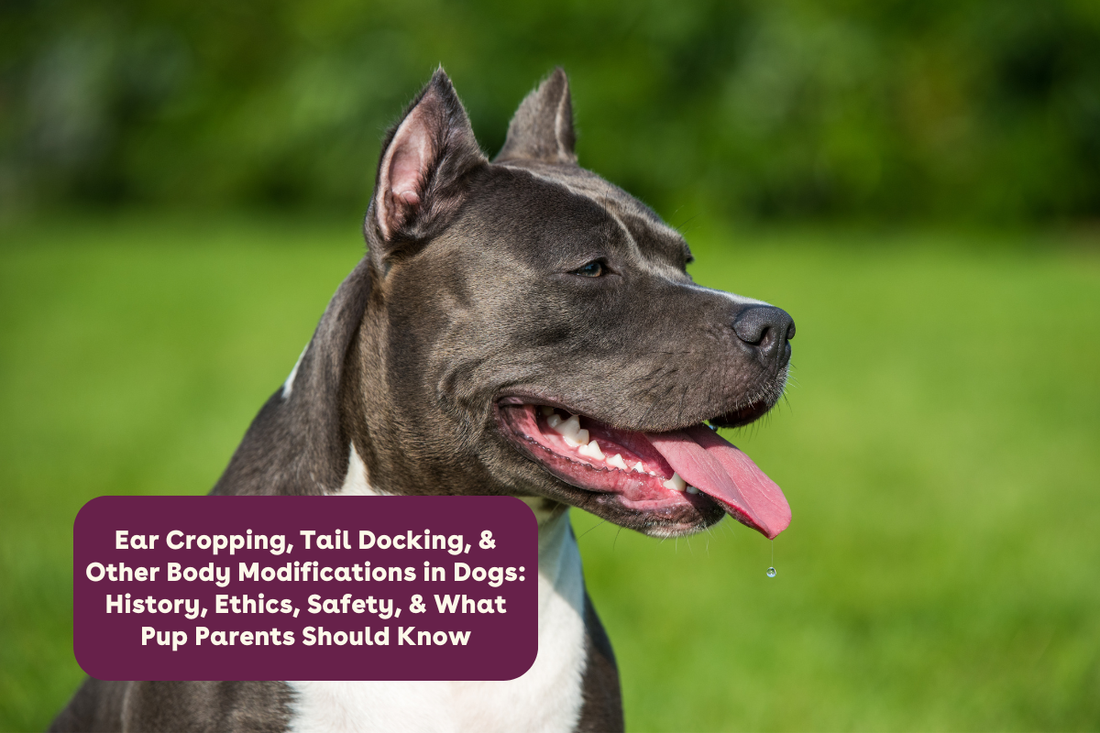
Conversations about ear cropping, tail docking, and other body modifications in dogs can feel complicated. For some people, these procedures are long-standing traditions tied to breed history. For others, they raise serious ethical questions about animal welfare and consent. The truth is nuanced. Some practices began with practical working purposes. Others evolved into cosmetic preferences. And today, laws and veterinary recommendations continue to shift as our understanding of canine health and welfare grows.
If you’ve ever wondered why certain breeds have cropped ears or docked tails, whether dewclaw removal is necessary, or where these practices are banned, this comprehensive guide will walk you through the history, the reasoning, the controversies, and the modern perspective.
Table of Contents:
- What Are Body Modifications in Dogs?
- The Historical Origins of These Practices
- Ear Cropping
- Tail Docking
- Dewclaw Removal
- Other Forms of Body Modification
- Safety vs. Cosmetic Motivation
- Where These Practices Are Banned or Restricted
- Ethical Considerations In Modern Dog Care
- What Pup Parents Should Consider
- Alternatives to Prevent Injury
What Are Body Modifications in Dogs?

In dogs, “body modification” refers to intentional physical alterations that are not medically necessary for the individual dog at the time they are performed. These procedures go beyond routine veterinary care such as vaccinations, spay/neuter surgery, or medically required treatments.
Common examples include:
- Ear cropping
- Tail docking
- Dewclaw removal
- Certain non-essential tooth extractions
While some of these practices originated for functional reasons in working dogs, many are now performed for cosmetic or traditional purposes.
The Historical Origins of These Practices

To understand why ear cropping and tail docking became common, we have to look back hundreds of years. Long before dogs were primarily companions, they were working animals. They guarded livestock, hunted game, pulled sleds, and protected property.
🐶Related Reading: The History and Evolution of Dog Breeds: A Basic Timeline | Pupford
In those contexts, physical alterations were often viewed as protective measures. Dogs navigating dense brush could injure long tails; ears could tear; dewclaws could catch on branches or equipment. With limited medical care and no antibiotics, even minor injuries could become life-threatening.
As dog breeding became more standardized in the 19th and 20th centuries, priorities gradually shifted. Instead of selecting dogs purely for working function, breeders increasingly emphasized appearance and conformity to written breed standards.
Modern research in canine welfare notes that this shift toward aesthetic traits has sometimes led to practices that prioritize visual preference over health and function. In that broader context, procedures like ear cropping and tail docking became tied not just to work, but to maintaining a particular “look.”
Ear Cropping

Ear cropping is a surgical procedure that reshapes a dog’s ears so they stand upright or follow a specific contour. It is commonly associated with breeds such as Doberman Pinschers, Boxers, Great Danes, Miniature Schnauzers, and several bully-type breeds including the American Pit Bull Terrier and American Bully.
Why Ear Cropping Began
Historically, cropping was believed to reduce the likelihood of ear injuries in working or fighting dogs. Upright ears were thought to be less vulnerable to tearing or being grabbed during confrontations with predators or other animals.
In some guarding and protection breeds, cropping was framed as a way to reduce injury risk. In bully-type breeds, however, cropping became more closely tied to periods when dogs were used in fighting or for intimidation purposes in certain contexts. While dog fighting is now illegal and widely condemned, the cropped-ear look persisted in some breed communities long after these original contexts faded.
Over time, what began in specific working or fighting contexts transitioned into aesthetic preference and breed tradition.
The Modern Perspective
Today, most dogs in these breeds are companions, not working guardians or fighting dogs. As a result, the original functional justification is rarely applicable.
In bully breeds especially, ear cropping is almost always cosmetic. The procedure is often chosen to create a certain appearance, sometimes described as alert, strong, or striking. However, this altered appearance can unintentionally reinforce stereotypes about certain breeds.
Ear cropping requires general anesthesia and a recovery period that includes bandaging and taping to help the ears stand correctly. Risks can include pain and discomfort, infection, anesthetic complications, and improper healing.
Major veterinary organizations, including the American Veterinary Medical Association and the American Animal Hospital Association, oppose ear cropping when performed solely for cosmetic reasons. They note that cropping and docking are “not medically indicated nor of benefit to the patient” and encourage the elimination of these procedures from breed standards.
It is also important to consider communication. Dogs rely heavily on ear position as part of their body language. Subtle ear movements help signal fear, curiosity, submission, and playfulness. Altering ear shape can change how dogs communicate and how other dogs and people interpret those signals.
As our understanding of canine behavior and welfare continues to evolve, many veterinarians emphasize preserving natural anatomy unless there is a clear medical need.
Tail Docking

Tail docking involves removing part of a dog’s tail, usually when puppies are just a few days old.
Historical Rationale
Working breeds such as herding dogs, hunting dogs, and certain terriers were docked to reduce the risk of tail injuries in dense brush or while working around livestock. Tail injuries can be painful and prone to infection, and in some high-risk environments, shortening the tail was seen as preventative.
In cold climates, there was also concern about frostbite in exposed tail tips.
Modern Use
Today, many docked dogs are not working in high-risk conditions. Instead, docking often aligns with breed standards or aesthetic expectations. The silhouette of certain breeds has become closely associated with a docked tail, even if the dog will never perform traditional working tasks.
Like ear cropping, routine cosmetic tail docking is opposed by many veterinary and animal welfare organizations, and several countries have banned the practice entirely except for certified working dogs.
Tails also serve important purposes in communication and balance. Dogs use tail position and movement to signal emotions such as excitement, fear, uncertainty, or friendliness. Removing part of the tail alters that signaling system.
Dewclaw Removal

Dewclaws are small, thumb-like digits located higher on the inside of a dog’s leg. Most dogs have front dewclaws, and some breeds also have rear dewclaws.
Why Dewclaws Are Removed
In certain working or sporting dogs, loosely attached dewclaws can be prone to tearing. A torn dewclaw can be painful and may require surgical correction later in life. For this reason, some breeders remove dewclaws in very young puppies.
Changing Views
Recent studies and biomechanical analyses suggest that front dewclaws may help with stability and traction, especially when dogs make sharp turns or climb. As awareness of this function grows, some veterinarians and breeders are re-evaluating routine removal practices.
Unlike ear cropping, dewclaw removal sometimes occupies a gray area. In specific working contexts, removal may reduce injury risk. However, for many family dogs, routine removal may not be necessary.
Other Forms of Body Modification

While less common, other procedures sometimes fall under the umbrella of body modification.
Non-Medical Tooth Extraction
Occasionally, certain teeth are removed in working dogs to prevent injury or equipment damage. However, tooth removal should only be performed when medically justified.
Historical Procedures
Some outdated practices, such as removing webbing between toes in certain hunting dogs, have largely disappeared as veterinary ethics have evolved.
It is important to distinguish between cosmetic or tradition-based procedures and surgeries performed to treat medical conditions. When a procedure is necessary to relieve pain, correct injury, or treat disease, it falls squarely within responsible veterinary care.
Safety vs. Cosmetic Motivation

The central question in discussions about body modification is this: Is the procedure medically necessary or clearly beneficial for that individual dog?
Situations Where Surgery May Be Justified
- Severe, recurrent tail injuries that fail to heal
- Chronic, unmanageable ear infections requiring surgical intervention
- Traumatic dewclaw injury requiring removal
In these cases, surgery aims to improve quality of life and reduce pain.
Cosmetic Procedures
When cropping, docking, or dewclaw removal is performed solely to achieve a traditional look or meet breed standards, the ethical conversation shifts. Dogs cannot consent to aesthetic surgery, and unnecessary procedures carry inherent risk.
As society increasingly views dogs as family members rather than working assets, tolerance for cosmetic modification has declined.
Where These Practices Are Banned or Restricted

Legal perspectives vary widely around the world.
Countries with Bans
Many European countries have banned cosmetic ear cropping and tail docking. In England, Wales, and Scotland, non-medical docking is prohibited, and most of Europe follows similar restrictions under animal welfare conventions.
Australia, New Zealand, and several Scandinavian nations also restrict or ban cosmetic body modifications in dogs.
The United States
In the United States, laws vary by state. Cosmetic cropping and docking remain legal in many areas, though some states and municipalities impose restrictions that require procedures be done only by licensed veterinarians. Breed standards from organizations like the American Kennel Club still permit these practices as part of defining breed conformation.
Ethical Considerations in Modern Dog Care

As veterinary science advances, so does our understanding of canine pain perception, communication, and welfare.
Ethical frameworks increasingly prioritize:
- Minimizing unnecessary pain
- Avoiding non-therapeutic surgery
- Preserving natural anatomy unless medically indicated
Broader discussions in veterinary ethics highlight how selective breeding for appearance, sometimes called “aesthetic-driven breeding”, can conflict with animal welfare when health or natural function is compromised. While cropping and docking differ from inherited conformational disorders, they fall within the same ethical conversation about how much human preference should shape canine anatomy.
Dogs use their ears and tails extensively for communication. Altering these structures changes how they express themselves and how others interpret them.
💡Ready to learn more about dog body language and communication? Check out our Dog Body Language Course!
What Pup Parents Should Consider

If you are bringing home a puppy or researching a specific breed, it is worth having thoughtful conversations with breeders and veterinarians.
Questions to ask include:
- Is this procedure medically necessary for my dog’s lifestyle?
- What are the short- and long-term risks?
- Are there non-surgical alternatives?
- How will this affect communication and mobility?
For working dogs in specific high-risk environments, individualized veterinary guidance may be appropriate. For most companion dogs, however, cosmetic procedures are not required for health or safety.
💖Related Reading: What Do We Owe Our Dogs? Simplifying the Overwhelm of Pup Parenting in – Pupford
Alternatives to Prevent Injury

For pup parents concerned about injury prevention, there are proactive steps that do not involve surgery:
- Conditioning and strength training to support joints and balance
- Protective gear such as booties for rough terrain
- Regular nail and dewclaw trimming to prevent snagging
- Ongoing veterinary monitoring for early detection of problems
In many cases, attentive care and thoughtful training provide more benefit than anatomical alteration.
Recap: Ear Cropping, Tail Docking and Other Body Modifications
Ear cropping, tail docking, dewclaw removal, and other body modifications have complex histories rooted in practicality, tradition, and aesthetics. In some limited working contexts, specific procedures may still be justified under veterinary guidance. However, for the vast majority of companion dogs, cosmetic alterations are not medically necessary.
As pup parents, informed decisions that prioritize canine well-being over appearance or tradition are essential. Asking questions, consulting veterinary professionals, and staying informed about evolving standards helps ensure choices that honor dogs’ health and comfort.


