


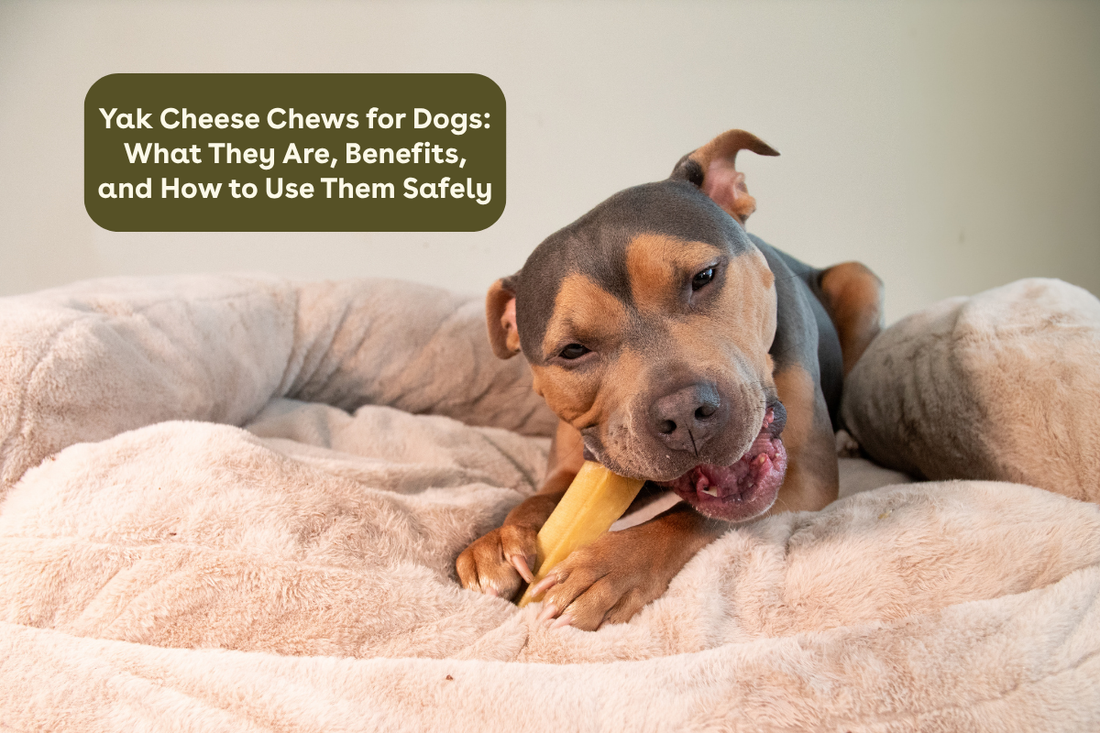
If you’ve spent any time searching for long-lasting, natural chews for your dog, chances are you’ve come across yak cheese chews. These dense, durable chews have quickly become a favorite among pup parents, and for good reason.
They’re simple, natural, and built to last, making them a great option for dogs who love to chew. But what exactly are yak cheese chews? How are they made? And are they the right fit for your dog?
In this guide, we’ll break down everything you need to know, from how yak chews are crafted to how to safely use them (and even what to do when they get down to that tiny “nub”).
What Is a Yak Cheese Chew?

A yak cheese chew (sometimes called a Himalayan dog chew) is a hard, long-lasting dog chew made from a simple blend of milk, lime juice, and salt.
Despite the name, these chews aren’t soft or crumbly like traditional cheese. Instead, they’re firm, dense, and designed to be slowly worn down as your dog chews.
They originated in the Himalayan regions of Nepal and Tibet, where people have been making this type of cheese for centuries. Originally created for human consumption, the recipe was eventually adapted into a dog-friendly chew that’s now popular worldwide.
At Pupford, yak cheese chews align perfectly with what we look for in enrichment products:
- Simple ingredients
- Minimal processing
- Long-lasting engagement
- Safe chewing experience when used properly
- An outlet for natural chewing behaviors
How Are Yak Cheese Chews Made?
One of the biggest selling points of yak cheese chews is how simple and natural the process is.
Here’s a general breakdown of how they’re made:
1. Milk Collection
Traditionally, yak and cow milk are combined (since pure yak milk can be harder to source in large quantities). The milk is the primary ingredient and provides the protein and structure of the chew.
2. Curdling Process
Lime juice (or another natural acid) is added to separate the milk into curds and whey, similar to how traditional cheese is made.
3. Pressing
The curds are then compressed into dense blocks to remove excess moisture. This step is key to creating the chew’s signature hardness.
4. Drying and Aging
The blocks are dried and smoked for several weeks. This slow curing process hardens the chew even further and helps extend its shelf life naturally.
5. Cutting and Packaging
Once fully dried, the blocks are cut into different sizes and shapes depending on the intended dog size. The Pupford Yak Cheese Chews come in three sizes: Small, Medium, and Jumbo.
The end result is a tough, shelf-stable chew with minimal ingredients and no artificial additives.
Benefits of Yak Cheese Chews

Yak chews have gained popularity for a reason; they check a lot of boxes for both dogs and pup parents.
Long-Lasting Chewing
These chews are extremely durable, that means more chewing time, which can help:
- Reduce boredom
- Provide mental enrichment
- Support natural chewing instincts
🐶Why Do Dogs Chew? Understanding the Why's and How's of Canine Chewing – Pupford
Supports Dental Health
Chewing helps mechanically scrape plaque and tartar off your dog’s teeth. While not a replacement for brushing, yak chews can be a helpful addition to your dog’s dental routine.
🪥11 Effective & Easy Ways to Clean Dog Teeth Without Brushing | Pupford
High Protein, Simple Ingredients
Yak chews are typically high in protein and made with just a few ingredients. This makes them appealing for pup parents looking for more natural options.
Low Odor and Low Mess
Unlike some chews, yak cheese doesn’t have a strong smell and doesn’t leave behind greasy residue, making it a more home-friendly option.
What Dogs Are Yak Chews Best Suited For?

Yak cheese chews aren’t a one-size-fits-all chew, they’re well-suited for certain types of chewers.
Moderate to Power Chewers
If your dog tends to go through softer chews quickly, yak chews can be a great upgrade. Their hardness makes them ideal for dogs who enjoy sustained chewing sessions.
💖How to Choose the Right Chew for Your Dog | Pupford
Dogs That Need Enrichment
Chewing is more than just a habit, it’s a natural behavior that helps dogs relax and stay mentally engaged. Yak chews can be a great option for:
- Dogs left home alone for periods of time
- Dogs with excess energy
- Dogs prone to boredom-related behaviors
🐕The Trifecta of Calm: Sniffing, Licking, and Chewing | Pupford
Adult Dogs With Strong Teeth
Because of their hardness, yak chews are generally better suited for adult dogs with fully developed teeth.
When Yak Chews Might Not Be the Best Fit
While yak chews have plenty of benefits, they’re not ideal for every dog.
Puppies With Developing Teeth
Young puppies may find yak chews too hard, which could risk damaging developing teeth. Softer chew options are usually a better starting point, like our Pupford Turkey Tendons!
🦴Best Chew Toys for Puppies: How To Satisfy Their Need to Chew
Very Aggressive Chewers
Some power chewers may try to bite down aggressively instead of gnawing gradually. This increases the risk of tooth fractures.
Dogs With Dental Issues
If your dog has existing dental problems (like cracked teeth or gum sensitivity), it’s best to consult your vet before offering hard chews.
How to Safely Use Yak Cheese Chews

Like any chew, safety comes down to proper use and supervision.
Choose the Right Size
Always select a chew size appropriate for your dog’s weight and chewing style. A chew that’s too small can become a choking hazard.
Supervise Chewing Sessions
Even with durable chews, it’s important to monitor your dog. especially during the first few sessions.
Limit Chew Time
Short, controlled chewing sessions (10–20 minutes) can help prevent overconsumption and reduce the risk of dental strain.
Watch for Wear and Tear
As the chew gets smaller, it becomes easier for dogs to swallow large pieces.
What to Do When the Chew Becomes a “Nub”
One of the most common questions pup parents have is: What do I do when the yak chew gets too small?
Good news, you don’t have to throw it away.
The Puffing Trick
When the chew gets down to a small nub:
- Take it away from your dog
- Soak it in warm water for about 5 minutes
- Microwave it for 30–60 seconds (until it puffs up)
- Let it cool completely
What you’re left with is a crunchy, airy treat that’s much safer for your dog to finish.
This not only reduces waste but also gives your dog a completely new texture and experience.
Yak Chews vs. Other Dog Chews
If you’re comparing yak cheese chews to other popular options, here’s how they generally stack up:
Vs. Bully Sticks:
- Yak chews last longer
- Less odor
- Harder texture
Vs. Rawhide:
- More digestible
- Fewer additives
- Lower risk of chemical processing
🐶Why Rawhide Chews Can Be Dangerous for Dogs | Pupford
Vs. Rubber Chew Toys:
- Edible and rewarding
- Provides nutritional value
- Less durable long-term than synthetic toys
- Each type of chew has its place, but yak chews are a strong option for dogs who need something natural and long-lasting.
Why Chewing Matters for Dogs
Chewing isn’t just about keeping your dog busy, it plays an important role in their overall well-being.
Regular chewing can:
- Reduce stress and anxiety
- Prevent destructive behaviors
- Provide mental stimulation
- Support healthy teeth and gums
For many dogs, chewing is a daily need, not just an occasional treat.
💖Dog Chews: The Ultimate Guide | Pupford
FAQs About Yak Cheese Chews

Are yak cheese chews digestible?
Yes, they’re more digestible than other chews like rawhide.
Can dogs eat yak chews every day?
They can be offered regularly in moderation, but it’s best to limit chewing sessions and rotate with other enrichment options.
Do yak chews splinter?
They don’t splinter like bones, but they can break into smaller pieces as they wear down, another reason to supervise and remove small nubs.
How long should a yak chew last?
This depends on your dog’s size and chewing style, but many dogs will get multiple sessions out of a single chew.
Recap: Yak Cheese Chews
Yak cheese chews are a simple, natural, and effective way to give your dog a safe outlet for their chewing instincts. With their long-lasting durability and minimal ingredients, they’re a great addition to many dogs’ enrichment routines.
That said, like any chew, they’re best used thoughtfully, choosing the right size, supervising sessions, and knowing when it’s time to swap it out.
If you’re looking for a chew that keeps your dog engaged, supports dental health, and aligns with a more natural approach to treats, yak cheese chews are definitely worth considering.


