


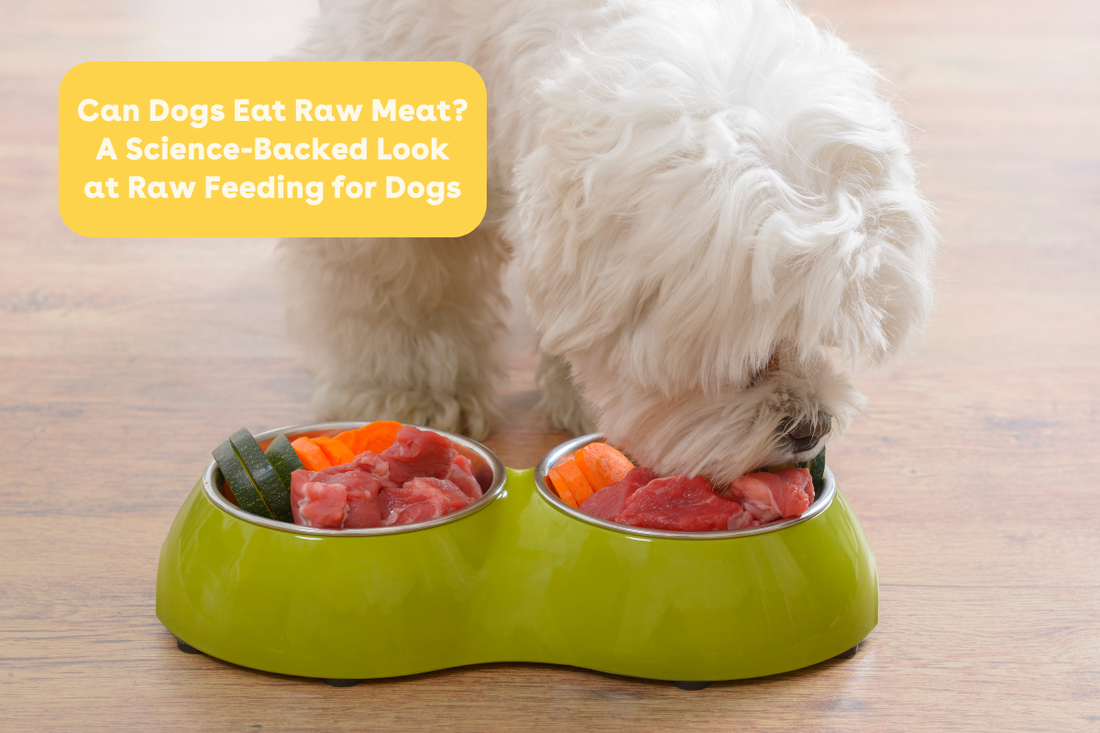
Few topics in dog nutrition spark as much debate as raw feeding. Some pup parents swear by raw meat diets, claiming shinier coats, smaller stools, and more energy. Others worry about bacteria, nutritional imbalances, and safety risks for both dogs and humans.
So where does the truth actually lie?
Can dogs eat raw meat? Is it safe to feed regularly? And how does raw meat compare to modern, thoughtfully formulated dog food?
In this guide, we’ll take a deep, balanced look at raw meat for dogs, what it is, why some people choose it, the real risks involved, what veterinarians and research say, and how to decide what’s best for your individual dog.
Table of Contents:
- Can Dogs Eat Raw Meat?
- What Exactly Is a Raw Diet for Dogs?
- Why Raw Meat Diets Appeal to Pup Parents
- Potential Benefits of Raw Diets (When Properly Prepared)
- The Hidden Risks of Feeding Dogs Raw Meat
- Puppies, Seniors, and Dogs with Medical Conditions
- Is Raw Meat Better Than Dog Food?
- What Veterinarians and Researchers Say About Raw Diets
- Where Freeze Dried Raw Food Fits In
- Why Pupford’s Good Dog Food is a Safer Alternative
- Making The Best Choice for Your Dog
Can Dogs Eat Raw Meat?

Yes, dogs can eat raw meat. Their digestive systems are adapted to process animal protein, and compared to humans, dogs have shorter digestive tracts and more acidic stomachs, which can help break down raw food.
However, being capable of eating raw meat does not automatically mean it’s the healthiest or safest option for long-term feeding.
Modern dogs live very different lives than their ancestors. They’re expected to thrive for 10–15 years or more, maintain healthy joints and organs, avoid preventable illness, and live closely with humans in shared spaces. Nutrition today isn’t just about survival, it’s about balance, consistency, and safety.
Veterinary nutrition research emphasizes that longevity and disease prevention rely on meeting precise nutrient requirements, not simply consuming animal protein
What Exactly Is a Raw Diet for Dogs?

A raw diet for dogs refers to feeding uncooked, animal-based foods rather than traditional cooked or extruded kibble. Raw feeding can take several forms, ranging from homemade meals to commercially prepared fresh or freeze-dried products. Ingredients may include:
- Raw muscle meat such as beef, chicken, or turkey
- Raw organ meat like liver, heart, or kidney
- Raw bones for calcium and dental enrichment
- Sometimes fruits, vegetables, oils, or supplements
Raw food diets have existed for decades, particularly among racing and sled dogs, where handlers sought high-energy, protein-rich nutrition. The concept gained mainstream attention in 1993 when Australian veterinarian Dr. Ian Billinghurst introduced the BARF model, short for Bones and Raw Food or Biologically Appropriate Raw Food.
Billinghurst believed that dogs would thrive on diets more closely resembling what their ancestors ate prior to domestication, rather than modern commercial pet food. While the philosophy resonated with many pup parents, the lack of standardization across raw diets remains one of the biggest challenges today.
The challenge is that there is no single “standard” raw diet, and quality, formulation, and safety vary significantly from one approach to another.
Why Raw Meat Diets Appeal to Pup Parents

Raw feeding often feels intuitive. After all, dogs descended from wolves, and wolves eat raw prey, so the logic seems simple. But let’s look at the most common reasons pup parents choose raw meat diets.
The Desire for “Natural” Nutrition
One of the biggest motivations behind raw feeding is the belief that it’s more natural. Many pup parents want to move away from highly processed foods and feel more connected to what they’re feeding their dogs.
While this instinct is understandable, “natural” does not always mean nutritionally complete or safe, especially when feeding domesticated animals with specific dietary requirements.
Ingredient Transparency
Raw diets often have short ingredient lists, which appeals to pup parents concerned about fillers, by-products, or artificial additives. Seeing recognizable ingredients like chicken thighs or beef liver can feel reassuring.
Picky Eaters
Some dogs find raw meat highly palatable. For picky eaters or dogs with decreased appetite, raw food can sometimes encourage better intake.
Potential Benefits of Raw Diets (When Properly Prepared)

When raw diets are carefully formulated, sourced responsibly, and handled safely, some dogs may experience noticeable benefits.
Reported benefits may include:
-
Stronger bones and joints: Raw bones and connective tissue contain collagen, marrow, glucosamine, and calcium, all of which play a role in skeletal health.
-
Dental stimulation: Chewing can help mechanically reduce plaque buildup, though it is not a replacement for proper dental care.
-
Skin and coat support: Many raw diets include omega-3-rich ingredients like salmon or seeds that support healthy skin and coat condition.
-
Smaller stool volume: Raw diets often contain fewer fillers, which can result in less waste.
-
Improved energy levels: Diets high in quality protein and low in unnecessary carbohydrates may support efficient energy use in some dogs.
It’s important to note that these benefits are not exclusive to raw diets and can also be achieved with well-formulated, complete dog food.
The Hidden Risks of Feeding Dogs Raw Meat

While raw diets can sound appealing, they also come with very real risks that deserve careful consideration.
Bacterial Contamination and Food Safety
Raw meat can carry harmful pathogens such as Salmonella, E. coli, and Listeria. Even if a dog doesn’t show signs of illness, they can still shed bacteria through saliva and feces.
Multiple peer-reviewed studies have found that dogs fed raw meat diets are significantly more likely to shed Salmonella and antimicrobial-resistant E. coli compared to dogs fed non-raw diets.
This creates potential exposure risks for children, elderly family members, immunocompromised individuals, and other pets in the home. Food preparation surfaces, bowls, and hands can also become contaminated, making raw feeding a household-wide concern, not just a dog nutrition issue
Nutritional Imbalance Over Time
One of the most significant concerns with raw feeding is nutritional imbalance, especially with homemade diets.
Dogs require precise ratios of nutrients to support:
- Bone development
- Organ health
- Immune function
- Neurological development
Studies analyzing homemade raw diets have found deficiencies or excesses in key nutrients such as calcium, phosphorus, vitamin D, zinc, and vitamin A.
Too little calcium can weaken bones, while excess vitamin A from organ meats like liver can lead to toxicity. Incorrect calcium-to-phosphorus ratios are particularly concerning for growing puppies, as they can contribute to skeletal abnormalities.
These issues don’t always show up immediately, they often develop gradually over months or years, making them easy to overlook until long-term damage has already occurred.
🦴Related Reading: 6 Nutrient and Vitamin Deficiencies in Dogs
Bone-Related Injuries
Raw bones are often promoted as safer than cooked bones, but veterinary case reports still show:
- Dental fractures
- Choking hazards
- Intestinal blockages or perforations
Emergency veterinary visits due to bone injuries are not uncommon, even among dogs accustomed to chewing.
Puppies, Seniors, and Dogs with Medical Conditions

Raw meat diets are especially risky for certain dogs.
Puppies require extremely precise nutrition to support healthy growth. Even small imbalances can affect bone structure and joint development.
Senior dogs and dogs with compromised immune systems may have a harder time handling bacterial exposure. Dogs with gastrointestinal sensitivities, kidney disease, or pancreatitis may also struggle with high-fat or improperly balanced raw meals.
Is Raw Meat Better Than Dog Food?

Not necessarily.
High-quality dog food is formulated to meet specific nutritional guidelines established to support canine health across life stages. The best dog foods provide:
- Complete and balanced nutrition
- Consistent nutrient levels
- Safety testing and quality control
- Convenience for daily feeding
Rather than choosing between “raw” and “processed,” it’s more helpful to focus on how the food is made, how it’s tested, and whether it meets your dog’s nutritional needs.
💖Learn everything you need to know about canine nutrition in our FREE Basic Puppy Nutrition Course!
What Veterinarians and Researchers Say About Raw Diets

Many veterinarians urge caution with raw feeding, not because raw ingredients are inherently bad, but because consistency, safety, and balance are difficult to guarantee.
A comprehensive review published in the Journal of the American Veterinary Medical Association concluded that the risks of raw meat–based diets, including bacterial contamination and nutritional imbalance, outweigh the currently unproven benefits.
Major veterinary organizations, including the AVMA and AAHA, similarly discourage feeding raw diets due to public health and nutritional concerns.
The key takeaway from veterinary nutrition experts is this:
Nutrition is about formulation, not just ingredients.
Where Freeze-Dried Raw Dog Food Fits In

Freeze-dried raw food has become increasingly popular because it bridges the gap between raw feeding and traditional dog food.
Freeze-drying removes moisture while preserving nutrients and flavor, resulting in food that:
- Retains the appeal of raw ingredients
- Is shelf-stable and convenient
- Reduces bacterial risk compared to fresh raw meat
- Can be formulated to be complete and balanced
This approach offers many of the perceived benefits of raw feeding without many of the associated risks.
Kibble vs Freeze Dried & Dehydrated Dog Food vs Raw Diets | Pupford
Why Pupford’s Good Dog Food Is a Safer Alternative

Pupford’s Freeze-Dried Raw Good Dog Food is designed for pup parents who want high-quality nutrition without the uncertainty of DIY raw feeding.
Each recipe is:
- Complete and balanced for dogs of all life stages
- Made with high-quality animal protein
- Free from artificial preservatives and unnecessary fillers
- Carefully formulated to support digestion, skin health, and overall wellness
Unlike feeding raw meat alone, Pupford ensures dogs receive essential vitamins, minerals, and nutrients in every serving, no calculators, supplements, or guesswork required.
Making the Best Choice for Your Dog

There is no one-size-fits-all answer in dog nutrition. Every dog is an individual with unique needs, preferences, and health considerations.
What matters most is choosing food that is:
- Nutritionally complete
- Consistently safe
- Appropriate for your dog’s life stage and health
- Easy to feed correctly long-term
For many pup parents, that means choosing a thoughtfully formulated option, like Pupford’s Freeze-Dried Raw Good Dog Food, one that delivers real ingredients, modern nutrition science, and peace of mind.
Recap: Can Dogs Eat Raw Meat?
Dogs can eat raw meat, but that doesn’t mean raw meat alone is the best or safest way to nourish them.
Balanced nutrition, careful formulation, and food safety matter just as much as ingredient quality. If you’re drawn to raw feeding but want a reliable, complete option, freeze-dried raw food offers a smart solution.
Pupford makes it easier to feed your dog with confidence, because good dogs deserve food that supports them for life. 🐾


